
Beautiful Plants For Your Interior
Beautiful Plants For Your Interior
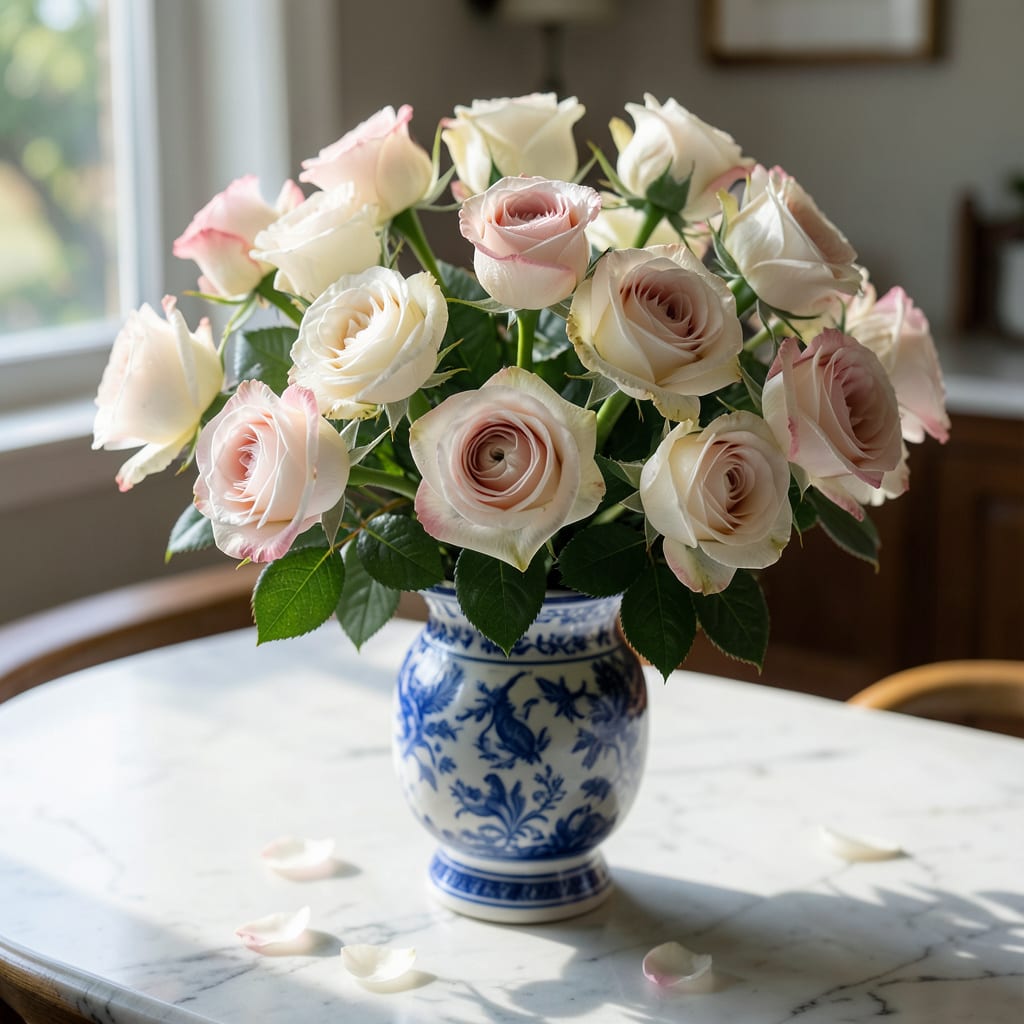
These roses stopped me in my tracks the first time I saw them blooming. The pure white petals gradually blush to soft pink at the edges, creating a look that’s both delicate and dramatic in any garden setting.
They work beautifully as focal points in borders or trained up trellises, and pair surprisingly well with deep purple salvias or silvery foliage plants. The color contrast makes everything around them pop while keeping the space feeling elegant and intentional.
📚 In This Guide
Here’s the method I use to coax those stunning bicolor blooms from my rose bushes every season.
Start with a rose variety known for white petals with pink edges, like ‘Cécile Brünner’ or ‘Souvenir de la Malmaison’. I always check the tag to confirm it produces bicolor blooms. Choose a spot with full sun (at least 6 hours of direct light daily) and well-draining soil.
Avoid low areas where water pools after rain. The ideal location has morning sun and afternoon shade in hotter climates to prevent petal scorch. You’ll see stronger color development in cooler temperatures, so morning light is especially valuable.
Roses thrive in rich, loamy soil with a pH between 6.0 and 6.5. I test my soil every spring and amend with compost or well-rotted manure if needed. Work the amendments into the top 12-18 inches of soil before planting.
Dig a hole twice as wide as the root ball but no deeper. This encourages roots to spread outward. If your soil is heavy clay, mix in some sand or perlite to improve drainage—soggy roots are the quickest way to lose a rose bush.
Place the rose in the hole so the graft union (the swollen area where the canes meet the roots) sits 1-2 inches above the soil line. This protects it from rot and cold damage. Backfill with native soil, water thoroughly, and tamp down gently to remove air pockets.
Water deeply after planting, giving it 1-2 inches of water to settle the soil. I always add a 2-3 inch layer of mulch around the base (keeping it away from the stem) to retain moisture and suppress weeds. You’ll see new growth within 2-3 weeks if the plant is happy.
Water established roses 1-2 times weekly, providing 1-2 inches of water each time. I water at the base in the morning to prevent fungal diseases. Fertilize every 4-6 weeks during the growing season with a balanced rose fertilizer.
Prune in early spring before new growth starts, removing dead or crossing canes. For bicolor roses, I avoid heavy pruning—these varieties often bloom on old wood. Watch for the first flower buds to form; they’ll show color differentiation 3-4 weeks before opening.
The pink tips develop best with consistent moisture and moderate temperatures. During heatwaves, I provide temporary shade cloth to prevent the pink from fading. Deadhead spent blooms regularly to encourage continuous flowering.
If the pink edges seem less pronounced, it might indicate a nutrient deficiency. A foliar spray of Epsom salt (1 tablespoon per gallon) can boost color intensity. You’ll notice deeper pink tips within 2-3 weeks of treatment.
These practical insights will help you avoid common pitfalls when growing these stunning bicolor blooms.
Sunlight Strategy: The 6 hours of daily full sun mentioned in Step 1 is non-negotiable for vibrant color development. Morning sun is particularly valuable, as it promotes stronger pink tips while preventing petal scorch in hotter climates. I’ve found that afternoon shade can actually enhance the bicolor effect during heatwaves.
Soil Preparation: When amending your soil in Step 2, don’t just focus on the pH between 6.0 and 6.5. Work those compost or manure amendments deep into the top 12-18 inches as specified. Shallow amendments won’t give your roses the rich, loamy foundation they need to develop those beautiful pink-tipped blooms.
Planting Depth: That 1-2 inches above soil line for the graft union in Step 3 might seem fussy, but it’s critical. Planting too deep can lead to rot, while too shallow exposes the graft to cold damage. I learned this the hard way after losing two bushes to improper planting depth.
Watering Wisdom: The 1-2 inches of water per session mentioned in Steps 3 and 4 is key. Deep, infrequent watering encourages robust root growth, which directly impacts bloom quality. Morning watering is especially important for bicolor roses, as it prevents fungal diseases that can mottle those precious pink tips.
These elegant blooms often represent purity, grace, and new beginnings, with the pink tips adding a touch of admiration and gratitude. They’re perfect for expressing heartfelt emotions in bouquets or gardens.
Most varieties bloom in late spring to early summer, though some may produce a second flush in fall. Timing depends on the climate and care, so check your local growing zone for specifics.
Plant in well-draining soil with full sun to partial shade. Water deeply 1-2 times a week and prune dead blooms to encourage more flowers. Fertilize monthly during growing season for vibrant color.
Yes! Choose a large pot (at least 18 inches wide) with drainage holes. Use quality potting mix and ensure they get 6+ hours of sunlight daily. Container-grown roses may need more frequent watering.
This can happen due to excessive heat, strong sunlight, or nutrient imbalances. Try providing afternoon shade or adjusting your fertilizer to restore the classic two-tone look.
