
Beautiful Plants For Your Interior
Beautiful Plants For Your Interior
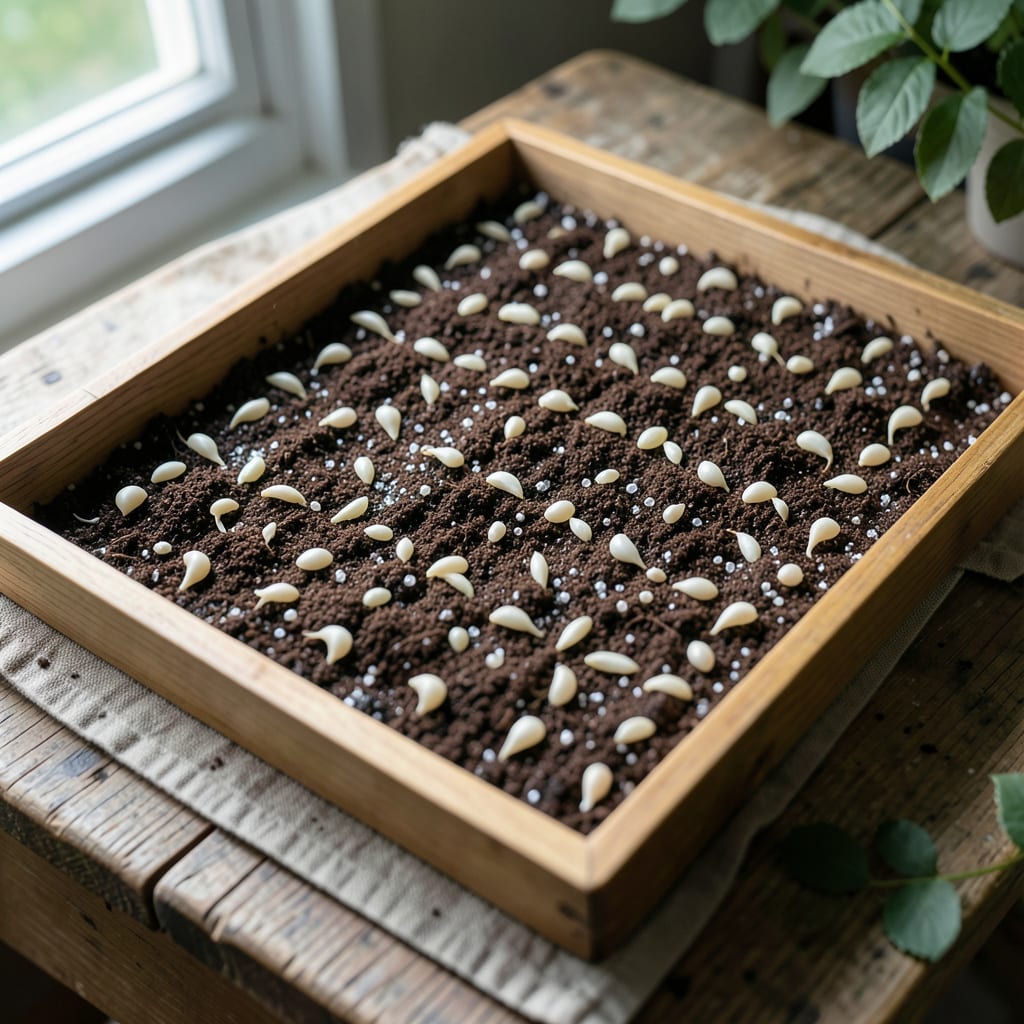
There’s nothing like the first fragrant white rose blooms in your garden. I started mine from seed, and the process taught me patience pays off with stunning results.
You’ll need quality seeds, the right soil mix, and consistent moisture for germination. Within 2-4 weeks, you’ll see sprouts, and with proper care, blooms will follow in 2-3 years.
📚 In This Guide
Here’s the method I use to coax white rose bushes from seed to spectacular bloom.
White rose seeds require a cold stratification period of 8-12 weeks to break dormancy. I place seeds between damp paper towels inside a sealed plastic bag and refrigerate at 35-40°F. Check weekly for mold—discard any seeds showing fuzzy growth.
This mimics winter conditions, triggering the biological cue to sprout. You’ll know stratification is complete when seeds slightly swell. Don’t rush this step; skipping it reduces germination rates to near zero.
Fill seed trays with a sterile seed-starting mix (never garden soil) to prevent damping-off disease. Sow stratified seeds ¼ inch deep, spacing them 1 inch apart. The fine texture of professional mixes ensures delicate rose roots penetrate easily.
Mist the surface until evenly moist but not soggy. Cover trays with clear plastic to maintain 70-75°F soil temperature and 90% humidity. Place under grow lights set to 14-16 hours daily—rose seedlings need intense light from day one.
Germination takes 3-6 weeks. Keep the medium consistently moist—let it dry slightly between waterings to prevent rot. I use a spray bottle to avoid disturbing seeds. Remove the plastic cover immediately after sprouts appear to prevent fungal growth.
Watch for the first true leaves (not the initial seed leaves) which signal it’s time to begin fertilizing. Use a balanced liquid fertilizer at half strength every 2 weeks to support vigorous growth.
When seedlings have 3-4 sets of true leaves and are 3-4 inches tall, transplant to 3-inch pots. Handle by the leaves, never the stems, to avoid crushing delicate tissues. Use the same sterile mix to prevent shock.
Begin hardening off 2 weeks before last frost by placing pots outside in shade for 1 hour the first day, increasing by 1 hour daily. This acclimates plants to wind, temperature swings, and direct sun. Transplant to the garden only after seedlings show no wilting after a full day outside.
Choose a site with full sun (minimum 6 hours daily) and well-draining soil. Dig holes twice as wide as the root ball but no deeper. Amend native soil with compost to improve fertility and drainage.
Space plants 3-4 feet apart to ensure air circulation, which prevents fungal diseases like black spot. Water deeply at planting, then maintain 1-2 inches of water weekly (more in extreme heat). Mulch with 2-3 inches of organic matter to retain moisture and suppress weeds.
Here’s what I’ve learned from seasons of starting roses from seed to help you avoid the most common pitfalls.
Stratification Success: That 8-12 weeks of cold stratification at 35-40°F isn’t just a suggestion—it’s non-negotiable for breaking dormancy. I’ve tried cutting it short, and germination rates plummet. Check those seeds weekly for mold, and discard any with fuzzy growth immediately to protect the batch.
Sowing Precision: Planting seeds ¼ inch deep and 1 inch apart in a sterile seed-starting mix prevents damping-off disease, which can wipe out your seedlings overnight. Garden soil harbors pathogens that delicate rose roots can’t fight off at this stage.
Light and Heat Balance: Maintaining 70-75°F soil temperature and 14-16 hours of grow light daily is critical. Rose seedlings are light-hungry from the moment they sprout, and inconsistent temperatures slow germination. A heat mat can help keep soil warm if your space is cool.
Hardening Off Patience: The 2-week hardening-off period before last frost is your insurance policy against transplant shock. Start with just 1 hour of shade on the first day, then gradually increase exposure. Rushing this step can set your seedlings back by weeks.
White rose bush seeds typically take 2-4 weeks to germinate under ideal conditions (70-75°F, moist soil, and indirect light). Patience is key, as some may take longer. Using a heat mat can speed up the process.
Yes, but it’s slower! Seeds produce new genetic variations, while cuttings clone the parent plant. If you want consistent traits, opt for cuttings. Seeds are great for experimenting with unique blooms.
Start seeds indoors 8-10 weeks before the last frost. Transplant outdoors in early spring or fall, when temperatures are mild. Avoid extreme heat or cold for the best results.
Common issues include old seeds, overly wet/dry soil, or insufficient warmth. Ensure fresh seeds, consistent moisture, and a warm environment (70°F+). If all else fails, try scarifying seeds lightly before planting.
