
Beautiful Plants For Your Interior
Beautiful Plants For Your Interior
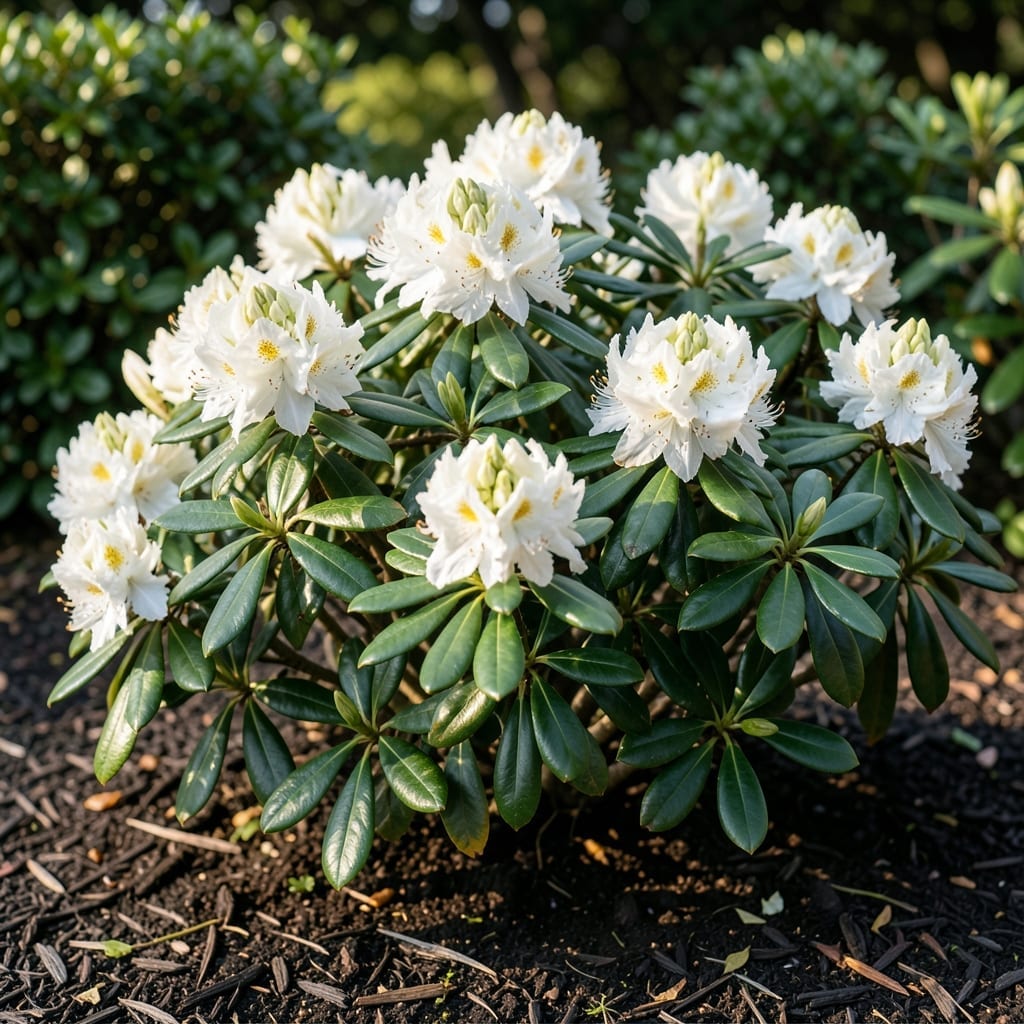
White rhododendrons transform shady spots into spring spectacles. I’ve watched mine go from spindly saplings to 6-foot showstoppers with glossy leaves and clusters of pure white blooms.
They thrive in partial shade with acidic, well-draining soil. A little pruning after flowering keeps them dense and healthy. Perfect for foundation plantings or woodland gardens.
📚 In This Guide
Here’s the method I use to establish healthy, blooming white rhododendrons in partial shade conditions.
Choose a site with dappled sunlight or morning sun with afternoon shade—this mimics the understory conditions rhododendrons naturally thrive in. Avoid deep shade under dense trees, as this reduces flowering. The soil should be well-draining, rich in organic matter, and slightly acidic with a pH between 4.5 and 6.0.
Test your soil by digging a 12-inch hole and filling it with water. If it drains completely within 30 minutes, your drainage is adequate. If water remains after an hour, amend the soil with compost or pine bark fines to improve structure before planting.
Dig a hole that is twice as wide as the root ball but only as deep as the root ball itself. Rhododendrons are shallow-rooted, and planting too deeply suffocates the roots. Loosen the soil around the edges of the hole to encourage root spread into the surrounding ground.
Mix the removed soil with 50% organic matter such as compost, peat moss, or aged pine bark. This improves both drainage and moisture retention. Position the plant in the hole so the top of the root ball sits 1-2 inches above the surrounding soil level—this prevents settling and water pooling around the stem.
Gently remove the plant from its container and loosen any circling roots with your fingers. Place it in the hole and backfill with the amended soil mix, firming lightly as you go to eliminate air pockets. Water thoroughly with 1-2 gallons of water to settle the soil around the roots.
Apply a 2-3 inch layer of organic mulch such as pine bark, wood chips, or shredded leaves, keeping it 3 inches away from the trunk to prevent rot. Mulch conserves moisture, suppresses weeds, and maintains the cool, acidic soil conditions rhododendrons prefer.
Water deeply 2-3 times per week for the first month after planting, then taper to once per week unless rainfall provides at least 1 inch. Check soil moisture by inserting your finger 2-3 inches deep—if it feels dry, it’s time to water. Rhododendrons prefer consistently moist but not waterlogged soil.
Fertilize in early spring with a product formulated for acid-loving plants, following package instructions. Avoid late-season fertilization, which encourages tender growth susceptible to winter damage. Yellowing leaves between the veins often indicate iron deficiency, which can be corrected with a chelated iron supplement.
Prune only after flowering, removing dead or crossing branches to maintain an open center. This improves air circulation and reduces disease risk while allowing the plant to set next year’s buds.
These refined practices will help ensure your plant thrives in partial shade conditions.
Soil Preparation Insight: In Step 1, when testing drainage with that 12-inch hole, remember that the 30-minute mark is your gold standard. If water lingers beyond an hour, amending with compost or pine bark fines is non-negotiable for preventing root rot in these shallow-rooted plants.
Planting Depth Caution: Real talk: I’ve seen more rhododendrons fail from being planted too deep than almost any other mistake. In Step 2, that 1-2 inches above soil level isn’t just a suggestion—it’s critical for preventing stem rot as the plant settles.
Mulching Technique: When applying that 2-3 inch layer of mulch in Step 3, keep it precisely 3 inches from the trunk. This isn’t just about rot prevention—it also discourages rodents from nesting against the bark, which can girdle young plants.
Watering Wisdom: The 2-3 times per week frequency in Step 4 is your baseline for the first month, but always check that soil 2-3 inches deep. Rhododendrons will tell you what they need—wilting leaves mean you’ve waited too long, while yellowing indicates overwatering.
Water regularly to keep soil moist but not soggy, and apply mulch to retain moisture. Use acidic fertilizer in early spring and prune after flowering to maintain shape.
Plant in early spring or fall to allow roots to establish before extreme temperatures. Avoid planting in summer heat or frozen winter ground.
Watch for root rot (from poor drainage), powdery mildew, and leaf spot. Ensure good airflow, avoid overhead watering, and treat with fungicides if needed.
It prefers partial shade, but some varieties tolerate morning sun. Too much direct sunlight can scorch leaves—protect with shade cloth in hot climates.
Yellowing leaves often signal iron deficiency (chlorosis) due to alkaline soil. Test soil pH and amend with sulfur or use iron chelates to restore health.