
Beautiful Plants For Your Interior
Beautiful Plants For Your Interior
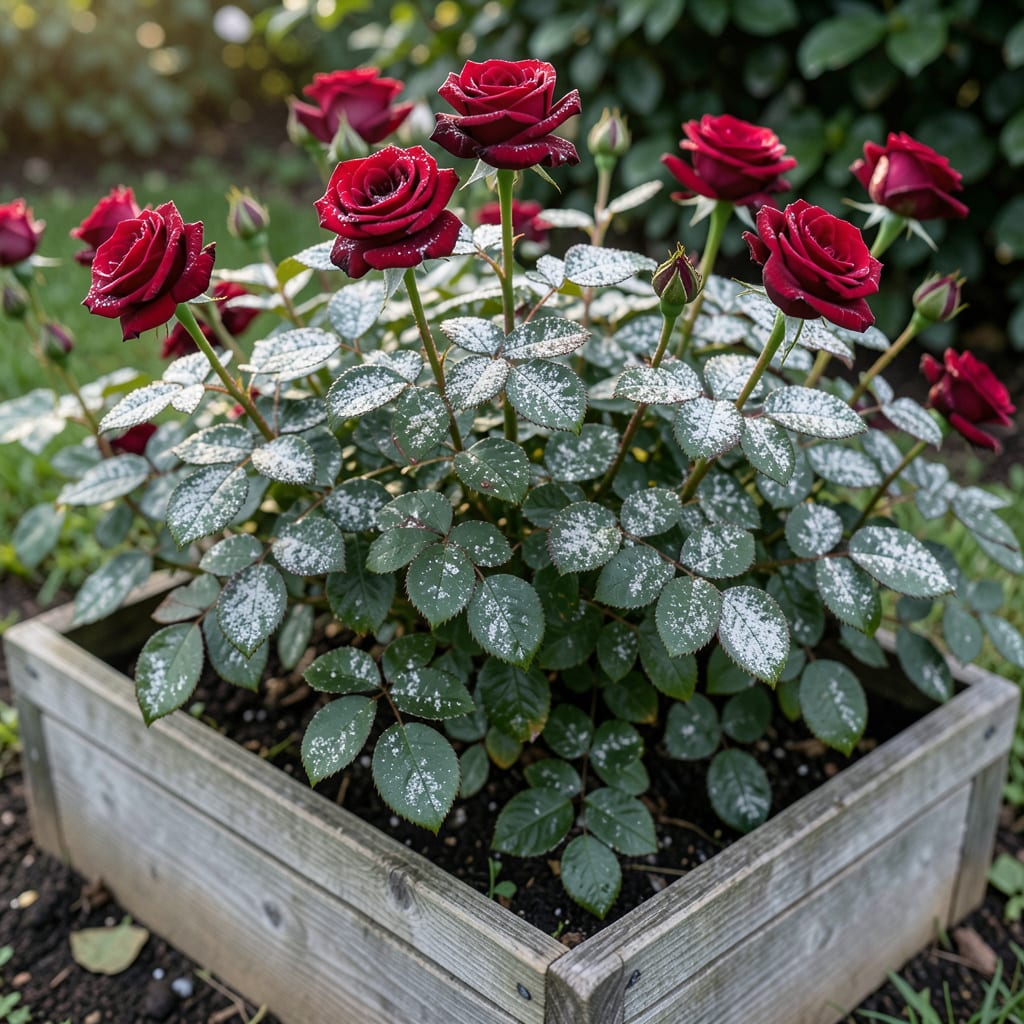
That white dust on your roses isn’t just unsightly—it’s stealing their vigor. I’ve battled this powdery mildew for years and learned it spreads fast in humid weather with poor air flow.
Left untreated, leaves curl and drop, but the right approach restores healthy growth within 2 weeks. Organic sprays work just as well as chemicals if you catch it early.
📚 In This Guide
Here’s my proven method for diagnosing and resolving powdery mildew while restoring your roses to full health.
Examine the affected leaves, stems, and buds carefully under natural light. Powdery mildew appears as a white to grayish powdery coating on the upper leaf surfaces, often in circular patches. I’ve found it’s most noticeable in the morning when dew is present, as the fungus thrives in high humidity.
Check the undersides of leaves too—sometimes the infection starts there before spreading upward. If you see yellowing leaves or distorted growth accompanying the white coating, this confirms powdery mildew rather than downy mildew, which typically appears on leaf undersides first.
Using clean, sharp pruners, cut off all leaves and stems showing white powdery residue. Remove at least 2-3 inches of healthy tissue below the infected area to ensure you’ve captured all spores. I always sterilize my pruners between cuts with rubbing alcohol to prevent spreading the fungus to healthy parts of the plant.
Do not compost these clippings—powdery mildew spores can survive and reinfect your garden. Seal them in a plastic bag and dispose of them with household trash. This immediate removal reduces the spore load and helps prevent the fungus from spreading to other plants.
Powdery mildew thrives in crowded, humid environments. Thin out any dense growth in the center of your rose bush to allow air to circulate freely. I aim for an open center that lets sunlight reach all parts of the plant, which helps dry moisture quickly.
Water your roses at the base in the morning so foliage has time to dry before evening. Avoid overhead watering, especially in the late afternoon or evening. If your roses are planted too closely together, consider transplanting some to create better spacing—3-4 feet apart is ideal for most varieties.
For organic control, mix 1 tablespoon baking soda and 1 teaspoon of mild liquid soap in 1 gallon of water. Spray this solution thoroughly on all leaf surfaces, including the undersides, until it drips off. I apply this in the early morning or late evening to prevent leaf burn.
For severe infections, use a commercial fungicide labeled for powdery mildew on roses. Follow the package instructions precisely for mixing and application rates. Reapply every 7-10 days or after rain, as the protective coating wears off. Always wear gloves and protective clothing when handling chemical fungicides.
Check your rose bushes daily for new signs of white powder, especially after periods of high humidity or rain. Early detection makes treatment far more effective. I keep a small notebook to track when I first notice symptoms, which helps me time my preventative sprays.
As a preventative, apply a fungicide spray every 2-3 weeks throughout the growing season, particularly during periods of high humidity. Choose resistant rose varieties for future plantings, and maintain consistent cultural practices to keep your roses healthy and less susceptible to fungal infections.
These practical strategies will help you effectively manage powdery mildew and keep your roses thriving.
Diagnosis Precision: In Step 1, examine plants in morning light when dew makes the white to grayish coating most visible. The circular patches on upper leaf surfaces are distinctive, but always check undersides too—this fungus often starts there before spreading upward.
Pruning Protocol: When removing infected material in Step 2, those 2-3 inches of healthy tissue below the infection are non-negotiable. I learned this the hard way after reinfection spread from inadequate pruning. Sterilize pruners between every cut with rubbing alcohol.
Cultural Controls: The spacing recommendation in Step 3 isn’t arbitrary—3-4 feet apart creates the air circulation that prevents humidity buildup where powdery mildew thrives. Morning watering at the base gives foliage the entire day to dry.
Treatment Timing: For the organic spray in Step 4, those early morning or late evening applications prevent leaf burn from sun exposure. The 7-10 day reapplication schedule accounts for the protective coating’s degradation, especially after rain.
Yes, it’s often powdery mildew, a fungal disease that weakens plants by blocking sunlight. If untreated, it can stunt growth and reduce blooming. Act quickly to prevent spreading!
Mix 1 tablespoon of baking soda, 1 teaspoon of dish soap, and 1 gallon of water. Spray affected leaves weekly. Neem oil is another great organic option for control.
Apply treatments in the early morning or late evening to avoid leaf burn from the sun. Consistency is key—reapply after rain or every 7–10 days.
Improve air circulation by pruning dense foliage, avoid overhead watering, and choose mildew-resistant rose varieties. Keep your garden clean to reduce fungal spores.
It could be downy mildew (fuzzy white patches) or even pesticide residue. Check for yellowing leaves or black spots—if unsure, consult a local nursery for diagnosis.
