
Beautiful Plants For Your Interior
Beautiful Plants For Your Interior
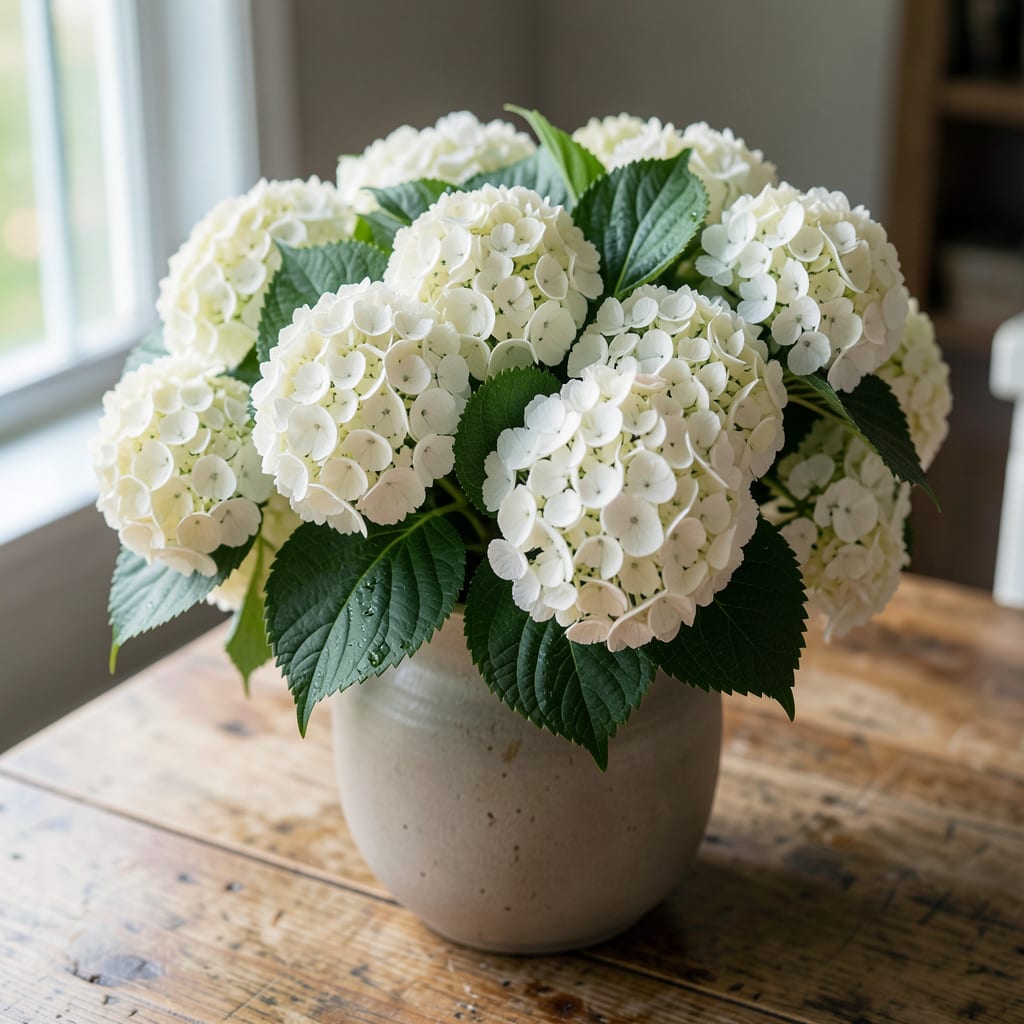
White pee gee hydrangeas transformed my shady corner into a summer showstopper. The massive snowball blooms appear in late spring, then often rebloom through fall with minimal effort on my part.
These shrubs thrive in partial shade with well-draining soil and consistent moisture. I’ve found they tolerate urban conditions better than most hydrangeas, and their dried flowers add winter interest when most plants look bare.
📚 In This Guide
Here’s my proven method for establishing these hardy shrubs with minimal fuss and maximum impact.
Choose a location with full sun to partial shade, though morning sun with afternoon shade works best in hotter climates. The soil should be well-draining and rich in organic matter. I always test drainage first by digging a 12-inch deep hole and filling it with water—if it drains within an hour, you’re good.
Avoid low-lying spots where water pools, as hydrangeas hate soggy roots. This variety tolerates urban conditions well, but give it space—mature plants reach 6-8 feet tall and wide.
Plant in early spring or fall, when temperatures are 50-60°F. Dig a hole twice as wide as the root ball but no deeper. Loosen the roots gently if they’re circling the container—this prevents girdling as the plant grows.
Set the root ball so the top sits 1-2 inches above the surrounding soil to allow for settling. Backfill with native soil, not amendments, to encourage roots to spread outward. Water deeply after planting to eliminate air pockets.
Water thoroughly 2-3 times per week for the first year, ensuring the soil stays evenly moist but not waterlogged. I check by sticking my finger 2 inches into the soil—if it feels dry, it’s time to water.
Once established, this variety is surprisingly drought-tolerant, but consistent moisture produces the lushest blooms. Mulch with 2-3 inches of organic matter to retain moisture and regulate soil temperature.
This hydrangea blooms on new wood, so prune in late winter or early spring before new growth starts. Remove dead or weak stems first, then shape the shrub by cutting back one-third of the oldest stems to the ground to encourage vigorous new growth.
I use clean, sharp bypass pruners to make 45-degree angle cuts just above a leaf node. This variety responds well to hard pruning, so don’t be afraid to cut it back severely if it’s overgrown—it’ll bounce back with more flowers.
Apply a balanced 10-10-10 fertilizer in early spring as new growth appears, then again in mid-summer. Scatter 1 cup per plant around the base, keeping it 6 inches away from the stems to prevent burn.
Water deeply after applying to help nutrients reach the roots. Avoid high-nitrogen fertilizers, as they promote leafy growth at the expense of those stunning snowball blooms this variety is known for.
These practical insights will help you avoid common pitfalls when growing this variety.
Site Selection Strategy: Confession: I skipped the drainage test for years and lost several plants to root rot. Always dig that 12-inch deep hole and time the drainage—if water doesn’t disappear within an hour, find a better spot. The 6-8 feet mature size also means you should plant it where it won’t crowd structures or other plants.
Planting Precision: Here’s what nobody tells you—setting the root ball 1-2 inches above the surrounding soil is non-negotiable. I learned this the hard way after planting too deep and watching my hydrangea struggle. The 50-60°F temperature range for planting is equally critical; these temperatures encourage root establishment without stressing the shrub.
Watering Wisdom: Real talk: those first-year 2-3 times per week waterings must be deep. A light sprinkle won’t reach the roots. I use the finger test—2 inches down—to check moisture. If it feels dry at that depth, it’s time to water. The 2-3 inches of mulch isn’t just for moisture retention; it also keeps soil temperatures stable, which this variety loves.
Pruning Pro Tip: Don’t make my mistake: never prune this hydrangea in fall. Since it blooms on new wood, late winter or early spring pruning is essential. When cutting back one-third of the oldest stems, always use those 45-degree angle cuts just above a leaf node—it prevents water from pooling on the cut surface and reduces disease risk.
White Pee Gee hydrangeas typically reach 6 to 10 feet tall, with a spread of 6 to 8 feet. Pruning can help control their size, making them versatile for hedges or standalone shrubs.
Prune in late winter or early spring before new growth starts. This hydrangea blooms on new wood, so trimming in late summer or fall may remove potential flowers.
They thrive in partial shade but tolerate full sun (6+ hours) in cooler climates. In hot areas, afternoon shade prevents leaf scorch and keeps blooms vibrant.
Common issues include pruning at the wrong time, insufficient sunlight, or nutrient deficiencies. Ensure proper care, and avoid heavy nitrogen fertilizers, which promote leaves over flowers.
Yes! Consider ‘Limelight’ (cream blooms) or ‘Annabelle’ hydrangeas (white, compact). Both offer stunning, long-lasting flowers and adaptable growth habits.
