
Beautiful Plants For Your Interior
Beautiful Plants For Your Interior
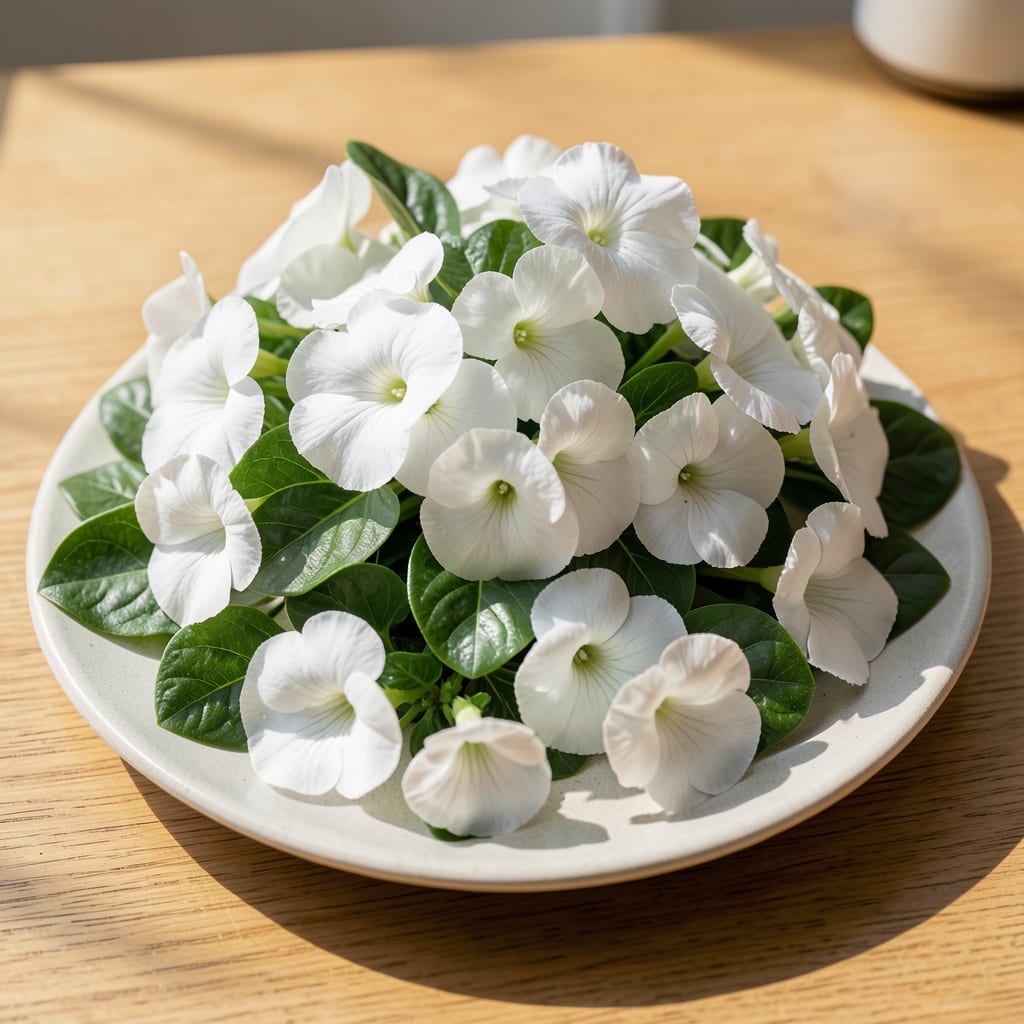
White New Guinea Impatiens changed my shady garden game. These vibrant blooms thrive where most flowers won’t, turning dim corners into bright displays without direct sun.
They’re low-maintenance and keep flowering all season with basic care—just consistent moisture and well-draining soil. Perfect for borders, containers, or anywhere color’s missing.
📚 In This Guide
Here’s the method I rely on to keep these shade-loving plants blooming beautifully all season long.
Select a spot with partial to full shade, especially during the hottest part of the day. New Guinea impatiens thrive in 4-6 hours of morning sun followed by afternoon shade. I’ve found they perform best under tree canopies or on east-facing patios where they’re protected from intense afternoon rays.
Ensure the area has well-draining soil—these plants despise soggy roots. If planting in containers, choose pots with drainage holes at least 12 inches in diameter to accommodate their spreading habit. The soil should feel slightly moist but never waterlogged when pressed between your fingers.
Amend the planting area with 2-3 inches of compost worked into the top 6 inches of native soil. This improves drainage while providing the organic matter these heavy feeders crave. For container planting, use a high-quality potting mix with added perlite for aeration.
I always test soil pH before planting—New Guinea impatiens prefer a slightly acidic to neutral range of 6.0-6.5. If your soil tests higher, work in some elemental sulfur; if lower, add lime. The plants will reward you with more abundant blooms when their pH needs are met.
Dig holes twice as wide as the root ball but no deeper. Place the plants in the holes, ensuring the top of the root ball sits ½ inch above the soil line to prevent crown rot. Backfill with amended soil and water thoroughly to settle the roots.
Establish a consistent watering schedule—these plants need 1-1.5 inches of water per week, including rainfall. I water deeply when the top inch of soil feels dry, then let it dry slightly between waterings. Morning watering is ideal to prevent foliar diseases and allow leaves to dry before evening.
Begin fertilizing 2-3 weeks after planting with a balanced, water-soluble fertilizer (10-10-10 or 20-20-20) diluted to half strength. I apply this every 2-3 weeks throughout the growing season, switching to a low-nitrogen, high-phosphorus formula when buds begin forming to encourage more blooms.
Don’t overlook foliar feeding—these impatiens respond well to occasional misting with liquid fertilizer. Do this early in the day so leaves dry quickly. You’ll notice a surge in growth and more abundant white blooms within 7-10 days of consistent feeding.
Pinch back the tips of new growth every 4-6 weeks to encourage bushier plants. This prevents them from becoming leggy, especially in lower light conditions. I use my fingers or clean pruners to remove the top 1-2 inches of each stem, making the cut just above a leaf node.
Deadhead spent blooms regularly by simply pinching them off at the base. This isn’t just about aesthetics—it directs the plant’s energy toward producing new flowers rather than seeds. With proper care, your white New Guinea impatiens will continue blooming prolifically until the first frost.
These plant-specific strategies will help you avoid pitfalls and maximize your blooms all season.
Light Exposure: The 4-6 hours of morning sun mentioned in Step 1 is non-negotiable for vibrant blooms. Afternoon shade prevents the wilting I’ve seen when plants get too much direct sun. Under tree canopies works best, as the dappled light mimics their natural habitat.
Soil Preparation Insight: When amending soil in Step 2, working the 2-3 inches of compost into the full 6 inches of native soil makes a noticeable difference. I learned this the hard way when surface-composting led to shallow root growth and weaker plants.
Watering Precision: That 1-1.5 inches per week water requirement includes rainfall, so adjust accordingly. Morning watering is crucial—I once lost several plants to fungal issues from evening watering that left foliage damp overnight.
Pruning Technique: For the pinching in Step 5, removing exactly 1-2 inches every 4-6 weeks creates the bushiest plants. Cutting above a leaf node encourages branching at that point, which is how you get that full, lush appearance.
Water them when the top inch of soil feels dry, typically 2-3 times per week. Avoid overwatering—soggy soil can lead to root rot. In hot climates, check moisture daily.
They thrive in partial shade but tolerate morning sun. In intense afternoon heat, leaves may scorch. For best results, provide dappled shade, especially in warmer zones.
Plant after the last frost in spring when soil temps reach 60°F (15°C). They’re warm-weather lovers and won’t survive cold snaps. In frost-free areas, enjoy them year-round!
Try regular impatiens (for shade) or sun-loving options like petunias or begonias. New Guinea impatiens resist downy mildew better than classic varieties, though.
Lack of blooms often means too much shade, over-fertilizing (use balanced 10-10-10), or stress from drought. Prune leggy stems to encourage new growth and flowers.
