
Beautiful Plants For Your Interior
Beautiful Plants For Your Interior
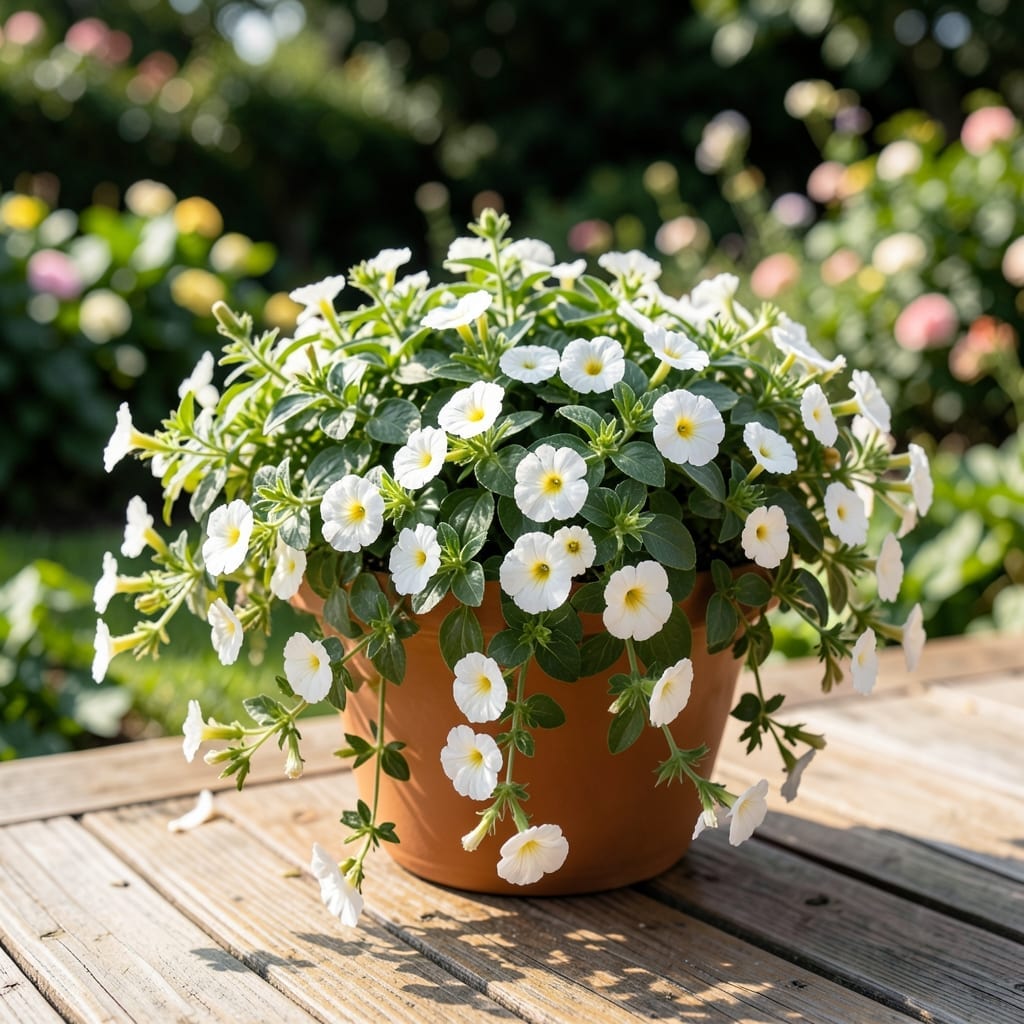
White million bells spill over containers like a waterfall of tiny stars. I first planted them in hanging baskets three summers ago, and they’ve been my go-to for effortless color ever since.
They thrive in full sun with well-draining soil and minimal fuss. A little deadheading keeps the blooms coming nonstop, and they bounce back fast after summer storms. Simple, rewarding, and stunning.
📚 In This Guide
This method delivers vibrant cascades of white blooms with minimal effort and maximum impact.
Choose a spot with full sun to partial shade, though these plants thrive best with at least 6 hours of direct sunlight daily. White million bells (Calibrachoa) are versatile but perform best in warm, sheltered locations. Avoid low-lying areas where cold air or frost might settle, as they’re sensitive to chilly temperatures.
Ensure the area has well-draining soil. These plants despise soggy roots, so if your garden soil is heavy clay, consider amending it with compost or planting in containers. A raised bed works wonderfully for improving drainage while keeping the display at eye level.
If planting in garden beds, loosen the soil to a depth of 8-10 inches and mix in a 2-inch layer of compost to improve fertility and drainage. For container growing—which is ideal for the trailing habit—select pots with drainage holes that are at least 10-12 inches in diameter.
Fill containers with a high-quality potting mix designed for flowering plants. I add a tablespoon of slow-release fertilizer to each pot at planting time. This gives the plants a nutritional boost without risking root burn from fresh compost.
Space plants 12-18 inches apart in garden beds to allow for their spreading habit. For containers, one plant per 10-12 inch pot works perfectly, or you can combine two to three in larger planters for a lush display. Dig holes just slightly larger than the root ball.
Remove plants from their nursery pots and gently loosen any circling roots. Place them in the holes so the top of the root ball sits level with the surrounding soil. Backfill with soil and press lightly to remove air pockets. Water thoroughly after planting to help settle the soil around the roots.
Keep the soil consistently moist but not waterlogged during the first 2-3 weeks after planting. Once established, white million bells are moderately drought-tolerant. I water when the top 1 inch of soil feels dry to the touch, which typically means every 2-4 days in hot weather.
Water at the base of the plant to keep the foliage dry, which helps prevent fungal diseases. For container plants, check moisture daily in summer—pots dry out faster than garden soil. A layer of mulch around garden plants helps retain moisture and suppress weeds.
Begin fertilizing 2 weeks after planting with a balanced, water-soluble fertilizer every 7-10 days throughout the growing season. I use a half-strength solution to avoid overfeeding, which can lead to excessive foliage at the expense of flowers.
Deadhead spent blooms regularly to encourage continuous flowering. Simply pinch off the faded flowers at their base. This also keeps the plant looking tidy. If the plant becomes leggy mid-season, trim it back by one-third to promote bushier growth and more blooms.
These small adjustments can make a big difference in your plant’s health and bloom production.
Sunlight Strategy: The 6-8 hours of daily sun mentioned in Step 1 isn’t just a suggestion—it’s essential. I learned this the hard way when my first batch became leggy and sparse. If your garden doesn’t get that much sun, consider containers you can move to follow the sunlight throughout the day.
Planting Depth Insight: In Step 2, when you’re transferring your million bells from nursery pots, be careful not to bury the stem too deep. The soil line should remain at the same level as it was in the original container. Planting too deep can lead to stem rot and stunted growth.
Watering Wisdom: The advice in Step 3 about checking the top inch of soil is gold. Here’s what nobody tells you—container plants often need water even when the top inch feels dry, especially in small pots. I check both the surface and about an inch down to be sure.
Maintenance Timing: For the pruning mentioned in Step 5, timing is everything. That one-third trim works best in early summer before the heat sets in. Doing it later in the season might stress the plant during its peak blooming period.
Water white million bells deeply once or twice a week, depending on the weather. Ensure the soil is moist but not soggy, and reduce frequency if rainfall is abundant.
Plant in spring after the last frost, when temperatures consistently stay above 50°F (10°C). This gives them time to establish before summer heat.
Consider petunias, calibrachoa (million bells’ close relative), or trailing lobelia for similar cascading effects and vibrant summer color.
Yellowing leaves often signal overwatering or poor drainage. Check soil moisture and ensure pots have drainage holes to prevent root rot.
They can attract aphids or spider mites. Use insecticidal soap or a strong water spray to deter pests and keep foliage healthy.