
Beautiful Plants For Your Interior
Beautiful Plants For Your Interior
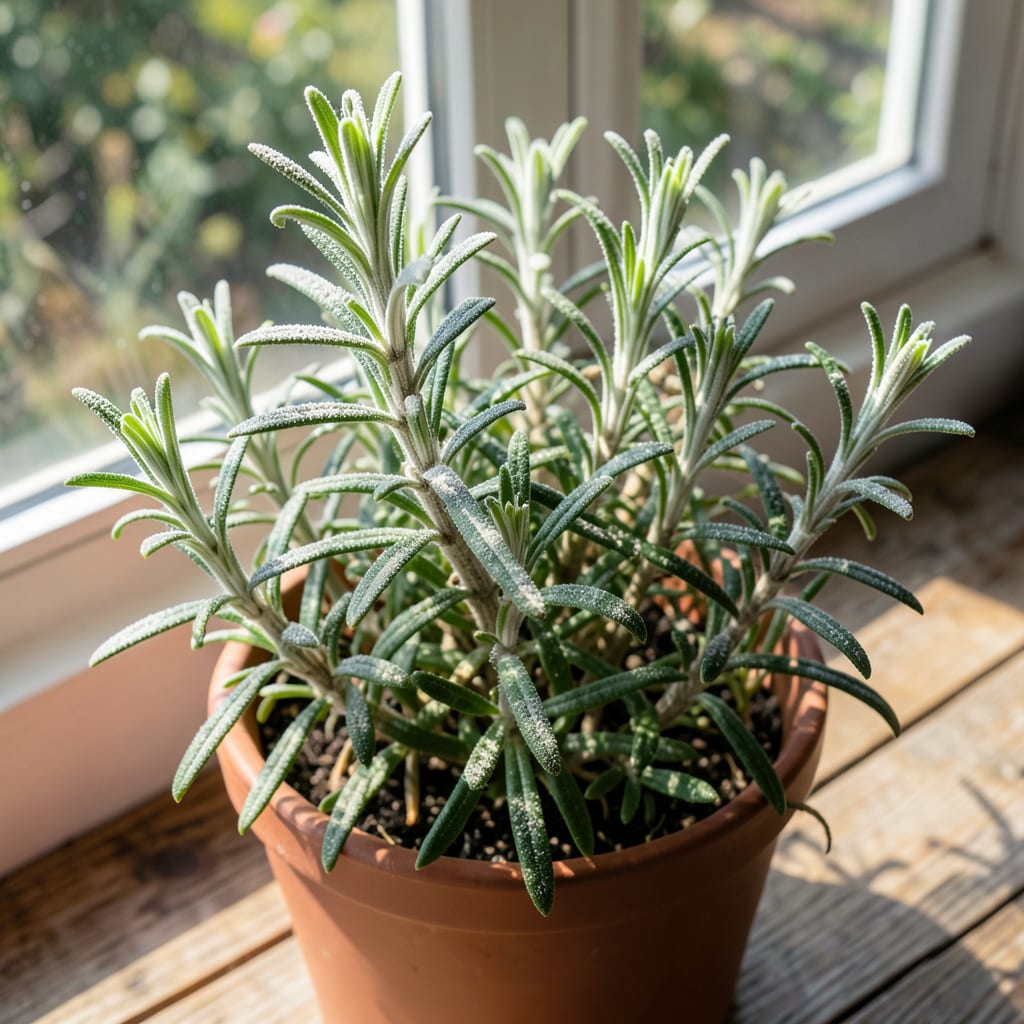
That white powder on your rosemary isn’t just dust. It’s a fungal party crashing on your plant’s leaves, and if left unchecked, it’ll spread faster than gossip at a garden club.
I’ve battled this same issue in my own herb garden. Overcrowding, poor airflow, or even a surprise cold snap can trigger it. The good news? Rosemary’s tough—with the right moves, it bounces back.
You’ll tackle this with simple fixes: prune affected bits, improve circulation, and apply organic sprays. Within a week, you’ll see the difference as new growth stays clean.
Prevention’s easier than cure. Space plants properly, water at the base, and keep leaves dry. Your rosemary will thank you with fragrant, healthy foliage.
White mildew on rosemary often stems from environmental and cultural conditions that favor fungal growth. Below are the primary causes, explained with actionable insights.
Fungal spores thrive in moist, stagnant air. Rosemary prefers dry, well-ventilated environments, but high humidity (above 80%) or crowded plantings can trap moisture on leaves, creating a breeding ground for powdery mildew (Oidium spp.) or downy mildew (Peronospora spp.).
Watering from above leaves foliage damp for extended periods. Rosemary’s needle-like leaves hold moisture, and evening watering (when evaporation slows) exacerbates the issue. This prolonged leaf wetness invites fungal spores to germinate.
Cool nights (50–60°F) paired with warm days stress the plant and slow water evaporation, increasing susceptibility. Rosemary is drought-tolerant but not cold-hardy; sudden temperature drops weaken its defenses against pathogens.
Excess nitrogen promotes lush, soft growth that’s more vulnerable to infection. Rosemary thrives in lean, well-draining soil; high-nitrogen fertilizers can disrupt this balance, reducing its natural resistance to mildew.
Mildew spreads via spores from nearby infected plants or contaminated tools. Rosemary in close proximity to squash, cucumbers, or other mildew-prone plants may contract the fungus through airborne spores or splashing water.
Tackling white mildew on your rosemary starts with targeted fixes for each underlying cause. Here’s how to rescue your plant and keep it thriving:
Fix: Stop watering immediately and let the soil dry out completely. If the pot lacks drainage, repot your rosemary in a container with drainage holes using a well-draining mix (add perlite or sand to potting soil). Trim any blackened or mushy roots to prevent rot.
Prevent: Water only when the top 1–2 inches of soil are dry. Use a moisture meter 💡 to avoid guesswork, and ensure pots have holes to let excess water escape.
Fix: Move your rosemary to a sunnier, breezier spot (6+ hours of sunlight daily). If indoors, use a small fan ⏰ on low for 2–3 hours a day to improve air circulation. Prune dense foliage to open up the plant’s center.
Prevent: Space plants at least 2 feet apart outdoors. Indoors, avoid crowding and keep humidity below 60% with a dehumidifier if needed.
Fix: Remove heavily infected leaves or stems and discard them (do not compost). Spray the plant with a DIY fungicide: mix 1 tsp baking soda + 1 quart water + a few drops of dish soap. Apply weekly until the mildew clears.
Prevent: Sterilize pruning tools with rubbing alcohol between cuts. Avoid overhead watering—use a soaker hose or water at the base to keep leaves dry.
Fix: Rosemary thrives in 60–85°F. If it’s too cold, move pots indoors near a sunny window. If it’s too hot, provide afternoon shade and mulch to retain moisture.
Prevent: Acclimate plants gradually to temperature changes. Use row covers in early spring/fall to protect from sudden cold snaps.
Yes, if left untreated, it can weaken your rosemary by blocking sunlight and reducing photosynthesis. The fungus also spreads to other plants.
Remove infected leaves and stems immediately to prevent spreading. Always sterilize your pruners with rubbing alcohol afterward.
A baking soda solution (1 tsp baking soda + 1 quart water + dish soap) works as a safe, organic spray. Apply weekly until the issue clears.
Ensure good airflow, avoid overhead watering, and keep humidity below 60%. Space plants at least 2 feet apart outdoors.
