
Beautiful Plants For Your Interior
Beautiful Plants For Your Interior
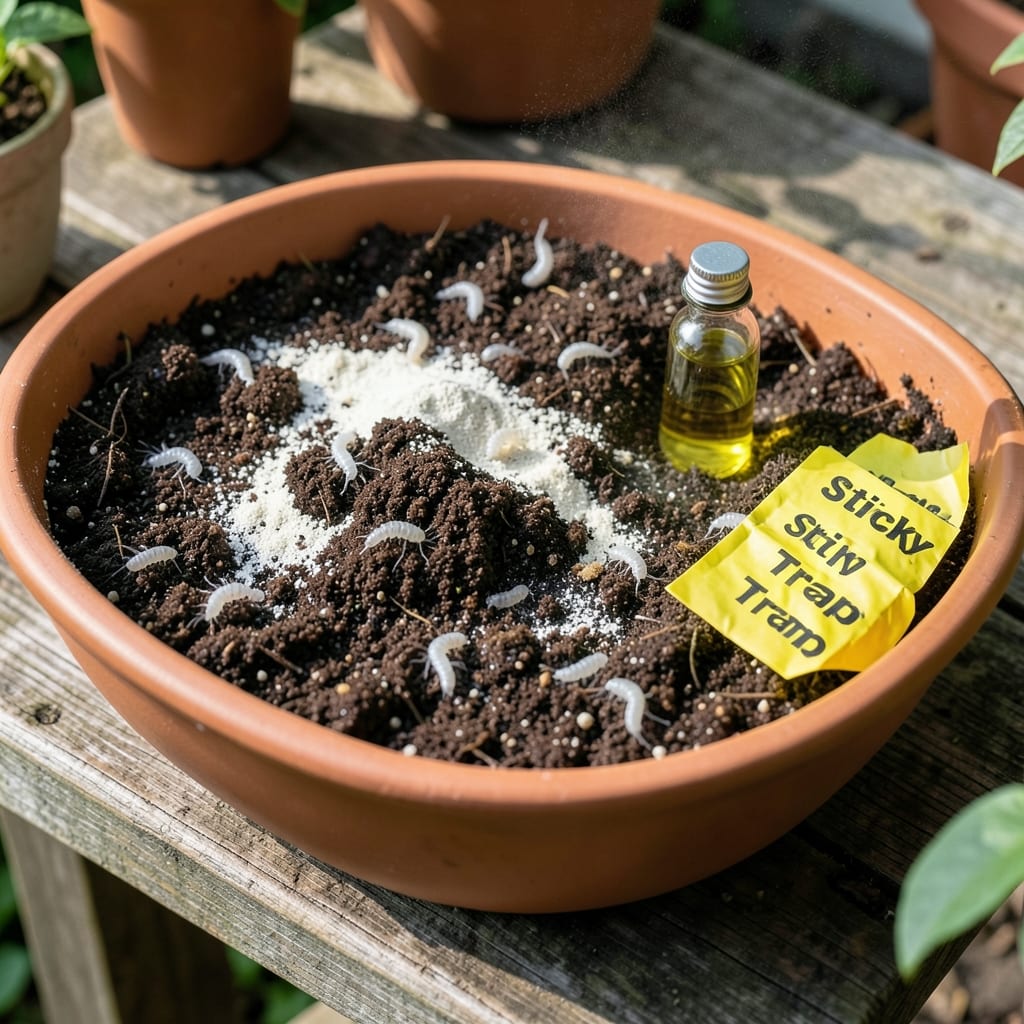
I spotted my first white maggot while repotting a wilting pepper plant last spring. Tiny, squirming, and definitely not welcome. These pests thrive in damp, organic-rich soil, often hitching a ride in cheap potting mixes or compost that hasn’t heated up enough.
Catching them early saves your plants. I lost two seedlings before figuring out the organic fix—it’s simpler than you’d think, and your garden will thank you for acting fast.
Short list. Fast action. Save your plants from those unwelcome squirmers.
| Ingredient | Amount | Notes |
|---|---|---|
| Neem Oil 🌿 | 1 piece | Cold-pressed 100% pure |
| Diatomaceous Earth 🪨 | 1 lb | Food-grade powder |
| Beneficial Nematodes 🐛 | 5 million | Hb or Sf varieties |
| Yellow Sticky Traps 🪴 | 4 pieces | For adult fungus gnats |
| Organic Potting Mix 🌾 | 2 gallons | Sterilized and well-draining |
| Hydrogen Peroxide 💧 | 1 piece | 3% solution |
| Spray Bottle 💦 | 1 piece | Fine mist nozzle |
| Garden Trowel ✂️ | 1 piece | Stainless steel |
[recipeingredientscaler]
Sterilized potting mix is non-negotiable here. Big-box stores often sell cheap, unsterilized bags (the good stuff, not the bagged-up dirt from a sale). Home Depot and Lowe’s both carry sterilized organic mixes—look for the label. I grab FoxFarm Ocean Forest when I need a reliable base.
No neem oil? Insecticidal soap works in a pinch but reapply every few days. Beneficial nematodes are pricier but worth it for heavy infestations (trust me on the Hb variety). Diatomaceous earth doubles as slug prevention—just reapply after rain.
Store leftover diatomaceous earth in a sealed container—it lasts indefinitely. Neem oil keeps for 1-2 years in a cool, dark place. I label my spray bottles with mix dates so I’m not guessing potency later.
Use these organic methods to eliminate white maggots and restore your soil’s health without harsh chemicals.
Use the garden trowel to carefully scoop out the top 1-2 inches of soil where you see the maggots. These are likely fungus gnat larvae, which thrive in consistently moist conditions. Place the infested soil in a sealed bag and dispose of it immediately—don’t compost it, as this can spread the problem.
If the maggots are clustered around plant bases, gently lift the plants and inspect the roots. Trim away any damaged or slimy roots with clean scissors. Repot the plant in fresh organic potting mix to prevent reinfestation.
Mix the 3% hydrogen peroxide with water in a 1:4 ratio (1 part peroxide to 4 parts water) in the spray bottle. Lightly mist the top layer of soil until it’s damp but not soggy. The peroxide will fizz as it releases oxygen, which suffocates the larvae and kills them on contact.
Apply this solution every 3-4 days for 2 weeks to break the life cycle. You’ll notice fewer maggots within 24-48 hours as the treatment takes effect. Avoid using this on dry soil, as it can stress plant roots.
Sprinkle a thin layer of the 1 lb diatomaceous earth over the surface of the soil. This fine powder is harmless to plants but deadly to larvae—its microscopic edges pierce their bodies, causing them to dehydrate and die. Focus on the soil surface and around the base of plants.
Reapply the diatomaceous earth after watering or rain, as moisture reduces its effectiveness. For best results, combine this with the hydrogen peroxide treatment. You’ll see a noticeable decline in maggot activity within 5-7 days.
Mix the 5 million beneficial nematodes with water according to the package instructions and apply the solution to the soil using the spray bottle. These microscopic worms actively seek out and kill fungus gnat larvae without harming plants or beneficial insects.
Apply the nematodes in the evening or on a cloudy day, as they’re sensitive to UV light. Keep the soil moist for 7-10 days after application to help the nematodes move through the soil and establish themselves. This method provides long-term control.
Place the 4 yellow sticky traps near the infested area to catch adult fungus gnats before they lay more eggs. These traps are coated with a sticky adhesive that traps the gnats when they land. Position them just above the soil level for the best results.
Check the traps every 2-3 days and replace them when they’re covered in gnats. Reducing the adult population prevents new larvae from hatching. You’ll know the infestation is under control when the traps remain clean for a full week.
To eliminate white maggots in soil naturally, use heat treatment. Spread the affected soil in a thin layer on a baking sheet and bake at 200°F (93°C) for 30-45 minutes. This kills larvae without chemicals.
Apply organic remedies like beneficial nematodes or neem oil in the early morning or late evening. These times ensure the treatment adheres better and avoids harming pollinators.
Maggots thrive in damp conditions. Reduce watering and improve drainage by adding compost or sand to the soil. Aim for a balance—moist but not soggy—to deter infestations.
Plant marigolds, garlic, or mint near affected areas. Their strong scents repel maggots while enhancing your garden’s biodiversity. Rotate crops annually to prevent recurring issues.
