
Beautiful Plants For Your Interior
Beautiful Plants For Your Interior
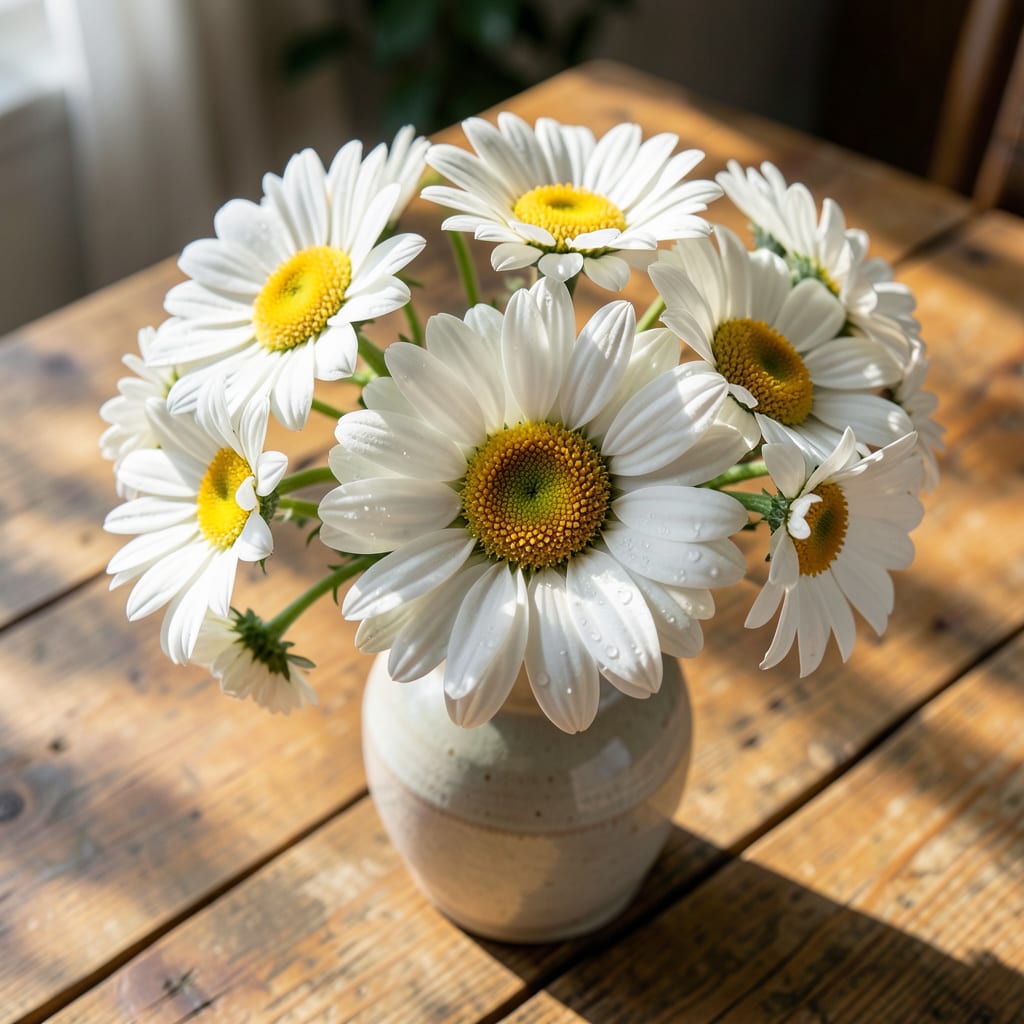
White Lion Shasta daisies bring classic elegance to any sunny spot. I first planted these Leucanthemum × superbum varieties along my fence line and was stunned by how quickly they established.
With the right conditions—full sun and well-draining soil—you’ll get wave after wave of pristine white blooms from early summer through fall. They thrive in zones 5-9 and need minimal care once settled in.
📚 In This Guide
Here’s my straightforward approach for getting these classic blooms established and thriving in your garden.
White Lion Shasta daisies need a spot with full sun to partial shade, but they’ll produce the most flowers in at least 6 hours of direct sunlight daily. I always pick a location that gets morning sun, which helps dry the leaves quickly and prevents fungal issues.
Test your soil by digging a small hole and checking drainage after rain—if water pools for hours, amend with compost or sand. These plants prefer well-draining soil with a pH of 6.0-7.0. Work in a few inches of organic matter to improve fertility before planting.
Dig a hole that’s twice as wide and just as deep as the root ball. Gently loosen the roots if they’re pot-bound, then place the plant in the hole so the crown sits ½ inch above the soil line—this prevents rot. Backfill with native soil, pressing lightly to remove air pockets.
Space plants 18-24 inches apart to allow for air circulation and future growth. If you’re planting multiple rows, leave 2 feet between them. Water thoroughly after planting to help the roots settle in.
For the first 2-3 weeks, water deeply 2-3 times per week to keep the soil consistently moist but not soggy. You’ll know it’s time to water when the top inch of soil feels dry to the touch. Once established, Shasta daisies are fairly drought-tolerant.
Apply a 2-3 inch layer of mulch around the base of the plants, keeping it a few inches away from the stems. Mulch helps retain moisture, suppresses weeds, and keeps the roots cool. I use shredded bark or straw for a natural look.
In early spring, apply a balanced 10-10-10 fertilizer around the base of the plants. Follow the package instructions for dosage, and always water after fertilizing to prevent root burn. Avoid over-fertilizing, as it can lead to excessive foliage and fewer flowers.
Deadhead spent blooms regularly by snipping the stem just above a set of leaves. This encourages new flower production and keeps the plant looking tidy. I like to deadhead in the morning when the stems are firm and easy to handle.
Shasta daisies benefit from division every 3-4 years to maintain vigor and prevent overcrowding. The best time to divide is in early spring or fall. Dig up the entire clump and gently separate it into smaller sections, each with a healthy portion of roots and shoots.
Replant the divisions immediately, spacing them 18-24 inches apart as you would with new plants. Water well after replanting to help them establish. You’ll notice your daisies will bloom more abundantly the following season after division.
These practical insights will help your White Lion daisies thrive from day one.
Sunlight Strategy: For maximum blooms, prioritize that 6 hours of direct sunlight daily—morning sun is ideal as it dries foliage quickly, reducing fungal risks. If your space only gets partial shade, expect fewer flowers but still healthy plants.
Planting Precision: That ½ inch above soil line placement for the crown isn’t just suggestion—it’s rot prevention. I’ve lost plants by burying the crown too deep, so trust the method in Step 2. Also, the 18-24 inch spacing gives roots room to spread without competing.
Watering Wisdom: During those first 2-3 weeks, check soil moisture daily by feeling the top inch. Deep watering 2-3 times per week encourages strong root growth, but soggy soil spells trouble. Once established, you’ll notice they bounce back from dry spells remarkably well.
Mulch Mastery: The 2-3 inch mulch layer in Step 3 does triple duty—retaining moisture, blocking weeds, and insulating roots. Just remember to keep it away from stems to avoid trapping moisture against the plant. Shredded bark works best in my experience.
Keep soil moist but well-drained, and plant in full sun to partial shade. Deadhead spent blooms to encourage more flowers, and divide clumps every 2-3 years for healthy growth.
Plant in early spring or fall for best results. This allows roots to establish before extreme heat or cold. Avoid planting in the peak of summer.
Consider oxeye daisies, cone flowers, or black-eyed Susans for similar charm. These also thrive in sunny spots and attract pollinators.
Lack of sunlight, poor soil, or over-fertilizing can hinder blooms. Ensure 6+ hours of sun, well-draining soil, and minimal high-nitrogen fertilizer.
Yes! Its bitter foliage makes it less appealing to deer, though no plant is completely deer-proof in all conditions.
