
Beautiful Plants For Your Interior
Beautiful Plants For Your Interior
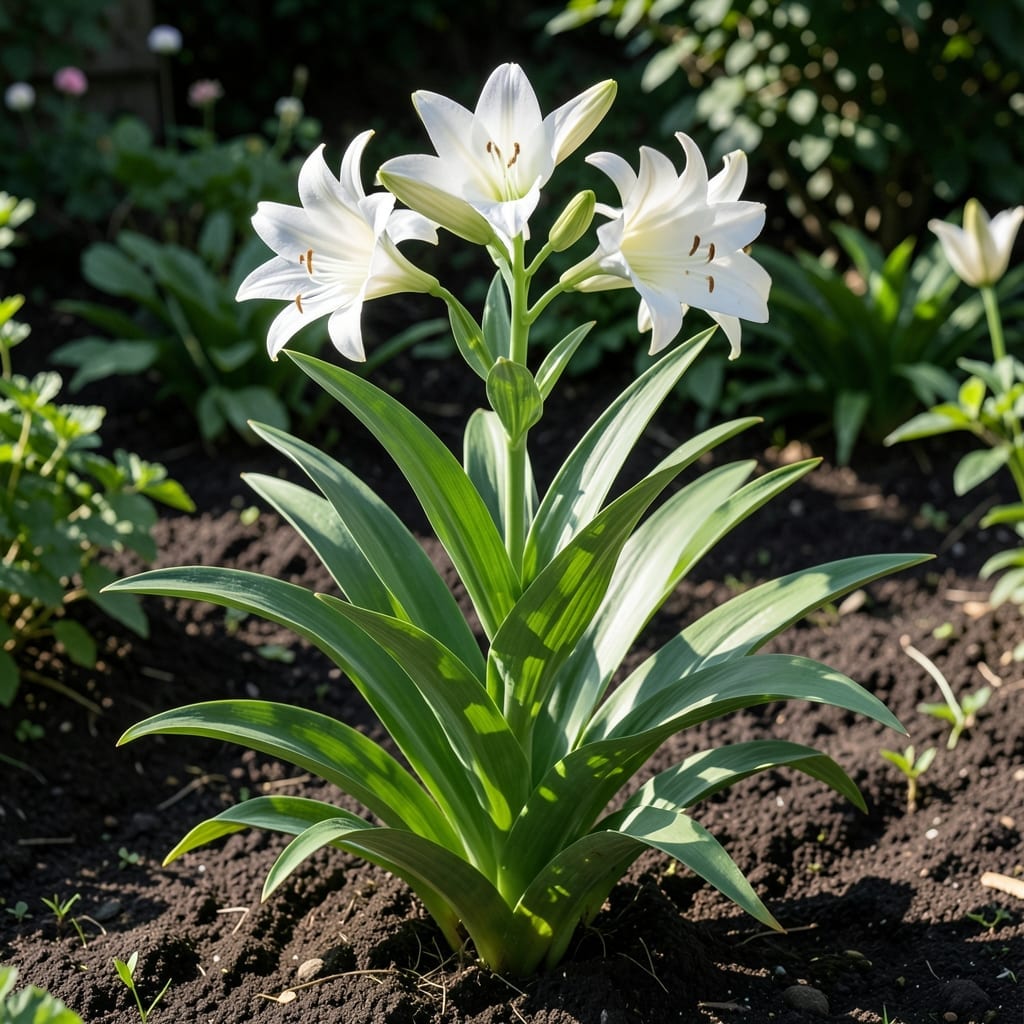
Pure white blooms in your garden are closer than you think. I’ve grown white lilies for years, and the right variety makes all the difference between a struggling plant and a showstopper.
With proper spacing, drainage, and a little vigilance, you’ll get disease-resistant plants that return bigger and brighter each season. The smell alone is worth the effort.
📚 In This Guide
This method ensures robust plants with pristine blooms every season.
Choose a spot with full sun to partial shade—white lilies thrive with at least 6 hours of sunlight daily. I always test the area by watching how the light moves across it throughout the day. Morning sun with afternoon shade works particularly well in warmer climates to prevent petal scorching.
The soil should be well-draining with a slightly acidic to neutral pH (6.0-7.0). Dig a test hole about 12 inches deep and fill it with water. If the water drains within 1-2 hours, the drainage is adequate. If it pools, amend the soil with compost or sand before planting.
Plant bulbs in the fall, about 4-6 weeks before the first frost. This gives them time to establish roots before winter. Dig holes that are 3 times the height of the bulb—typically 6-8 inches deep for standard white lily varieties. Space bulbs 8-12 inches apart to allow for future growth and airflow.
Place each bulb in the hole with the pointed end facing upward. I’ve learned the hard way that planting upside down delays sprouting by weeks. Cover with soil and press down gently to remove air pockets. Water immediately after planting to settle the soil around the bulbs.
Keep the soil consistently moist but not waterlogged during the growing season. Water deeply once a week, providing about 1 inch of water each time. You’ll know it’s time to water when the top 1-2 inches of soil feel dry to the touch. Overwatering can rot the bulbs, so always check the soil first.
Apply a 2-3 inch layer of organic mulch around the plants to retain moisture and suppress weeds. Straw, shredded leaves, or pine needles work well. Keep the mulch a few inches away from the stems to prevent rot. This also protects the bulbs during winter in colder zones.
In early spring, as shoots emerge, apply a balanced 10-10-10 fertilizer around the base of the plants. I use a slow-release granular type to provide steady nutrients. Scratch it lightly into the soil surface and water thoroughly to activate it. Avoid getting fertilizer directly on the foliage, as it can burn the leaves.
White lilies can grow tall, often reaching 3-4 feet, so provide support if needed. Install stakes or a grow-through ring early in the season before the stems get too tall. Tie the stems loosely with soft garden twine as they grow to keep them upright without damaging the plant.
Inspect plants regularly for signs of trouble. Aphids, lily beetles, and slugs are common pests. I remove aphids by spraying them off with a strong jet of water. For lily beetles, handpick them in the morning when they’re sluggish. Use beer traps or diatomaceous earth for slugs.
Prevent fungal diseases like botrytis by ensuring good airflow around the plants. Thin out overcrowded stems and remove any dead or yellowing foliage promptly. If you notice brown spots on leaves, remove them immediately and avoid overhead watering to keep foliage dry.
Small details make the difference between thriving lilies and struggling plants.
Sunlight Strategy: That 6 hours of daily sunlight mentioned in Step 1 is non-negotiable for robust blooms. In hotter climates, I’ve found that morning sun with afternoon shade prevents petal scorching while still meeting the light requirement. Use a sunlight calculator app to track your garden’s exposure if you’re unsure.
The Depth Factor: Planting bulbs at 6-8 inches deep as specified in Step 2 ensures they establish strong roots before winter. I’ve learned that shallow planting leads to weak stems that flop over. Also, spacing bulbs 8-12 inches apart prevents overcrowding, which can invite disease.
Watering Wisdom: The 1 inch of water per week in Step 3 should be deep and infrequent rather than light daily watering. Check the top 1-2 inches of soil—if it’s dry, it’s time to water. Overwatering is a common mistake that rots bulbs, so always err on the side of too little rather than too much.
Pest Prevention: Step 5’s advice about inspecting for pests is critical. Lily beetles are especially destructive, and handpicking them in the morning when they’re sluggish is the most effective method. For slugs, beer traps work wonders, but place them away from the plants to avoid attracting more pests.
Ensure good air circulation, avoid overwatering, and plant in well-draining soil. Remove infected foliage promptly and use fungicides as a preventive measure.
Plant bulbs in early spring or fall, 4-6 weeks before the first frost. This allows roots to establish before extreme temperatures.
Consider Orientpets or Asiatic lilies, which are hardier and less prone to common diseases like botrytis blight.
Yellowing can indicate overwatering, poor drainage, or fungal infections. Check soil moisture and inspect for spots or mold.
Yes! Use a deep container with drainage holes and well-draining potting mix. Ensure they receive at least 6 hours of sunlight daily.