
Beautiful Plants For Your Interior
Beautiful Plants For Your Interior
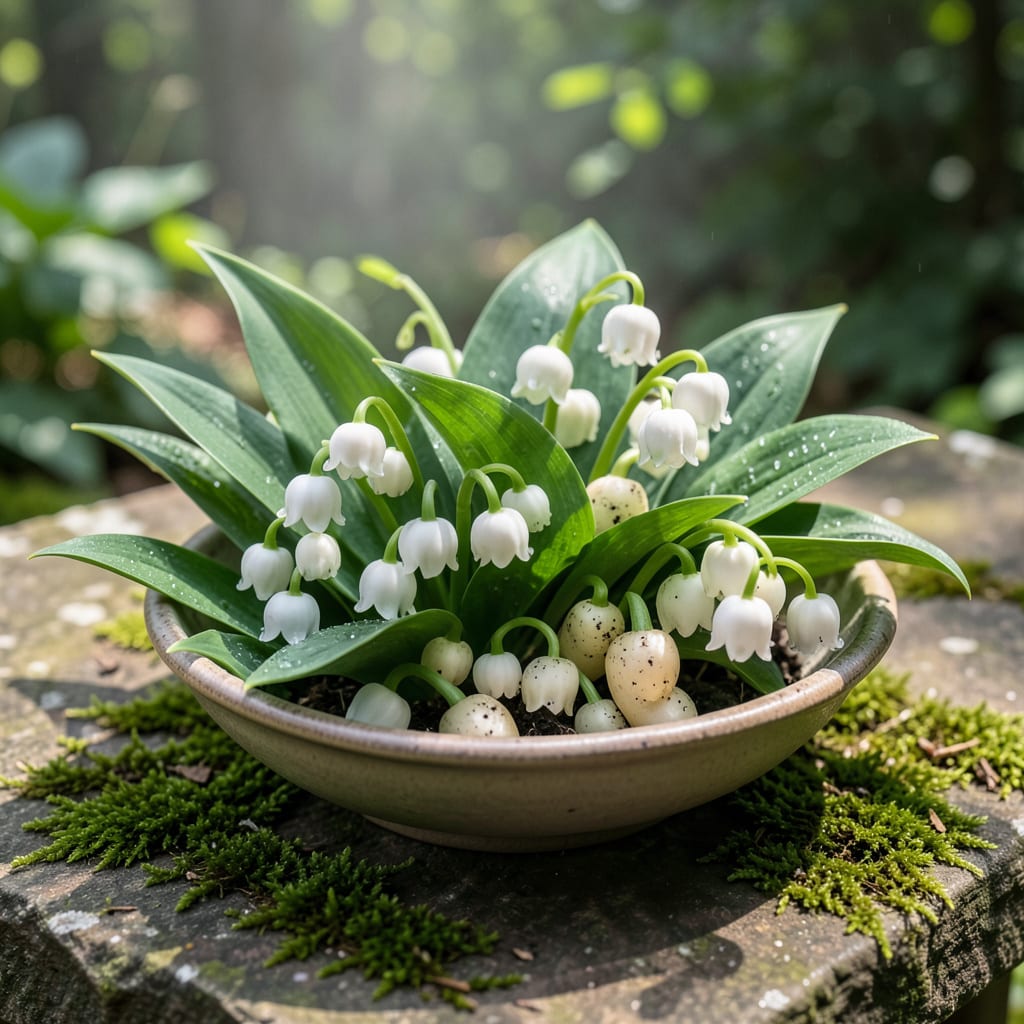
Shade gardens come alive with that sweet, unmistakable fragrance in spring. I planted my first cluster under an old oak, and now it spreads like a living carpet every April.
These bell-shaped blooms thrive where most flowers fail—under trees, along north walls. Give them rich soil and consistent moisture, and they’ll reward you with years of nearly effortless beauty.
📚 In This Guide
This elegant ground cover thrives in shade and rewards patience with its signature fragrance.
Choose a location with partial to full shade, as direct sunlight can scorch the delicate foliage. Lily of the valley prefers moist, well-draining soil rich in organic matter. Test soil pH—it should be slightly acidic to neutral (6.0-7.0).
Amend the area with compost or aged leaf mold to improve fertility and drainage. Remove weeds and debris thoroughly, as this plant spreads aggressively and will compete poorly with established weeds. Work the soil to a depth of 8-10 inches to loosen it for root establishment.
Soak the rhizomes (called “pips”) in lukewarm water for 2-3 hours before planting to rehydrate them. Space pips 4-6 inches apart, placing them 1 inch deep with the buds facing upward. Cover lightly with soil and press gently to eliminate air pockets.
Water immediately after planting to settle the soil around the rhizomes. The key is consistent moisture during establishment—dry soil at this stage can prevent sprouting. Mark the planting area clearly, as new growth may take 2-3 weeks to appear above soil level.
Maintain even moisture during the first growing season, watering when the top 1 inch of soil feels dry. Apply a 2-3 inch layer of organic mulch (like shredded bark) to retain moisture and suppress competing growth. Avoid synthetic fertilizers—this plant thrives on organic matter.
Lily of the valley has few pests but may attract slugs in consistently moist conditions. Monitor for chewed leaves and use organic controls if needed. The first year focuses on root establishment; expect limited flowering as plants direct energy downward.
Once established, this plant spreads rapidly via underground rhizomes. Contain it with edging or by planting in sunken pots if you need to restrict its growth. In early spring, apply a balanced organic fertilizer to support the upcoming bloom cycle.
Flowering typically occurs in mid to late spring. After blooms fade, resist cutting back the foliage—it continues photosynthesizing to fuel next year’s flowers. The plant will go dormant in summer heat; this is normal and requires no intervention beyond maintaining consistent moisture.
Every 3-4 years, thin crowded plantings in early spring or fall to maintain vigor. Dig up clumps and separate the rhizomes, replanting the healthiest pieces. Share extras with fellow gardeners—this plant is often passed down through generations.
For new plantings, water deeply after division and keep the soil moist for 2-3 weeks to help re-establish the roots. Divided plants may take a season to rebound fully, but they’ll reward your patience with more abundant blooms the following year.
Small details in planting and care make all the difference with this delicate ground cover.
Site Preparation Tip: In Step 1, when working the soil to that critical 8-10 inch depth, I’ve found that incorporating compost into the top 6 inches gives roots the best start. This creates a nutrient-rich zone exactly where the young rhizomes will first establish themselves.
The Soaking Secret: For Step 2, don’t rush the 2-3 hour soaking of your pips. I learned this the hard way after planting dry rhizomes— they struggled to establish. The soaking plumps them up, giving them the moisture boost they need to start growing immediately after planting.
Moisture Management: During those first 2-3 weeks after planting (and again after dividing), maintain consistent moisture by checking the top 1 inch of soil daily. Between us, I use my finger to test—if it feels dry at that depth, it’s time to water. The rhizomes are particularly vulnerable to drying out during establishment.
Spread Control Strategy: Once established, this plant can become aggressive. In Step 4, I recommend installing root barriers or planting in sunken containers at the same time you plant your pips. It’s much easier to contain the spread from the beginning than to try to rein it in later.
Yes! White lily of the valley is low-maintenance and thrives in partial to full shade with moist, well-draining soil. Plant the pips (small bulb-like roots) in early spring or fall for best results.
Typically, it blooms in mid to late spring, producing its signature fragrant, bell-shaped white flowers. The exact timing depends on your climate and planting zone.
Yes! Try sweet woodruff or Solomon’s seal for similar shade-loving, fragrant ground covers. These spread more politely and won’t overtake your garden.
Lack of blooms can result from too much sun, dry soil, or overcrowding. Ensure it’s planted in shade, kept moist, and divided every 3-4 years to rejuvenate growth.
Yes, all parts of the plant are highly toxic to cats and dogs if ingested. Keep it out of reach or opt for pet-safe alternatives like astilbe.
