
Beautiful Plants For Your Interior
Beautiful Plants For Your Interior
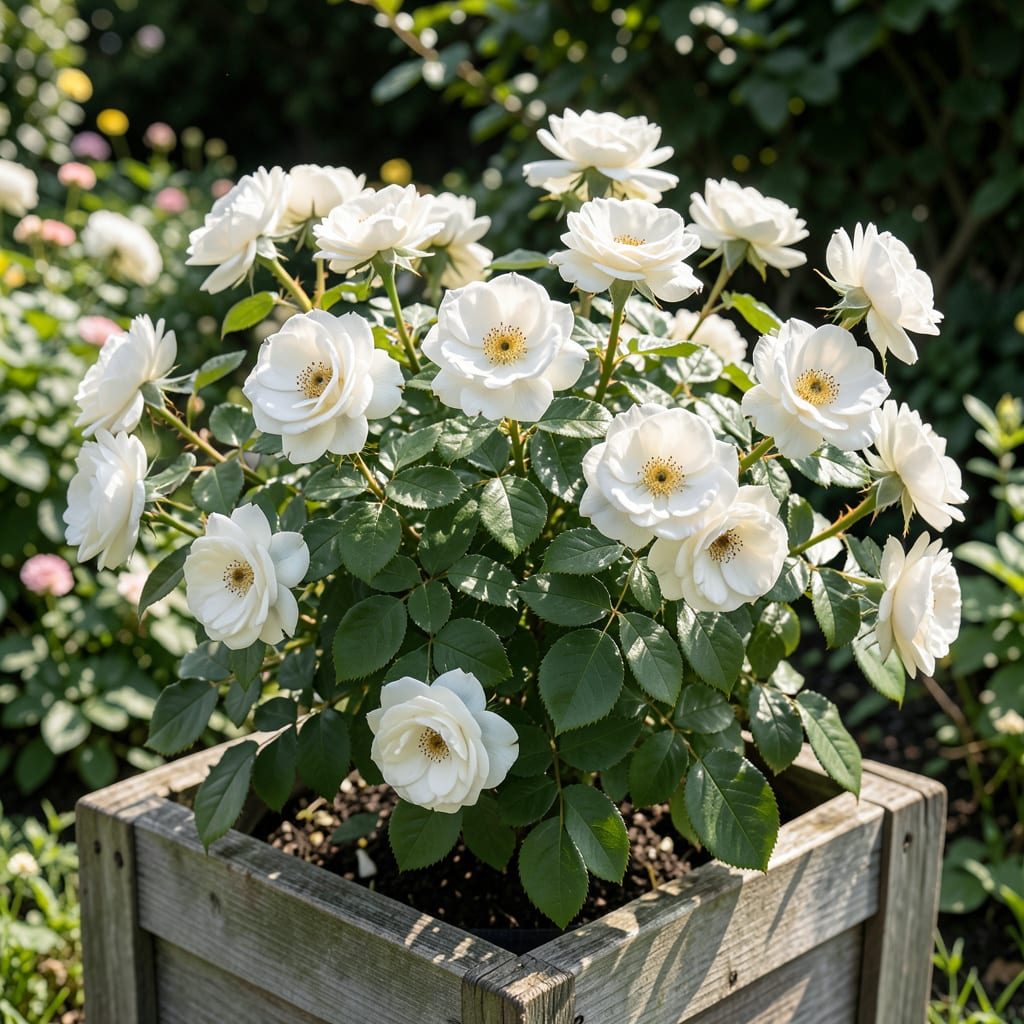
White Lies rose bush delivers show-stopping blooms that transform any garden space. I planted mine last spring, and the pure white flowers with their subtle fragrance became the centerpiece of my backyard within weeks.
This variety thrives in full sun with well-draining soil, producing disease-resistant flowers that return year after year. The contrast of dark green foliage against the white blooms is stunning, and it requires minimal maintenance once established.
📚 In This Guide
This elegant hybrid tea rose rewards you with pure white blooms and a striking presence in any landscape.
Choose a site that receives at least 6-8 hours of direct sunlight daily. White Lies roses thrive in full sun but can tolerate light afternoon shade in hotter climates. The soil should be well-draining with a pH between 6.0-6.5—test it with a kit if you’re unsure.
Avoid low-lying areas where cold air or water pools, as this encourages root rot and fungal diseases. I like to plant near a south-facing fence or wall, which provides warmth and protection from harsh winds while still allowing air circulation.
Dig a hole that is twice as wide and just as deep as the root ball. This gives the roots room to spread without settling too deeply. Mix the removed soil with 2-3 inches of organic compost to improve fertility and drainage.
If your soil is heavy clay, add 1 part sand to 2 parts soil to break it up. Set the rose in the hole so the graft union (the swollen area where the canes meet the roots) sits 1-2 inches below ground level in cold climates or at ground level in milder zones.
Backfill the hole with the amended soil, firming it gently around the base to eliminate air pockets. Water deeply with 1-2 gallons of water to settle the soil and hydrate the roots. This initial soak is critical—it ensures the soil makes full contact with the root system.
Create a small water ring or berm around the base to help direct moisture to the roots during future waterings. I always mulch immediately after planting with 2-3 inches of organic mulch, keeping it 2 inches away from the stem to prevent rot and deter pests.
Water deeply 2-3 times per week for the first month, tapering to 1-2 times weekly once established. Always water at the base in the morning to allow foliage to dry before evening, reducing disease risk. You’ll know it’s time to water when the top inch of soil feels dry.
Begin fertilizing 4-6 weeks after planting with a balanced rose fertilizer or 10-10-10 formula. Feed every 4-6 weeks through the growing season, stopping 6 weeks before the first frost to avoid encouraging new growth that won’t harden off in time.
Prune in early spring just as new growth begins, removing one-third of the oldest canes at ground level. Cut back remaining canes by one-third to one-half, making clean cuts at a 45-degree angle just above an outward-facing bud. This opens the center for airflow and light penetration.
Deadhead spent blooms regularly by cutting just above a 5-leaflet leaf to encourage continuous flowering. Watch for black spot or powdery mildew—treat immediately with neem oil or a fungicide if you spot dark spots on leaves or a white powdery coating.
These practical insights will help you avoid common pitfalls when growing this elegant plant.
Sunlight Strategy: The 6-8 hours of daily direct sunlight mentioned in Step 1 is non-negotiable for optimal blooms. I learned this the hard way when my first planting in partial shade produced sparse, weak flowers. A south-facing location works wonders, and that afternoon shade tolerance only applies in scorching climates.
Soil Preparation Tip: When following Step 2’s instruction to dig a hole twice as wide as the root ball, resist the urge to go deeper. The graft union must sit at the correct depth—1-2 inches below ground level in cold areas—to protect it from freeze damage. This single detail can make or break your rose’s survival through winter.
Watering Wisdom: That initial 1-2 gallons of water in Step 3 isn’t excessive—it’s critical for eliminating air pockets. I always create that water ring immediately after planting, as it helps direct moisture exactly where the new roots need it most during establishment.
Pruning Precision: In Step 5, when removing one-third of the oldest canes, don’t hesitate to be bold. Those 45-degree cuts just above an outward-facing bud aren’t just aesthetic—they prevent water from pooling on the cuts and invite disease. This is where most gardeners go wrong, creating perfect conditions for fungal issues.
Water deeply 1-2 times per week, ensuring the soil stays moist but not soggy. Adjust based on rainfall and soil drainage.
Plant in early spring or fall for optimal root establishment. Avoid extreme heat or frost.
Consider Iceberg or Julia Child roses for similar white blooms and disease resistance.
Check for insufficient sunlight, improper pruning, or nutrient deficiencies. Fertilize and ensure 6+ hours of sun daily.
Yes! They’re bred for resistance to black spot and mildew, but good air circulation helps.
