
Beautiful Plants For Your Interior
Beautiful Plants For Your Interior
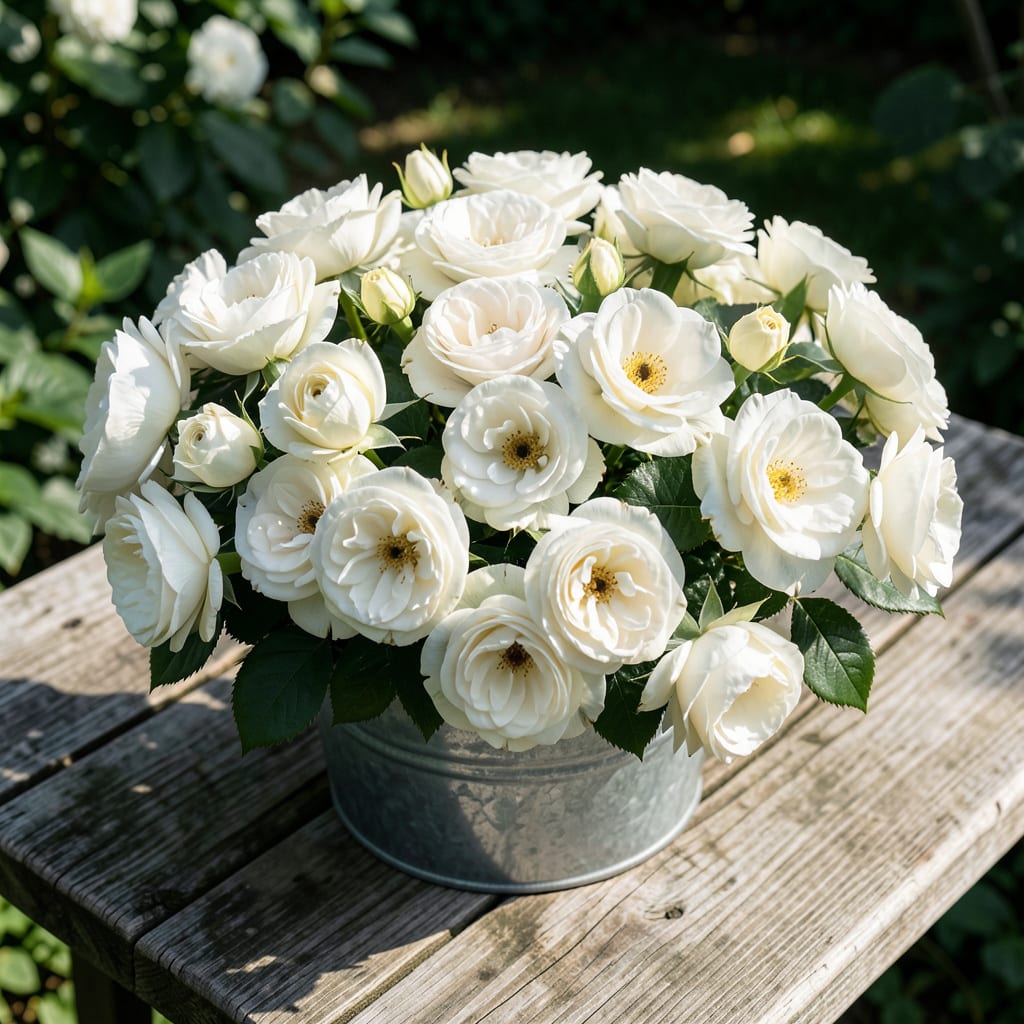
I planted my first white Knock Out roses three years ago, and they’ve been blooming nonstop since May through frost with almost zero effort from me.
These shrubs laugh at heat, shrug off poor soil, and ask for nothing but a sunny spot and occasional water. You’ll get clean white blooms that brighten the yard all season, and the best part? No fancy pruning or deadheading required.
📚 In This Guide
Here’s my go-to method for establishing these resilient, repeat-blooming shrubs with minimal fuss.
Select a spot that receives full sun (at least 6-8 hours of direct sunlight daily). White Knock Out roses perform best in well-draining soil, so avoid low-lying areas where water tends to pool after rain. I’ve found that morning sun with some afternoon shade works in hotter climates, but these plants truly thrive in all-day sun.
Test your soil drainage by digging a 12-inch deep hole, filling it with water, and watching how quickly it drains. If water remains after 2 hours, amend the area with compost or consider a raised bed. The hole should drain completely within 1-2 hours for optimal growing conditions.
Dig a hole that’s twice as wide as the root ball but no deeper than the container your rose came in. This gives the roots room to spread without sinking the plant too low. I always loosen the soil at the sides of the hole to encourage roots to grow outward rather than circling in their original shape.
Mix the excavated soil with one-third compost or well-rotted manure to improve fertility and drainage. If your soil is particularly heavy clay, add some coarse sand to the mix. The amended soil should feel loose and crumbly, not dense or sticky when moist.
Gently remove the rose from its container and loosen any circling roots with your fingers. Place the plant in the hole so the top of the root ball sits 1-2 inches above the surrounding soil level. This slight mound prevents water from pooling around the stem, which can lead to rot.
Backfill with your amended soil, pressing lightly as you go to eliminate air pockets. Water thoroughly after planting until the soil is completely settled. You’ll know it’s properly watered when the surface looks evenly moist but not waterlogged. The plant may wobble slightly at first—that’s normal until roots establish.
Water deeply 2-3 times per week for the first 3-4 weeks after planting. Each watering should penetrate 12-18 inches deep to encourage strong root growth. I check by pushing my finger into the soil—if it feels dry at 2-3 inches down, it’s time to water again.
After establishment, White Knock Out roses are quite drought-tolerant. Reduce watering to once a week unless you’re experiencing extreme heat. Always water at the base of the plant rather than overhead to prevent fungal diseases. A 2-3 inch layer of mulch around the base helps retain moisture and suppress weeds.
These roses are self-cleaning, meaning they don’t require deadheading to continue blooming. However, I do give mine a light trim after each major flush of blooms to maintain shape and encourage new growth. Use clean, sharp pruners to remove about one-third of the stem length, cutting just above an outward-facing bud.
Fertilize lightly in early spring and again after the first bloom cycle with a balanced rose fertilizer. Watch for yellowing leaves, which often indicate either overwatering or nutrient deficiency. With proper care, you’ll see continuous white blooms from late spring through the first hard frost.
Took me a few tries to get these right, but these adjustments make all the difference.
Sunlight Secrets: The 6-8 hours of daily sun mentioned in Step 1 isn’t just a suggestion—it’s the key to those prolific blooms. If your space only gets morning sun, place them where they’ll catch those rays early. In hotter climates, some afternoon shade helps prevent stress, but don’t skip the full sun requirement entirely.
Drainage Check: That 12-inch deep hole test in Step 1 is your best insurance against root rot. If water sits after 2 hours, definitely amend with compost or go for a raised bed. The 1-2 hours drainage window is ideal for preventing both drought stress and waterlogging.
Planting Depth: In Step 3, that 1-2 inches above soil level for the root ball is non-negotiable. I learned this the hard way after losing a plant to stem rot—this slight elevation prevents water from pooling at the base where it can do the most damage.
Watering Wisdom: For the first 3-4 weeks after planting, deep watering 2-3 times per week establishes strong roots. The 12-18 inches penetration ensures roots grow downward rather than outward, creating a more drought-resistant plant long-term.
Water deeply 1-2 times per week, depending on rainfall and soil drainage. These drought-tolerant roses prefer moist but well-drained soil—avoid soggy conditions to prevent root rot.
Spring or early fall is ideal, giving roots time to establish before extreme heat or frost. Plant in full sun (6+ hours daily) for the best blooms and disease resistance.
Yes! Feed with a balanced rose fertilizer every 4-6 weeks during growing season. Slow-release options work well—just stop fertilizing 6-8 weeks before the first frost.
Check for insufficient sunlight, overpruning, or nutrient deficiencies. These roses bloom profusely, so if flowers are sparse, adjust care or test soil pH (aim for 6.0–6.5).
Try Iceberg or Blanc Double de Coubert for similar white blooms. For lower maintenance, Drift roses offer compact growth and disease resistance.
