
Beautiful Plants For Your Interior
Beautiful Plants For Your Interior
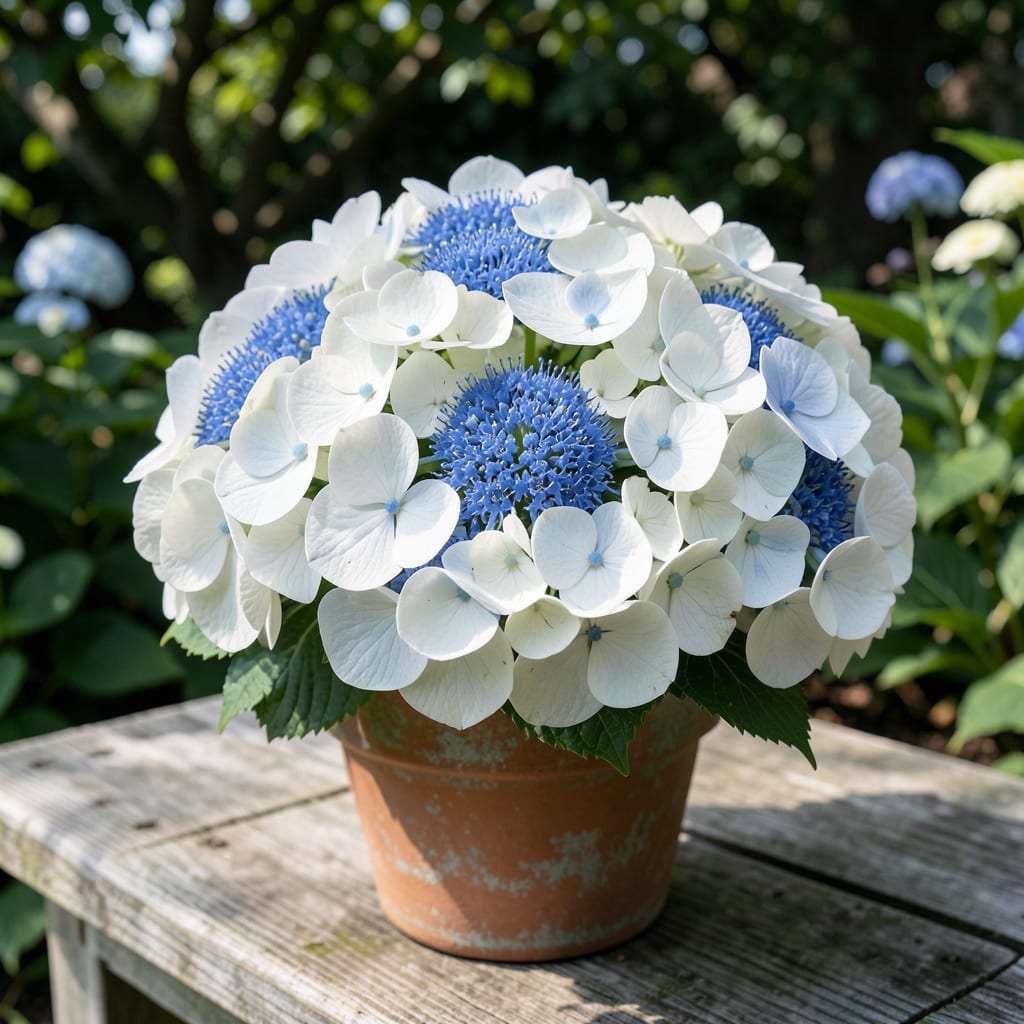
That first bloom stopped me in my tracks. Pure white petals cradling a vibrant blue heart create a contrast that demands attention in any garden space.
I use them as focal points in partial shade borders, pairing with deep green foliage or purple flowers to make the color pop even more. Even a single plant transforms a corner into something special.
📚 In This Guide
This method produces vibrant contrast blooms that will transform your garden into a sophisticated display.
Select a spot that receives partial shade to full sun, with protection from harsh afternoon rays. Hydrangeas thrive in locations with morning sun and afternoon shade, especially in warmer climates. The blue center variety particularly enjoys consistent, dappled light.
Ensure the soil is well-draining and rich in organic matter. Test drainage by digging a 1-foot-deep hole and filling it with water—if it drains within 1 hour, you’re good to go. Poor drainage leads to root rot, which is a silent killer for these plants.
Check soil pH, as it directly affects flower color. For the blue center to remain vibrant, aim for a pH between 5.0 and 5.5. A simple soil test kit will give you an accurate reading.
Dig a hole that is twice as wide as the root ball and just as deep. This gives the roots room to spread out and establish quickly. If your soil is heavy clay, mix in some compost or peat moss to improve texture and fertility.
Loosen the roots of the hydrangea gently if they are pot-bound. This encourages them to grow outward into the surrounding soil rather than continuing to circle. Be careful not to damage the delicate root system.
Place the plant in the hole so the top of the root ball sits slightly above the soil level. This prevents water from pooling around the base of the stem, which can cause rot.
Backfill the hole with the amended soil, pressing down lightly to eliminate air pockets. Air gaps around the roots can dry them out and hinder establishment. Water deeply immediately after planting to settle the soil and hydrate the roots.
Apply a 2-3 inch layer of organic mulch around the base of the plant, keeping it a few inches away from the stem. Mulch helps retain moisture, regulate soil temperature, and suppress weeds that compete for nutrients.
Water the plant 2-3 times per week for the first month, then reduce to once a week once established. Hydrangeas are thirsty plants, especially during the first growing season.
Fertilize lightly in early spring with a balanced, slow-release fertilizer. Avoid high-nitrogen formulas, as they promote leaf growth at the expense of blooms. For the blue center to stay vivid, use a fertilizer specifically formulated for acid-loving plants.
Prune in late winter or early spring, removing dead or weak stems at the base. This variety blooms on old wood, so avoid heavy pruning or you’ll cut off potential flowers. Always use clean, sharp pruners to prevent disease.
Monitor soil moisture regularly. Hydrangeas wilt dramatically when thirsty but bounce back quickly once watered. If leaves droop in the heat of the day, give the plant a deep drink—it’s a clear sign it needs attention.
These practical insights will help you avoid common pitfalls when planting.
Drainage Test: Don’t skip the 1-foot-deep hole test from Step 1. If water doesn’t drain within the specified 1 hour, amend your soil with compost or create a raised bed. I learned this the hard way after losing two hydrangeas to root rot in poorly draining soil.
pH Precision: For that stunning blue center, maintaining a pH between 5.0 and 5.5 is non-negotiable. Test your soil before planting and adjust with sulfur if needed. The color difference between pH 5.5 and 6.0 can be dramatic.
Root Care: When loosening pot-bound roots in Step 2, be gentle but thorough. I use my fingers to carefully separate the roots rather than pulling them apart. This encourages outward growth without damaging the delicate system.
Watering Wisdom: Stick to the 2-3 times per week schedule for the first month as specified. Hydrangeas are thirsty, but overwatering can be just as harmful as underwatering. After establishment, the once-a-week rule works perfectly.
Plant them in well-draining, acidic soil (pH 5.0–5.5) with partial shade. Use aluminum sulfate to enhance the blue center. Water consistently and fertilize lightly in spring for vibrant blooms.
The blue hue fades if the soil pH rises above 6.0. Test your soil and add aluminum sulfate or sulfur to lower pH. Avoid over-fertilizing, as phosphorus can reduce aluminum uptake.
They typically bloom from late spring to early summer, with some varieties reblooming into fall. Prune right after the first flush of flowers to encourage a second round.
Yes! Adjust the soil pH: acidic conditions (pH 5.0–5.5) deepen the blue, while alkaline soil (pH 6.5+) shifts it toward purple or pink. Use soil amendments for gradual changes.
Pair them with hostas, ferns, or astilbes for a lush, shaded garden. For contrast, try purple coneflowers or ornamental grasses. Ensure companions share similar light and moisture needs.
