
Beautiful Plants For Your Interior
Beautiful Plants For Your Interior
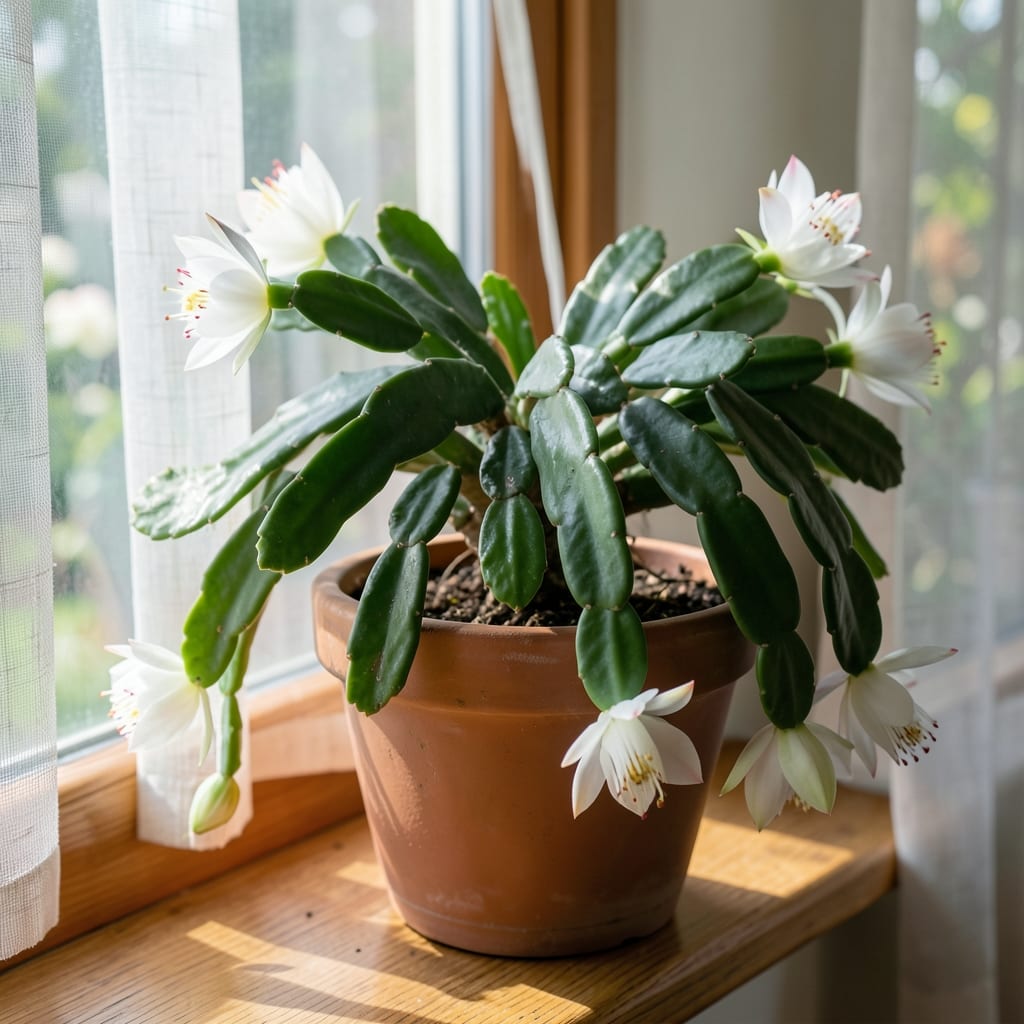
This plant brought me back from the dead-plant graveyard. 🌱 I’d killed three before learning the trick: bright indirect light, no soggy soil, and a strict watering schedule that mimics its natural dry seasons.
Now mine blooms twice a year with pure white flowers that last for weeks. The secret is patience—it takes 6-8 weeks of cool nights and darkness to trigger those stunning holiday blooms.
📚 In This Guide
Here’s my proven method to keep these stunning plants flowering well beyond the holiday season.
Place your cactus in a spot with bright, indirect light—an east-facing window works perfectly. Direct midday sun can scorch the leaves, especially during summer. I’ve found that 12-14 hours of light daily encourages consistent blooming, but avoid artificial light sources at night as this can disrupt the plant’s natural cycle.
You’ll notice the segments (called phyllocades) darken slightly when light levels are ideal. If they turn pale or yellowish, your plant needs more light. Rotate the pot quarter turn weekly to ensure even growth and prevent the plant from leaning toward the light source.
Water when the top 1-2 inches of soil feel dry to the touch—this usually means every 7-10 days in average home conditions. Use room-temperature water and soak until it runs through the drainage holes, then empty the saucer after 15 minutes to prevent root rot.
Here’s the thing—these plants are succulents, so they store water in their stems. Overwatering is the most common killer. I use the “finger test” religiously: if the soil sticks to your skin, wait another day. During fall and winter, reduce watering to every 2-3 weeks as growth slows.
Maintain daytime temperatures between 65-75°F and allow a 10°F drop at night. This temperature fluctuation mimics their natural habitat and triggers bud formation. I’ve had great success placing them in a cooler room at night during the 6 weeks before desired blooming.
For humidity, aim for 40-50%—typical household levels work fine. If your air is very dry (especially in winter), place the pot on a tray of pebbles with water, ensuring the pot itself isn’t sitting in water. Brown leaf tips often signal low humidity, while yellowing can indicate too much moisture in the air.
To trigger flowers, give your cactus 6 weeks of cooler temperatures (50-60°F) and 12-14 hours of darkness each night starting in early fall. This mimics their native Brazilian conditions. I move mine to a cool, dark closet each evening and return it to bright light in the morning.
Once buds appear (they look like tiny knobs at the segment joints), increase light and maintain consistent moisture. Real talk: even slight changes in conditions can cause bud drop. Avoid moving the plant or changing its care routine once buds form—patience is key as it takes 8-12 weeks from bud appearance to full bloom.
After flowering, prune back 1-2 segments from each stem to encourage branching. Use clean, sharp scissors and make cuts at the joint between segments. I always prune in early spring to give the plant time to grow new stems before the next blooming cycle.
Fertilize with a balanced houseplant fertilizer (10-10-10) diluted to half strength every 2-4 weeks during spring and summer. Stop fertilizing 6 weeks before you want to encourage blooming. The new growth you see after pruning will be where next year’s flowers appear, so this step directly impacts your future holiday display.
These plant care insights will help you achieve consistent, beautiful blooms every year.
The Light Factor: That quarter-turn weekly rotation in Step 1 isn’t just for aesthetics—it prevents etoliation (that lanky, weak growth from reaching for light). I learned this the hard way after my first cactus grew crooked and refused to bloom. Stick to east or north-facing windows, and if you notice pale leaves, move it back immediately.
Watering Wisdom: The 15-minute saucer emptying in Step 2 is non-negotiable. Soggy roots are the #1 killer of holiday cacti, and that standing water is the culprit. I set a timer to remind myself—it’s easy to forget this critical step. Also, that finger test? Push deep enough to reach the 1-2 inch mark specified.
Darkness Discipline: In Step 3, those 12-14 hours of complete darkness daily for 6-8 weeks are what trigger bud formation. Confession: I ruined my first attempt by accidentally leaving a closet light on. Now I use a blackout cloth as backup. Even a phone screen’s glow can disrupt the process at 50-60°F.
Bud Care: When you see those tiny swellings forming after 4-6 weeks, resist the urge to move your plant. The bud drop mentioned in Step 4 is real—I lost half my buds the first time I rotated the pot. That pebble tray for humidity? Fill it with water just below the pot’s base to prevent root rot while maintaining moisture.
Lack of blooms often means insufficient light or incorrect temperatures. Ensure 12-14 hours of darkness daily for 6-8 weeks before the holiday season, and keep temps between 50-60°F at night.
Water when the top inch of soil feels dry—usually every 1-2 weeks. Overwatering can cause root rot, so ensure good drainage and avoid soggy soil.
Yes! Take cuttings of 2-3 segments, let them dry for a day, then plant in well-draining soil. Keep the soil lightly moist until roots form in 3-4 weeks.
Leaves and bloom timing vary: Thanksgiving cacti have pointed edges, Christmas cacti have rounded edges, and Easter cacti bloom in spring with bristle-like edges.
Underwatering or root stress is likely. Check soil moisture—if dry, water thoroughly. If soggy, repot in fresh, dry soil and reduce watering.