
Beautiful Plants For Your Interior
Beautiful Plants For Your Interior
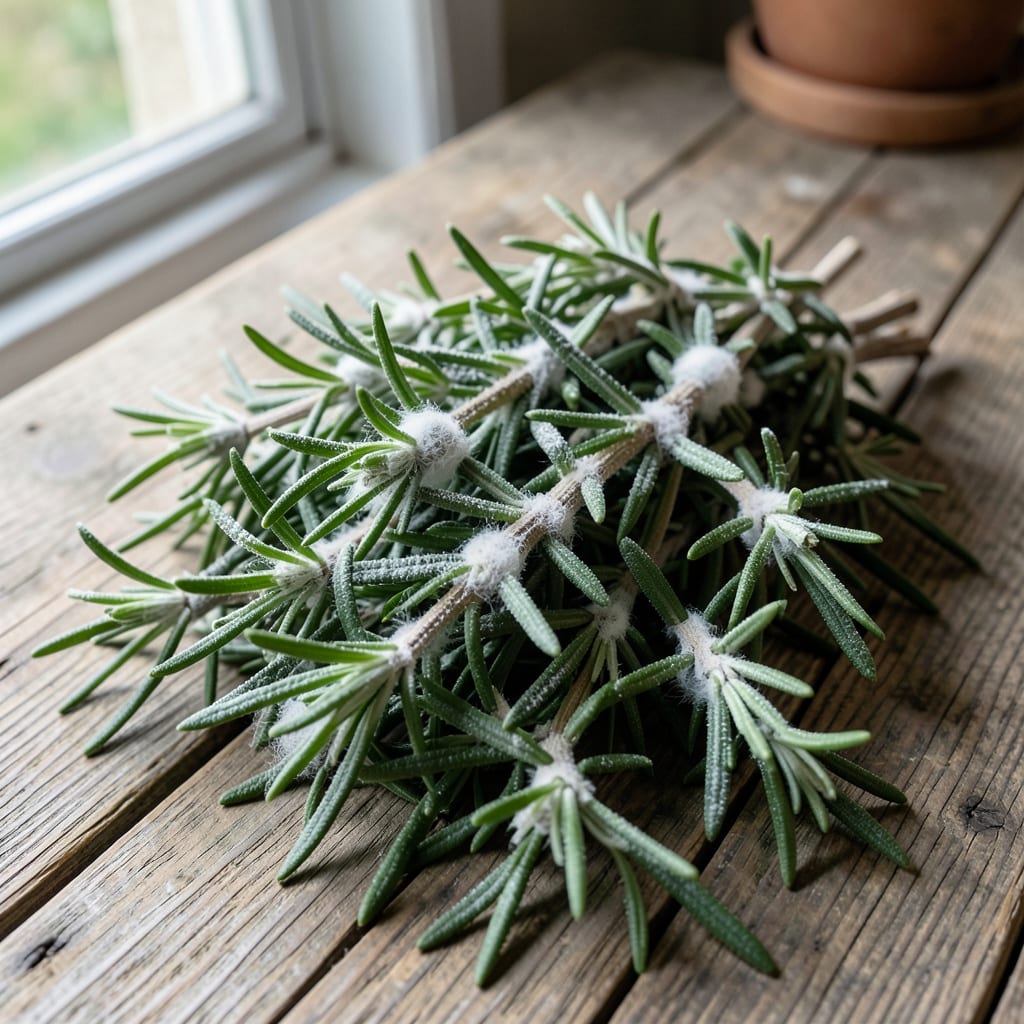
That white fuzz on your rosemary isn’t just unsightly—it’s a red flag. I’ve seen this issue wreck healthy plants in weeks if ignored, but the good news is it’s fixable with the right approach.
Powdery mildew or mealybugs are the usual culprits, and both thrive in damp, still air. The solution starts with better airflow and a simple natural spray that clears it up without chemicals. Your plant can bounce back fast.
📚 In This Guide
Here’s the method I use to diagnose and treat this issue without harsh chemicals.
First, examine the white growth closely. Powdery mildew appears as a fine, dust-like coating on leaves, while downy mildew shows up as fuzzy patches on the undersides. I always check both leaf surfaces with a magnifying glass to confirm what I’m dealing with.
If the fuzz looks cottony and appears at the stem joints, it might be mealybugs instead. This distinction matters because mealybugs require different treatment than fungal infections. Note any yellowing or leaf drop—these are signs the problem has progressed.
Move your rosemary away from other plants to prevent the issue from spreading. I place mine on a separate windowsill or even in another room if possible. This is especially important for powdery mildew, which can spread quickly through air currents.
Wash your hands after handling the plant and avoid touching other plants until you’ve cleaned up. The spores can hitch a ride on your fingers or tools. I keep a dedicated pair of pruners for sick plants to avoid cross-contamination.
Most white fuzz problems thrive in still, humid air. Move your plant to a spot with better airflow, like near an open window or a ceiling fan on low. I’ve found that even a small USB fan directed at the plant for 2-3 hours daily makes a big difference.
Stop misting the leaves and water only at the soil level. Let the top 1-2 inches of soil dry out between waterings. Rosemary prefers drier conditions, so you’re actually helping it by cutting back on moisture.
For powdery mildew, mix 1 teaspoon baking soda with 1 quart water and add a drop of dish soap. Spray this on affected leaves every 5-7 days until the fuzz disappears. The baking soda changes the pH on the leaf surface, making it inhospitable for the fungus.
For downy mildew or mealybugs, a 1:10 ratio of rubbing alcohol to water works well. Dab it on the fuzzy patches with a cotton swab. I test this on a small area first to ensure it won’t damage the leaves, then treat the rest if there’s no reaction.
Using clean pruners, remove any heavily infested leaves or stems. I cut back to just above a healthy leaf node to encourage new growth. Never compost diseased plant material—throw it in the trash to prevent reinfection.
Wipe down the remaining leaves with a damp cloth to remove any lingering spores. Sterilize your pruners with rubbing alcohol after use. This step is crucial because even a few missed spores can restart the problem.
Here’s what I’ve learned from treating white fuzz on rosemary—these details make all the difference.
Diagnosis First: Confession: I skipped proper identification for years and wasted time on the wrong treatments. In Step 1, use that magnifying glass to check both leaf surfaces—the difference between powdery mildew’s dusty coating and downy mildew’s fuzzy undersides is subtle but critical. Mealybugs at stem joints look completely different, so don’t assume it’s fungal.
Isolation Protocol: Step 2 isn’t just a suggestion—it’s your first line of defense. I learned the hard way that even a few minutes of hesitation can let powdery mildew spread to nearby plants via air currents. Keep those dedicated pruners handy; cross-contamination is easier than you think.
Environment Control: The 2-3 hours daily with a USB fan in Step 3 works because white fuzz thrives in still air. Stop misting immediately—rosemary hates soggy leaves anyway. Let that top 1-2 inches of soil dry out completely; the plant will thank you by recovering faster.
Treatment Precision: For the baking soda spray in Step 4, use exactly 1 teaspoon per quart of water—more can burn leaves, less won’t work. When using the rubbing alcohol solution, always test on a small area first; some rosemary varieties are more sensitive than others.
White fuzz on rosemary is usually powdery mildew, a fungal infection caused by poor air circulation or high humidity. It appears as a powdery, white coating on leaves and stems.
While not toxic, it’s best to avoid consuming rosemary with powdery mildew. Wash affected leaves thoroughly, but discard heavily infected parts to prevent ingestion of fungi.
Try a DIY spray of 1 part water to 1 part milk or a baking soda solution (1 tsp baking soda, 1 quart water, a few drops of soap). Apply weekly until the fuzz disappears.
Yes! Improve airflow around the plant, avoid overhead watering, and ensure it gets plenty of sunlight. Space plants apart to reduce humidity buildup.
Not immediately. If the infection is mild, treat it and monitor. Remove only severely affected plants to prevent spreading to healthy ones.
