
Beautiful Plants For Your Interior
Beautiful Plants For Your Interior
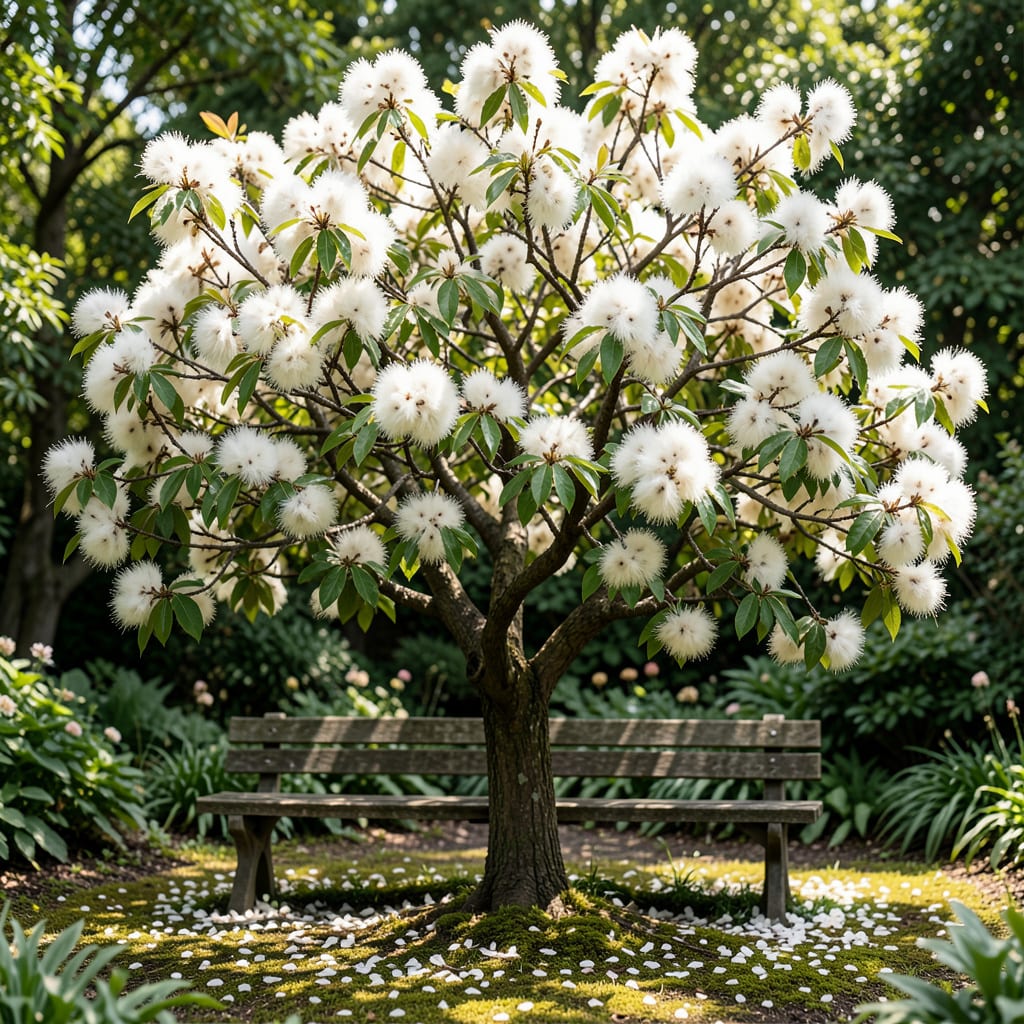
The first time I saw a white floss silk tree in bloom, I stopped mid-stride. Snowball-sized white flowers with golden centers cover its trunk and branches like nature’s confetti.
It’s not just the stunning display—this tree thrives in heat, needs minimal care, and grows 20-30 feet tall with a sculptural, bottle-shaped trunk. Perfect for adding drama to any landscape.
📚 In This Guide
This tropical beauty thrives with the right care. Start here for dramatic blooms.
Select a location with full sun to partial shade, as this tree adapts well to both. Ensure the soil is well-draining—soggy roots will kill it. I always test drainage by digging a 12-inch hole and filling it with water. If it’s gone within 3-4 hours, you’re good.
White floss silk trees grow 20-30 feet tall with a 15-20 foot spread, so give it space. Avoid planting near sidewalks or foundations, as the roots can be invasive. A spot with shelter from strong winds helps protect its showy blooms.
Dig a hole twice as wide and just as deep as the root ball. Loosen the roots gently if they’re circling the container—this encourages outward growth. Place the tree in the hole, ensuring the top of the root ball sits 1-2 inches above ground level to prevent settling.
Backfill with native soil, tampering lightly to remove air pockets. Water deeply after planting to settle the soil. I always add a 2-3 inch layer of mulch around the base, keeping it 6 inches away from the trunk to prevent rot. This retains moisture without suffocating the roots.
Water your tree 2-3 times weekly for the first 3-4 months to establish roots. After that, reduce to once a week, unless you’re in a drought. The soil should feel slightly moist but not sodden when you check 2 inches down.
Fertilize in early spring with a balanced 10-10-10 fertilizer, following package instructions. Avoid high-nitrogen formulas, as they promote leafy growth over blooms. I stop fertilizing by late summer to let the tree prepare for dormancy.
Prune in late winter or early spring before new growth starts. Remove dead, diseased, or crossing branches first. Then, shape the tree by cutting back errant growth to maintain its natural form. I use clean, sharp pruners and make cuts at a 45-degree angle just above a bud.
Thin out crowded areas to improve air circulation, which reduces disease risk. Never remove more than 25% of the canopy in a single year—this tree blooms on old wood, so aggressive pruning sacrifices flowers.
Watch for aphids and scale insects, which love the tree’s sap. A strong blast of water often dislodges them, but for stubborn infestations, I use horticultural oil or neem oil as directed. Apply in the early morning or late evening to avoid burning leaves.
Yellowing leaves may signal overwatering or poor drainage. If you see this, check the soil moisture and adjust your watering schedule. White floss silk trees are drought-tolerant once established, so it’s better to underwater than overdo it.
Small details make a big difference when establishing this striking tree in your landscape.
Site Selection Insight: That 20-30 foot height and 15-20 foot spread means you need to think long-term. I learned the hard way that planting too close to a driveway led to cracked pavement within five years. Always measure the mature size against your space before digging.
Drainage Test Refinement: When testing drainage with that 12-inch hole, use a timer for the 3-4 hours. If water disappears in under 2 hours, your soil may be too sandy and dry out quickly. If it takes longer than 5 hours, consider amending with compost to improve drainage.
Planting Depth Critical: The 1-2 inches above ground level for the root ball isn’t just a suggestion. I’ve seen trees planted level with the soil that settled too deep, leading to trunk rot. After planting, the root flare (where roots meet trunk) should be visible above soil.
Watering Wisdom: During those first 3-4 months of 2-3 times weekly watering, check that 2-inch soil depth with your finger. If it feels dry at that depth, it’s time to water. The “slightly moist but not sodden” rule is your best guide to prevent both underwatering and root rot.
This tree grows at a moderate to fast rate, typically adding 1-2 feet per year under ideal conditions. With proper care, it can reach 20-30 feet tall in about a decade.
Expect stunning white blooms in late summer to early fall, usually August through October. The flowers resemble snowballs and attract pollinators like bees and butterflies.
Consider crape myrtle for similar summer blooms or magnolia trees for large, fragrant flowers. Both thrive in comparable climates and offer seasonal drama.
Lack of blooms may result from insufficient sunlight, improper pruning, or young age. Ensure it gets full sun (6+ hours) and avoid heavy pruning in spring.
Yes! Once established, it’s quite drought-tolerant. However, water deeply during prolonged dry spells, especially in its first 1-2 years to encourage strong root growth.
