
Beautiful Plants For Your Interior
Beautiful Plants For Your Interior
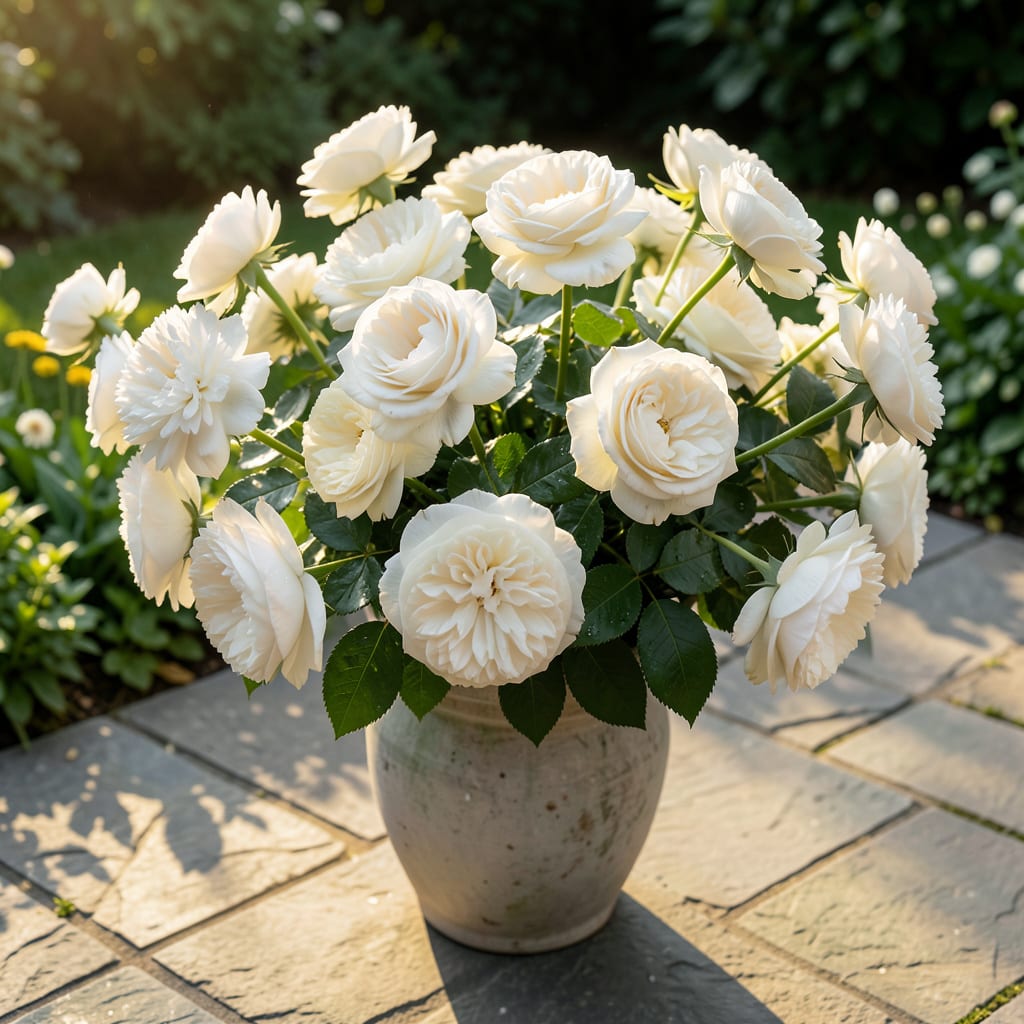
White Double Knockout roses changed my approach to rose gardening forever. Their disease-resistant nature means no more morning panic over black spots or mildew ruining the show.
These plants deliver effortless beauty with continuous blooms from spring until frost. They thrive in most soil types, require minimal pruning, and laugh at the challenges that kill other roses. Perfect for busy gardeners who want stunning results without the fuss.
📚 In This Guide
This disease-resistant variety thrives with minimal effort, rewarding you with continuous blooms.
Choose a spot with full sun (at least 6-8 hours of direct sunlight daily). White Double Knockout roses tolerate partial shade but produce fewer blooms. The location should have well-draining soil to prevent root rot, which these plants particularly dislike.
Test drainage by digging a 12-inch deep hole and filling it with water. If it drains within 1 hour, your soil is suitable. For clay-heavy soil, amend with compost to improve drainage before planting.
Dig a hole that’s twice as wide as the rose’s root ball but no deeper. The depth is critical—planting too deep can suffocate the roots, while too shallow exposes them to drying out. Loosen the soil at the bottom and sides of the hole to encourage root penetration.
If your soil is poor, mix in one-third compost or well-rotted manure with the native soil. This provides the nutrients White Double Knockout roses need for their vigorous growth habit. Avoid fresh manure, as it can burn the roots.
Remove the rose from its container and gently loosen the roots if they’re circling. Place the plant in the hole so the bud union (the swollen area where the canes meet the roots) sits 1-2 inches above soil level in cold climates or at soil level in warmer zones.
Backfill with soil, firming it gently around the base to eliminate air pockets. Water deeply with 1-2 gallons of water immediately after planting. This settles the soil and ensures good root-to-soil contact. You’ll know it’s properly watered when the soil is damp 6 inches down.
White Double Knockout roses are drought-tolerant once established, but water them 1-2 times weekly during their first growing season. Each watering should deliver 1-2 inches of water, which encourages deep root growth. Always water at the base to keep foliage dry and prevent disease.
Apply a 2-3 inch layer of mulch around the base (keeping it 3 inches away from the stems) to retain moisture and suppress weeds. These roses bloom on new wood, so prune in early spring just as new growth begins, removing any dead or crossing canes.
Feed your roses with a balanced, slow-release fertilizer in early spring after pruning. I use a 10-10-10 formula, applying it according to package instructions. Reapply every 4-6 weeks throughout the growing season, stopping 6 weeks before your first expected frost.
For continuous blooms, deadhead spent flowers regularly. Unlike some roses, White Double Knockouts don’t require precise pruning cuts—simply snip off the faded blooms just above a leaf set. This encourages the plant to produce more flowers and maintains a tidy appearance.
These small details make a big difference in helping your roses thrive with minimal effort.
The Sunlight Factor: In Step 1, that 6-8 hours of direct sunlight isn’t just a suggestion—it’s the key to abundant blooms. I’ve seen the difference firsthand: plants in partial shade produce sparse, leggy growth compared to those basking in full sun. If your garden has limited sun, prioritize morning light over afternoon shade.
Drainage Test Insight: The 1-hour drainage test in Step 1 is your best insurance against root rot. Confession: I skipped this once and lost two plants. If your hole doesn’t drain within that hour, don’t just hope for the best—amend that soil with compost or consider raised beds. These roses hate wet feet.
Planting Depth Precision: Step 2’s warning about depth is critical. Planting the bud union 1-2 inches above soil level in cold climates isn’t just tradition—it protects against winter dieback. In warmer zones, soil level is fine, but never bury it. I mark the level with a stick before backfilling to avoid guesswork.
Watering Wisdom: That initial 1-2 gallons in Step 3 isn’t excessive—it’s necessary to eliminate air pockets. After planting, I always check the 6-inch depth with my finger. If it’s not damp, water more. The first year’s 1-2 times weekly watering schedule in Step 4 builds the deep root system that makes these roses drought-tolerant later.
These hardy roses bloom repeatedly from spring until the first frost, producing waves of white flowers every 5-6 weeks. Deadheading encourages faster reblooming!
Yes! They’re bred for exceptional resistance to black spot, powdery mildew, and rust—perfect for low-maintenance gardens. Minimal spraying is needed.
Plant in early spring or fall, when temperatures are mild. This gives roots time to establish before extreme heat or cold.
For the best blooms, aim for 6-8 hours of sunlight daily. They tolerate partial shade but may produce fewer flowers.
Try the original Double Knockout (pink) or ‘Blushing Knockout’ (soft pink) for similar hardiness with a pop of color.
