
Beautiful Plants For Your Interior
Beautiful Plants For Your Interior
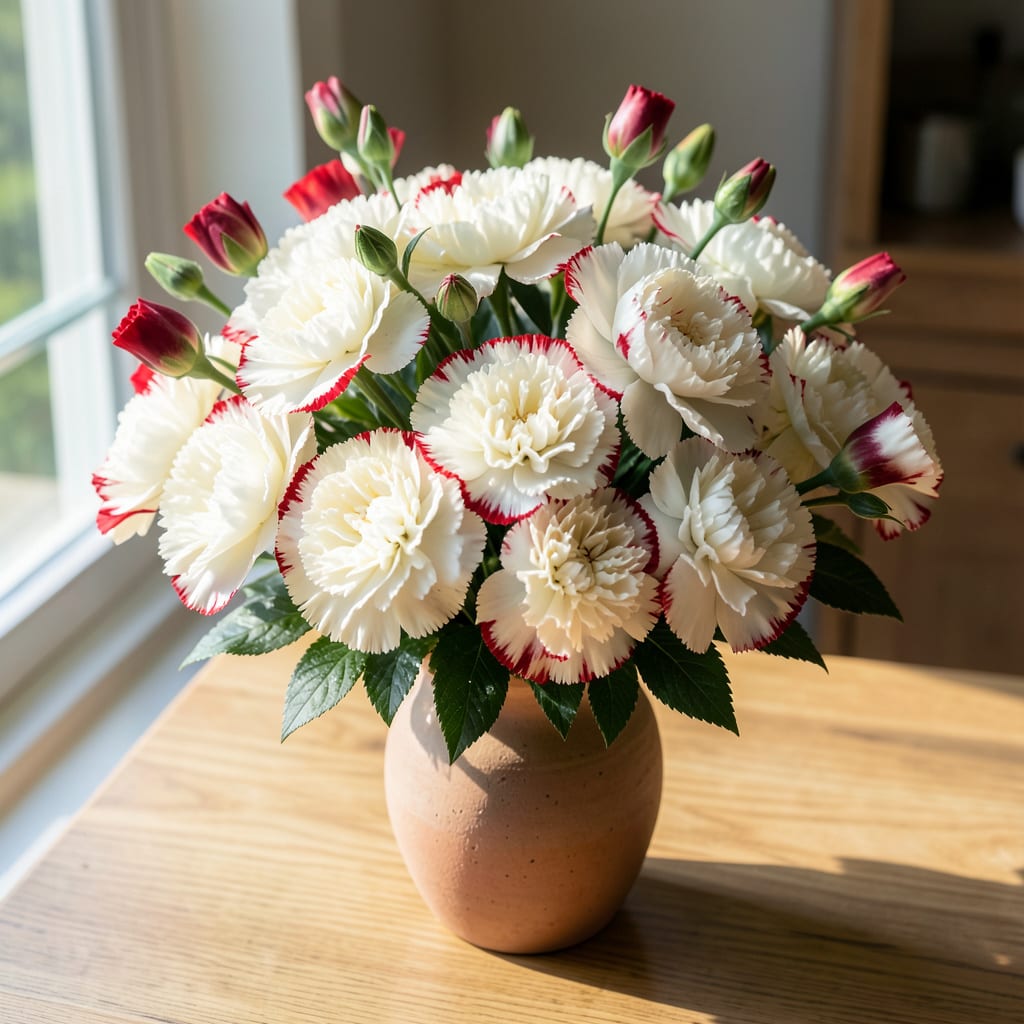
I first saw white carnations with red tips at a local market and couldn’t believe they weren’t dyed. The bicolor blooms are completely natural, and growing them is simpler than you’d think.
These plants thrive in well-draining soil with full sun, and with the right care, they’ll produce those striking red-tipped petals all season long. Just keep them evenly watered and deadhead spent flowers to encourage more growth.
📚 In This Guide
Here’s the method I use to grow these stunning two-tone blooms with consistent results.
Start with white carnation plants known for their bicolor potential. I look for varieties like ‘White Sim’ or ‘Nelson’s White’ at local nurseries. Choose specimens with firm stems and bright green leaves—avoid any with yellowing foliage or spotted blooms.
Check the root system by gently sliding the plant from its pot. Healthy roots appear white and fibrous, not brown or mushy. This ensures your base plant has the vigor needed to develop those striking red tips.
If starting from seed, sow indoors 8-10 weeks before the last frost. The seedlings need consistent 65-70°F temperatures to germinate properly.
Plant your carnations in well-draining soil with a pH between 6.0-7.0. I amend garden beds with compost before planting to improve drainage and fertility. Space plants 12-18 inches apart to allow for air circulation.
These flowers thrive in full sun (at least 6-8 hours daily). In hotter climates, afternoon shade helps prevent petal scorch. The red tips develop best with consistent sunlight exposure.
Water deeply at the base 2-3 times weekly, letting the top 1-2 inches of soil dry between waterings. Overhead watering can lead to fungal issues that ruin the bicolor effect.
The red tips form naturally as the white blooms mature in specific conditions. I’ve found that cooler night temperatures (50-55°F) during the bud stage intensify the red coloration. This temperature fluctuation signals the plant to produce anthocyanins.
Apply a balanced 10-10-10 fertilizer every 4-6 weeks during the growing season. Too much nitrogen results in lush foliage but fewer blooms. The phosphorus in the fertilizer supports vibrant color development.
Deadhead spent blooms regularly to encourage continuous flowering. The new blooms will show stronger bicolor patterns as the plant matures through the season.
Stake taller varieties to prevent stem breakage, especially in windy conditions. I use bamboo stakes and soft plant ties to support the stems without damaging them. The bicolor blooms are heavier than single-color varieties.
Watch for common pests like aphids or spider mites, which are particularly drawn to the sweet fragrance. A strong blast of water from the hose often dislodges them before they cause damage.
As flowers develop, you’ll notice the red tips become more pronounced. The color intensifies as the blooms open fully, typically reaching peak vibrancy 3-5 days after opening.
Small adjustments in your growing approach can dramatically improve those red tips.
Selection Tip: In Step 1, always check the root systems carefully—healthy white and fibrous roots are non-negotiable for developing vibrant bicolor blooms. I learned this the hard way after several plants with weak roots produced lackluster coloration.
Sunlight Strategy: The 6-8 hours of daily full sun in Step 2 isn’t just a suggestion. In hotter climates, that afternoon shade prevents petal scorch while still allowing the red tips to develop. I’ve found that consistent morning sun works best for color intensity.
Temperature Matters: Those cooler night temperatures (50-55°F) during the bud stage in Step 3 are what signal the plant to produce anthocyanins. If your nights are warmer, try moving potted carnations to a cooler spot like a basement or garage overnight.
Timing Secret: The color intensification happens 3-5 days after opening, as mentioned in Step 4. Don’t be discouraged if the red tips appear faint at first—patience pays off as they reach peak vibrancy.
Yes! These carnations thrive indoors with bright, indirect light (6+ hours daily) and well-draining soil. Use grow lights if natural light is limited, and maintain 60-70°F for best results.
Typically, they bloom in late spring to early summer, but timing varies by climate. With proper care (regular watering, fertilizer), some varieties may produce a second flush in fall.
This could be due to insufficient light, nutrient deficiencies (especially phosphorus), or a non-bicolor variety. Ensure full sun exposure and use a balanced fertilizer to encourage vibrant tips.
Try ‘Chabaud’ or ‘Enchantment’ carnations—they often feature similar bicolor patterns. Alternatively, consider spray roses or dianthus for a comparable two-tone effect.
