
Beautiful Plants For Your Interior
Beautiful Plants For Your Interior
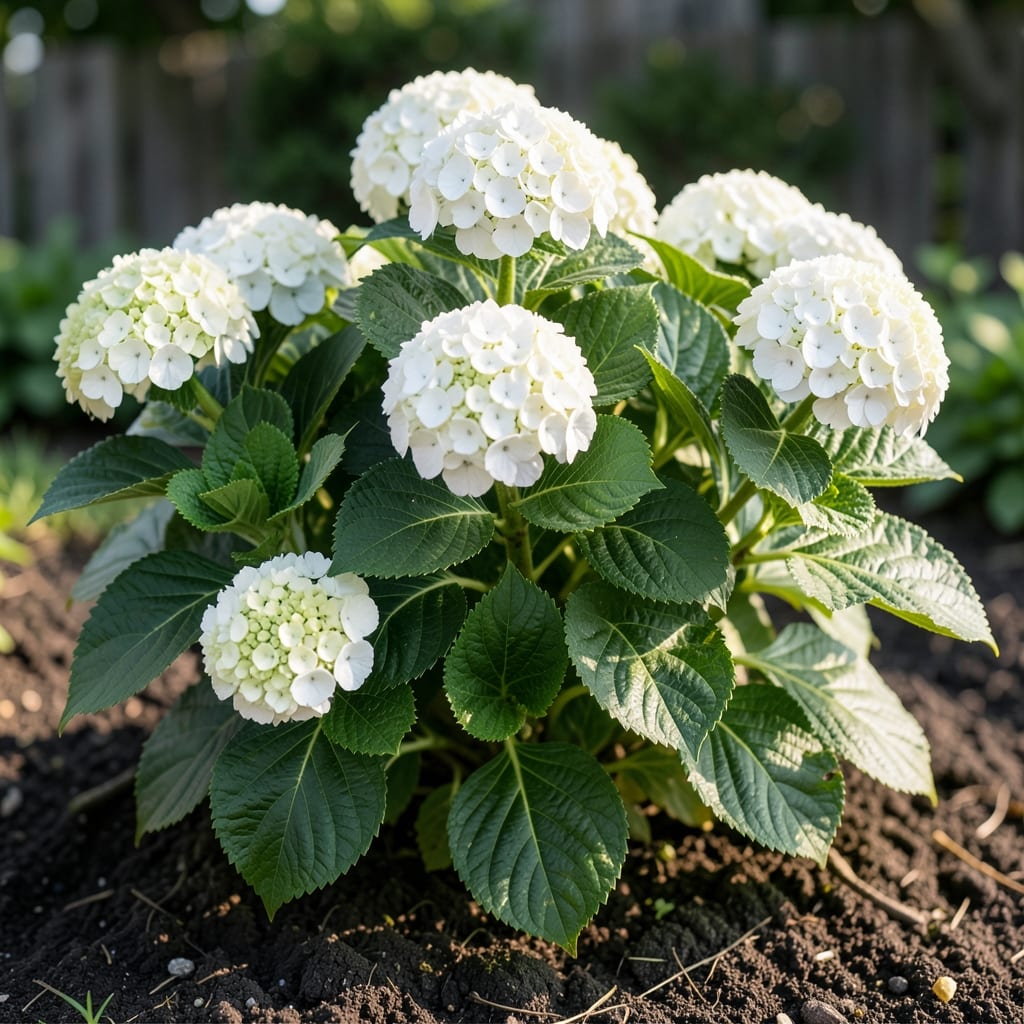
Big, bold white blooms can transform any shady spot. I’ve spent years perfecting the conditions for these showstoppers, and the key lies in getting the soil just right.
They’ll reward you with lush summer blooms if you nail the moisture, light, and pruning timing. Even a little effort yields dramatic results that last for years.
📚 In This Guide
Here’s the method I rely on to cultivate vibrant white bigleaf hydrangeas with consistent summer blooms.
Choose a site with partial shade, especially during the hottest afternoon hours. Bigleaf hydrangeas thrive in locations that receive morning sun and afternoon shade. Full sun exposure will scorch the leaves, while too much shade reduces blooming significantly.
Ensure the soil is rich in organic matter and well-draining. These plants prefer moist but not waterlogged conditions. Test drainage by digging a 12-inch deep hole and filling it with water—if it drains in 1-2 hours, the location is suitable.
Amend the planting area with compost or well-rotted manure to improve fertility and structure. Bigleaf hydrangeas prefer slightly acidic to neutral soil (pH 6.0-7.0). A soil test kit will confirm your pH level.
Work the organic matter into the top 12-18 inches of soil. This creates a loose, nutrient-rich environment where roots can establish quickly. Avoid heavy clay or sandy soils unless significantly amended.
Dig a hole twice as wide as the root ball but no deeper. Position the plant so the root flare (where roots meet stem) sits 1-2 inches above soil level. Backfill with native soil, watering lightly as you go to eliminate air pockets.
Space multiple plants 3-6 feet apart to allow for mature spread. After planting, create a 3-4 inch watering ring around the base to direct moisture to the roots during the critical first season.
Water deeply at planting and maintain consistent moisture during the first growing season. These hydrangeas need 1-2 inches of water weekly, more during extreme heat. Check soil moisture by inserting your finger 2-3 inches deep—if it feels dry, it’s time to water.
Mulch with 2-3 inches of organic material like pine bark or shredded leaves to retain moisture and regulate soil temperature. Keep mulch 3 inches away from the stem to prevent rot.
Bigleaf hydrangeas bloom on old wood, meaning flower buds form the previous summer. Prune immediately after blooming, typically by late summer. Remove dead or weak stems at the base, and trim back one-third of the oldest stems to encourage new growth.
Avoid fall or spring pruning, as this removes potential flower buds. If your plant isn’t blooming, it’s often due to incorrect pruning timing or winter damage to buds. Protect plants in winter with a 4-6 inch mulch layer after the ground freezes.
These insights will help you avoid the most common pitfalls when growing bigleaf hydrangeas.
Site Selection Insight: In Step 1, the partial shade requirement isn’t just a suggestion—it’s critical. I learned this after watching several plants struggle in full sun. Morning sun with afternoon shade gives them the light they need without the leaf scorch. If your yard lacks natural shade, consider planting on the east side of a building or under tall trees.
The Drainage Test: That 1-2 hour drainage test in Step 1 is your best insurance against root rot. I’ve seen too many hydrangeas decline because their roots sat in water. If your test hole doesn’t drain within this timeframe, either amend the soil heavily with organic matter or choose a different location entirely.
Planting Depth Detail: The 1-2 inches above soil level for the root flare in Step 3 might seem counterintuitive, but it prevents stem rot. I made the mistake of planting too deep with my first hydrangea and lost it within a year. When in doubt, it’s better to plant slightly high than too low.
Pruning Timing: The late summer pruning window in Step 5 is non-negotiable for consistent blooms. Bigleaf hydrangeas set their flower buds in late summer for the following year’s display. If you prune in fall or spring, you’re essentially cutting off next year’s flowers before they have a chance to open.
This is normal! Many white bigleaf hydrangeas develop a green tint as they age, especially in hot weather. It’s caused by chlorophyll becoming more visible. If you prefer pure white blooms, try planting them in partial shade.
Prune right after the flowers fade in late summer. These hydrangeas bloom on old wood, so avoid pruning in spring or fall, or you might cut off next year’s blooms.
Ensure it gets morning sun and afternoon shade, and keep the soil consistently moist. Fertilize lightly with a balanced, low-nitrogen fertilizer in early spring to encourage abundant blooms.
Powdery mildew, leaf spot, and root rot are frequent issues. Improve air circulation, avoid overhead watering, and remove affected leaves promptly to prevent spread. Fungicides can help if needed.