
Beautiful Plants For Your Interior
Beautiful Plants For Your Interior
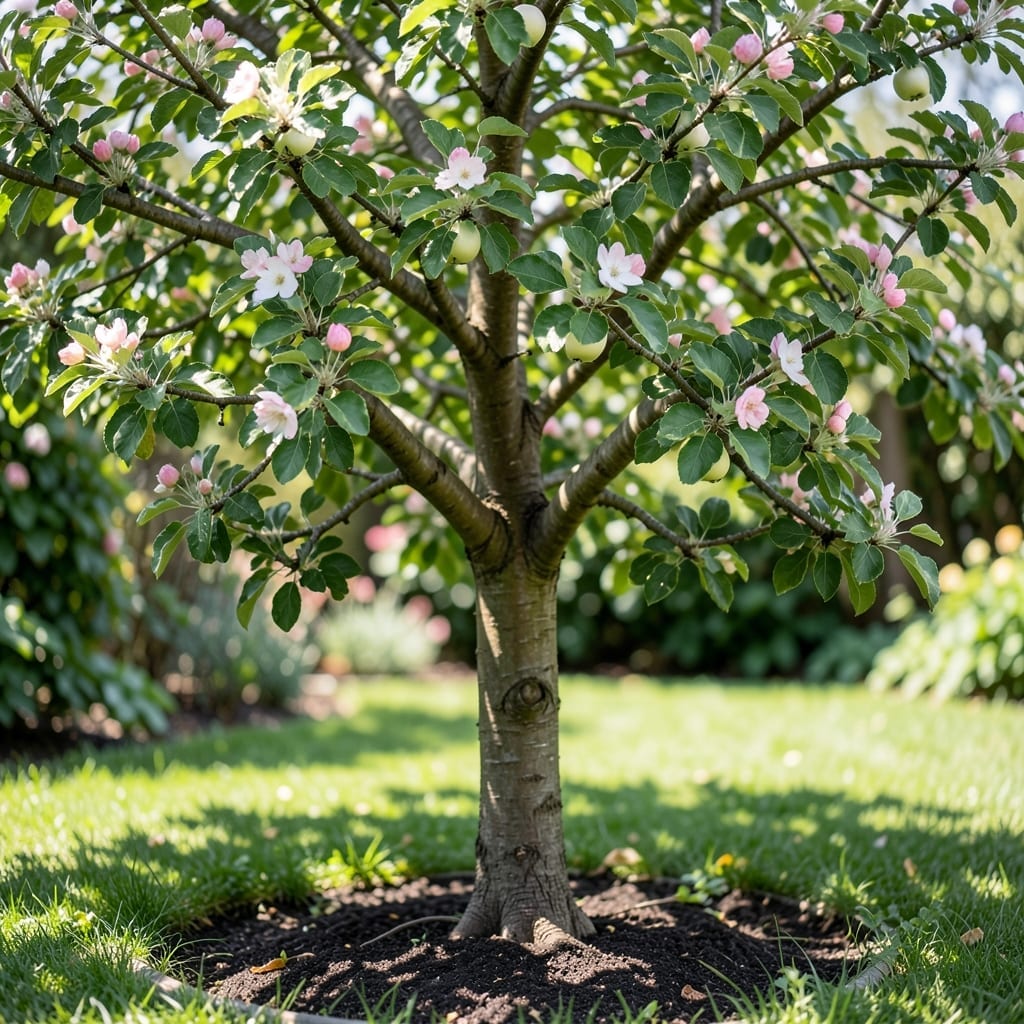
My white apple tree went from struggling sapling to the centerpiece of my yard in just 3 seasons. The key was matching its needs to my soil and climate, not the other way around.
You’ll get fragrant blooms in spring and crisp fruit in fall with the right planting spot and consistent care. It’s more forgiving than most fruit trees, but does need annual pruning to stay productive and healthy.
📚 In This Guide
Here’s the method I use to establish vigorous trees that produce abundant, healthy fruit year after year.
Choose a location with full sun exposure—at least 6-8 hours of direct sunlight daily is non-negotiable for fruit production. Apple trees tolerate partial shade but won’t produce quality fruit. The soil must drain well; avoid low spots where water pools after rain.
Test drainage by digging a 12-inch deep hole, filling it with water, and checking if it drains within 2-3 hours. If not, select another spot or amend with compost. I always plant on a slight mound in heavy clay areas to improve drainage and prevent root rot.
Dig a hole 2 feet wide and 18-24 inches deep—twice as wide as the root ball to encourage lateral root growth. Remove all grass, weeds, and debris from the area. Loosen the soil at the sides and bottom of the hole with a garden fork to help roots penetrate easily.
Mix the excavated soil with 20-30% compost to improve fertility and structure. Avoid adding pure compost to the bottom of the hole, as this creates a “pot effect” where roots circle instead of spreading outward. The amended soil should be loose enough that you can easily push your fingers through it.
Place the tree in the hole, ensuring the graft union (the visible bulge near the base) sits 2-3 inches above soil level. This prevents the scion from rooting and bypassing the dwarfing rootstock. Spread the roots outward if planting a bare-root tree, or gently loosen the root ball if container-grown.
Backfill with the amended soil, tamping lightly every 6 inches to eliminate air pockets. Stop when the soil reaches the original planting depth on the trunk. Water immediately with 5 gallons to settle the soil and hydrate the roots. You’ll see the soil level drop slightly after this initial watering—add more soil to maintain the proper depth.
Apply a 3-4 inch layer of organic mulch (wood chips or straw) in a 3-foot diameter around the tree, keeping it 6 inches away from the trunk to prevent rot. Mulch conserves moisture, suppresses weeds, and maintains consistent soil temperature—critical for newly planted trees.
Water deeply 2-3 times per week for the first month, then taper to once weekly unless rainfall is insufficient. Check soil moisture by digging 4 inches deep—if it feels dry, it’s time to water. I’ve found that trees established with this routine develop stronger root systems that withstand drought better in future years.
Prune the tree immediately after planting to remove any damaged, crossing, or inward-growing branches. Make clean cuts at a 45-degree angle just above a bud, using sharp bypass pruners. This initial pruning establishes the tree’s structure and directs energy toward healthy growth.
Stake the tree only if necessary—most young apple trees establish better without stakes. If your site is particularly windy, use a single stake with a loose tie that allows some movement. Remove all stakes after 1 year to prevent girdling. Proper early training ensures a strong scaffold that supports heavy fruit loads in maturity.
Small details in the first year make the difference between a struggling sapling and a thriving orchard.
Sunlight Priority: That 6-8 hours of full sun in Step 1 isn’t flexible—apple trees grown in partial shade produce smaller, less flavorful fruit. I’ve seen trees in 5 hours of sun survive but never thrive. If your yard has limited sun, consider container growing on a sunny patio instead.
Drainage Test Insight: When testing drainage in Step 1 with that 12-inch deep hole, don’t just watch the clock for 2-3 hours. The water should disappear steadily, not sit for an hour then vanish. If it drains too quickly (under 30 minutes), your soil may be too sandy and need organic matter to retain moisture.
Planting Depth Critical: In Step 3, those 2-3 inches of graft union exposure above soil level prevent a common disaster. I learned this after burying the graft on my first tree—it grew vigorously but produced oversized, poor-quality fruit because the dwarfing rootstock was bypassed. The visible bulge must stay above ground.
Watering Wisdom: The 5 gallons immediately after planting in Step 3 settles the soil, but here’s what nobody tells you—check the depth after watering. I’ve had to add up to 2 more gallons as the soil settled, exposing roots. Keep adding until the original planting depth is restored, then apply that 3-4 inch mulch layer from Step 4.
Water deeply weekly, fertilize in early spring, and prune annually to encourage airflow. Monitor for pests like aphids and diseases such as powdery mildew. Mulch to retain moisture and protect roots.
Plant bare-root trees in late winter or early spring, while container-grown trees can be planted anytime during the growing season. Avoid extreme heat or frost periods for best results.
Common issues include apple scab, powdery mildew, and fire blight. Prevent with proper pruning, fungicide sprays, and removing fallen leaves or fruit to reduce infection risk.
Yes, dwarf varieties thrive in large containers (15+ gallons). Ensure good drainage, use quality potting mix, and place in full sun. Water frequently, as containers dry out faster.
Possible causes: insufficient pollination, young tree age (3-5 years to fruit), poor nutrition, or improper pruning. Plant pollinator-friendly varieties nearby and ensure balanced care.