
Beautiful Plants For Your Interior
Beautiful Plants For Your Interior
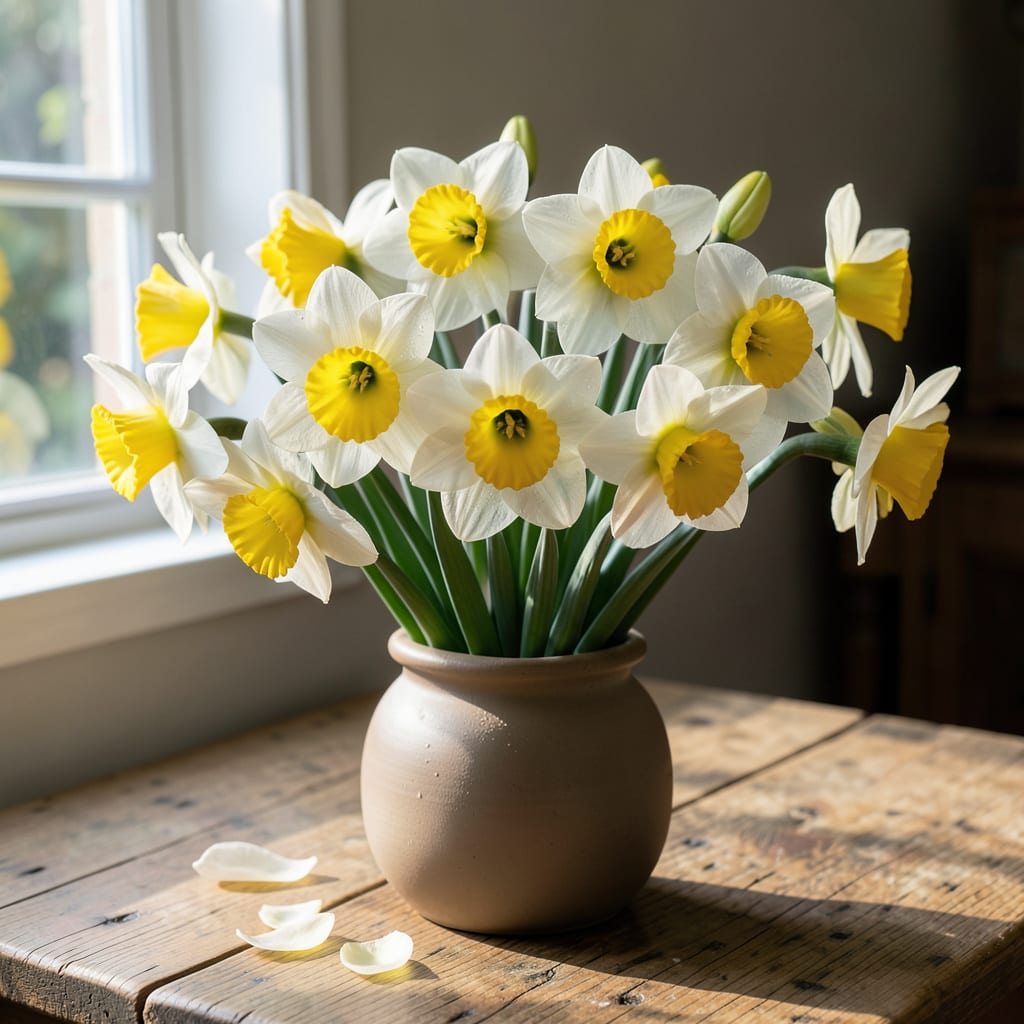
Nothing beats the sight of white and yellow daffodils pushing through winter’s last chill. 🌟 I planted my first bulbs three springs ago, and now they return bigger and brighter every year.
These flowers thrive in well-drained soil and full to partial sun, blooming when most gardens are still waking up. With minimal care, they’ll multiply and reward you with cheerful color for decades.
📚 In This Guide
Here’s my go-to method for reliable spring color that comes back stronger every year.
Pick a spot with full sun to partial shade—daffodils thrive in bright areas but tolerate light afternoon shade, especially in warmer climates. The soil should drain well; if water pools after rain, raise the bed or amend with compost to prevent bulb rot.
I always plant near the front of borders or along pathways where I can enjoy the early blooms. Avoid low-lying areas where cold air settles, as this can delay flowering. You’ll know you’ve found a good spot when the soil feels loose and crumbly in your hands.
Loosen the soil to a depth of 12-15 inches using a garden fork or tiller. This gives the bulbs room to establish strong root systems. Work in a 2-3 inch layer of organic matter like compost or well-rotted manure to improve fertility and drainage.
Daffodils aren’t picky about soil type, but they hate soggy conditions. If your soil is heavy clay, mix in some coarse sand or grit. The moment you see earthworms in the turned soil, you’ll know it’s healthy enough for planting.
Set each bulb with the pointed end up in a hole 6-8 inches deep—about three times the height of the bulb itself. Space them 3-6 inches apart for a natural look or 2-3 inches apart for a dense, dramatic display.
I use a bulb planter or trowel to dig, then place a handful of bone meal at the bottom of each hole for extra phosphorus. Cover with soil and press down gently to eliminate air pockets. You’ll feel the soil resist slightly when it’s firm enough to hold the bulbs in place.
Give the area a deep soak immediately after planting to help the soil settle and encourage root growth. Water until the soil is moist to a depth of 6 inches—use your finger to check.
After this initial watering, you won’t need to water again unless your area experiences a prolonged dry spell in fall. The bulbs need this moisture to start growing roots before winter. Watch for the soil surface to darken as the water soaks in.
Apply a 2-3 inch layer of mulch (straw, shredded leaves, or bark) after the ground freezes to insulate the soil and prevent winter heaving. This is especially important in colder climates where temperature fluctuations can push bulbs out of the ground.
In spring, remove the mulch gradually as the shoots emerge. Resist the urge to cut back the foliage after blooming—it needs 6 weeks of photosynthesis to store energy for next year. You’ll see the leaves yellow and wilt naturally when they’re ready to be removed.
Small adjustments in planting make a big difference for vibrant spring displays.
Planting Depth Matters: Stick to the 6-8 inch depth from Step 3—planting too shallow exposes bulbs to freeze-thaw cycles, while too deep delays blooming. I learned this the hard way after losing a whole bed to winter heaving. Confession: I skipped measuring once and wondered why my daffodils never appeared.
Soil Prep Secret: In Step 2, don’t skip loosening that full 12-15 inches of soil. Daffodil roots grow deep, and compacted earth stunts their development. Mixing in that 2-3 inch layer of compost isn’t just about nutrients—it improves drainage, which prevents the rot that kills bulbs over winter.
Watering Wisdom: The deep soak in Step 4 needs to penetrate 6 inches down—shallow watering encourages weak root systems. After planting, I check moisture by pushing my finger into the soil. If it comes out dry at the 6-inch mark, I water again until it’s evenly damp.
Winter Protection: That 2-3 inch mulch layer in Step 5 is non-negotiable in cold climates. I use shredded leaves because they’re free and insulate well. Just remember to apply it after the ground freezes, not before—otherwise, you’ll trap warmth and delay dormancy.
White and yellow daffodils typically bloom in early to mid-spring, usually between March and April, depending on your climate. They’re one of the first flowers to herald the season!
Plant bulbs in well-drained soil in the fall, 6-8 weeks before the first frost. Water moderately during growth and reduce after blooming. They thrive in full sun to partial shade.
Yes! Use a pot with drainage holes, fill with quality potting mix, and plant bulbs 2-3 inches deep. Keep the container in a sunny spot and water when the topsoil feels dry.
Common reasons include planting too shallow, overcrowded bulbs, or insufficient sunlight. Dig up bulbs every 3-5 years to divide and replant for better blooms next season.
Pair them with tulips, hyacinths, or early-blooming perennials like crocuses for a vibrant spring display. Their foliage also complements low-growing ground covers like creeping thyme.
