
Beautiful Plants For Your Interior
Beautiful Plants For Your Interior
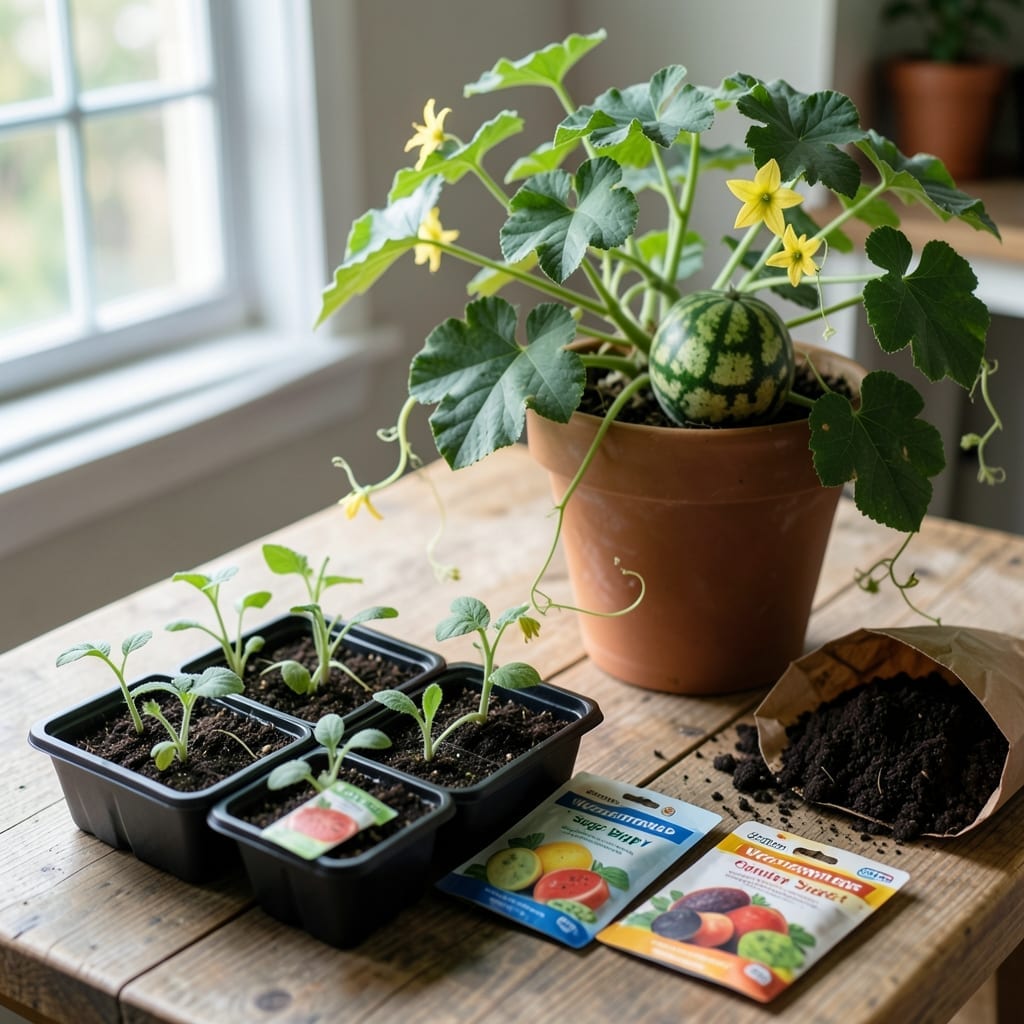
Timing is everything when starting 🍉 Watermelon seeds indoors. Plant too early, and your seedlings will outgrow their space; too late, and you’ll miss the optimal growing window.
This guide breaks down the perfect schedule by hardiness zone to ensure strong, healthy plants ready for transplanting. Whether you’re in zone 6 or elsewhere, we’ve got you covered.
Discover how to align your indoor start with the last frost date and set your garden up for success this spring.
Starting watermelon seeds indoors gives your plants a head start, but timing is critical. I’ve found that aligning your start date with your USDA hardiness zone ensures seedlings are ready for transplanting after the last frost.
In zone 6, where the last frost is typically around April 15, I start seeds indoors 2-4 weeks beforehand. This timing allows seedlings to develop strong roots before moving outdoors.
| USDA Zone | Last Frost Date | Indoor Start Date |
|---|---|---|
| 3-4 | May 15 | April 1-15 |
| 5 | April 15 | March 15-31 |
| 6 | April 15 | March 20-April 1 |
| 7 | April 1 | March 1-15 |
| 8-9 | March 1-15 | February 1-15 |
*Adjust for local microclimates and variety maturity rates.
For zone 5, where frost lingers until mid-April, I begin sowing seeds indoors in late March. This gives seedlings 4-6 weeks to grow before transplanting into warmed soil.
In warmer zones 8-9, I start seeds as early as February. The longer growing season here allows for an earlier start, but I always monitor soil temperature—it must be at least 70°F for optimal germination.
I’ve learned that container size matters too. Use 3-4 inch pots to prevent root binding. If seedlings outgrow their space, they’ll struggle after transplanting, even if the timing is perfect.
Another key factor is light exposure. Watermelon seedlings need 12-16 hours of light daily. I use grow lights to supplement natural sunlight, especially in early spring when days are shorter.
For short-season varieties, like ‘Sugar Baby,’ I start seeds 2 weeks later than long-season types. These mature faster, so they don’t need as much of a head start indoors.
Always harden off seedlings before transplanting. I gradually expose them to outdoor conditions over 7-10 days to prevent shock. This step is crucial, no matter your zone.
Finally, I check the 10-day forecast before moving seedlings outside. A late frost can wipe out weeks of work, so I wait until all danger has passed.
With these zone-specific guidelines, I’ve consistently grown healthy, productive watermelon plants from indoor starts. 🌱
While USDA zones provide a solid starting point, I’ve learned that several other factors can fine-tune your indoor seed starting schedule for watermelons. These nuances ensure your seedlings are neither too small nor too large at transplant time.
First, consider your local microclimate. Areas near lakes or urban heat islands may have slightly different frost dates than the broader zone suggests. I always check my specific location’s last frost date for precision.
The maturity rate of your chosen variety plays a huge role. For example, ‘Sugar Baby’ matures in about 75 days, while ‘Crimson Sweet’ can take 85-90 days. I start the longer-maturing varieties earlier.
Container size directly impacts root development. I use 3-4 inch pots for most varieties, but for large heirlooms, I’ll use 5-inch pots to accommodate their extensive root systems during the indoor phase.
Light exposure is another critical factor. Watermelon seedlings require 12-16 hours of light daily. In my experience, a south-facing window often isn’t enough in early spring, so I supplement with grow lights on a timer.
Finally, I monitor outdoor soil temperature religiously. Even after the last frost date, I wait until the soil consistently reaches 70°F at a 4-inch depth before transplanting. This ensures my seedlings don’t experience shock.
By considering these factors alongside your zone, you’ll achieve perfectly timed watermelon seedlings ready for a strong start in the garden. 🌱