
Beautiful Plants For Your Interior
Beautiful Plants For Your Interior
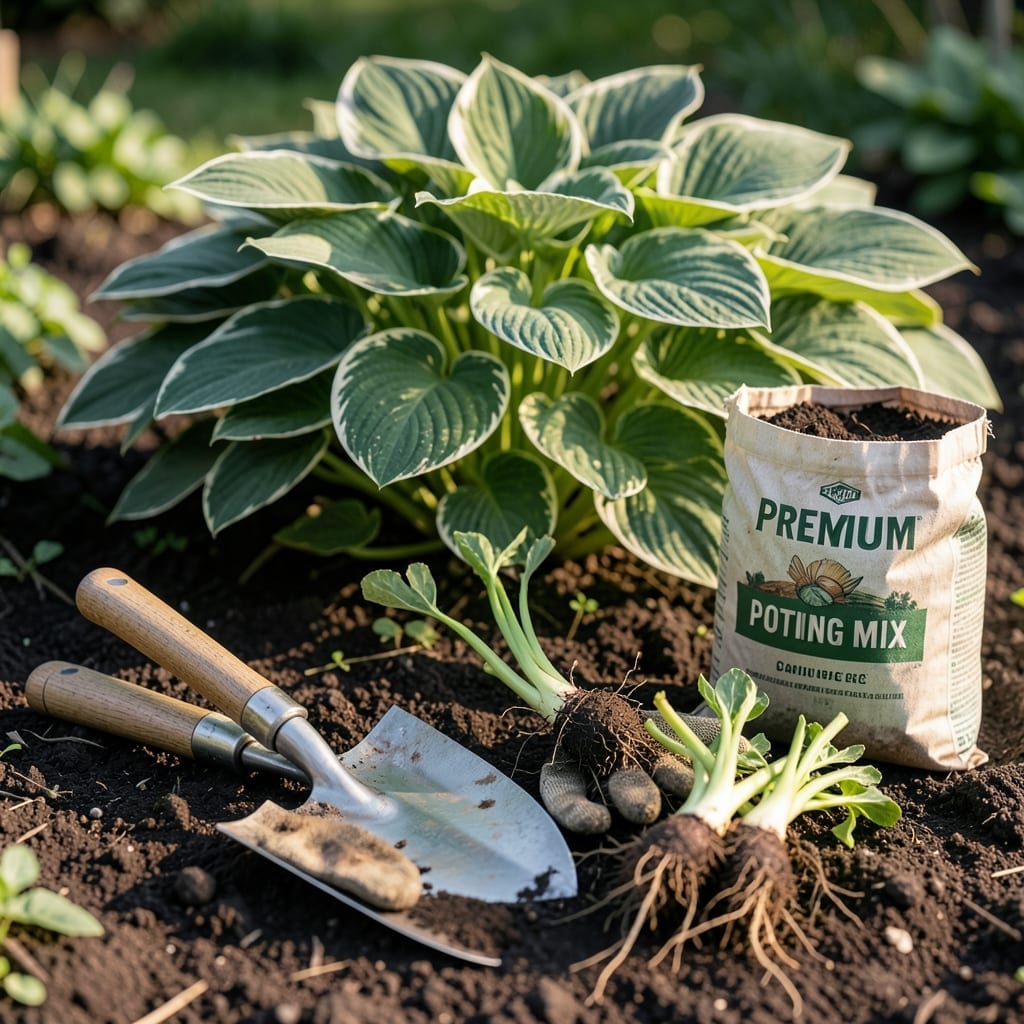
Dividing hosta plants at the right time ensures vibrant growth and prevents overcrowding, but timing is everything. Split too early or too late, and you risk stressing your 🌿 Hosta or stunting its development.
I’ve learned through experience that waiting for the best seasonal window makes all the difference. Your garden will thank you when those divided plants come back healthier and more vigorous.
Let me show you exactly when and how to do it for optimal results that even beginner gardeners can achieve with confidence.
Timing is critical when dividing hosta plants. I’ve found that early spring or early fall are the sweet spots for this task. These seasons align with the plant’s natural growth cycle.
In early spring, hostas are just waking up from dormancy, making it easier for them to recover. Early fall division gives them time to establish roots before winter sets in. 🌱
| Season | Best Months | Advantages |
|---|---|---|
| Early Spring | April-May | New growth recovery |
| Early Fall | August-September | Root establishment before frost |
Your USDA zone matters too. In zone 6a, I aim for April-May or August-September splits. Cooler climates may need earlier division to avoid frost damage.
Watch for visual cues that your hostas need dividing. When the center dies out or growth slows, it’s time. Overcrowded clumps produce smaller leaves, another clear sign.
Temperature plays a role. Ideal splitting conditions are 50-70°F soil temps. Avoid dividing during summer heat or winter dormancy for best results.
I always check the weather forecast before dividing. A week of mild weather after splitting helps plants recover. Avoid splitting right before a heat wave or cold snap.
For container-grown hostas, the rules are similar but more flexible. You can divide these anytime during growing season if you keep them well-watered and shaded after splitting.
Remember, morning division is best. This gives plants all day to recover before nighttime temperatures drop. I also prepare the new planting area before digging up the hosta.
After dividing, keep soil moist for 2-3 weeks. This is crucial for root establishment. A 2-inch mulch layer helps retain moisture and protect new divisions. 🌿
Dividing hosta plants is easier than you think when you follow the right steps. I start by watering thoroughly the day before to reduce root shock during the process.
Use a sharp spade or garden fork to dig around the hosta clump, working about 6 inches from the base to avoid damaging roots. 🌱
Once the root ball is exposed, I gently shake off excess soil to see the natural divisions. Look for separate crowns where new shoots emerge.
Use your hands or a clean knife to separate the clump into 2-4 sections. Each division should have at least 3-5 healthy buds and a good portion of roots.
Trim any broken roots or damaged leaves to help the plant focus energy on recovery. I also remove about 1/3 of the foliage to reduce water loss.
Plant each division in a prepared hole that’s twice as wide as the root ball. The crown should sit just above soil level, same as the original plant.
After replanting, water deeply and add a 2-inch mulch layer to retain moisture. Keep soil consistently moist for 2-3 weeks while roots establish. 🌿