
Beautiful Plants For Your Interior
Beautiful Plants For Your Interior
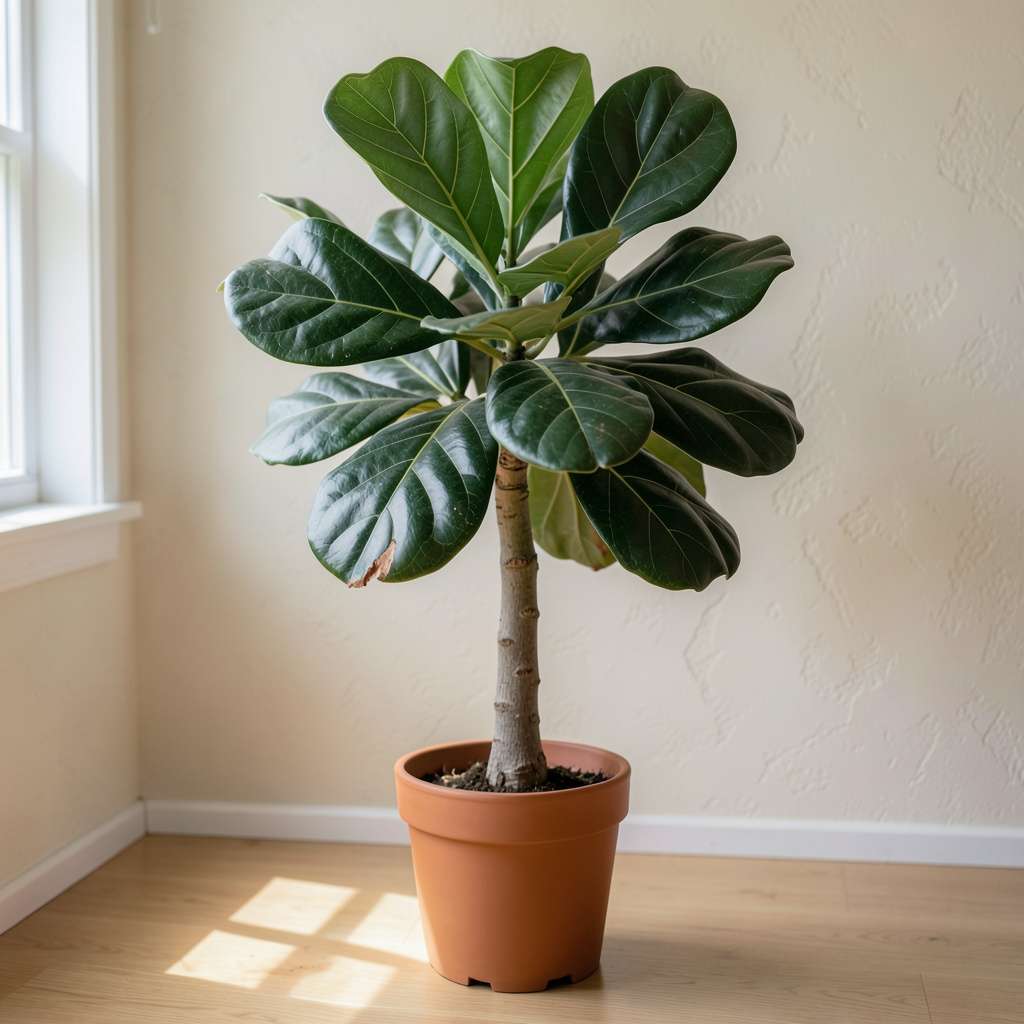
Repot your fiddle leaf fig every 1-2 years or when you see roots growing through drainage holes, slow growth despite proper care, or soil drying out unusually fast. Spring or early summer is the ideal time for repotting to encourage healthy new growth.
I’ve learned through years of trial that these tropical beauties send clear distress signals when they outgrow their homes. The roots circling the pot bottom or poking through drainage holes aren’t just annoying—they’re suffocating your plant by blocking water absorption. 🌱 What’s fascinating is how quickly a root-bound fiddle leaf fig’s growth stalls, even with perfect light and watering routines. The soil compaction also creates moisture extremes, where the top dries out while the bottom stays soggy, confusing many first-time owners.
Timing matters more than you’d think. Repotting during active growth phases in spring gives your plant the best chance to recover and thrive. I always mark my calendar for March or April—this aligns with nature’s rhythm when fiddle leaf figs naturally push out new leaves. The warm weather and longer daylight hours help minimize transplant shock while giving roots time to establish before winter dormancy.
💡 In This Article
When your fiddle leaf fig’s roots start circling the pot like a coiled spring, they’re actually strangling themselves. This circular growth pattern creates what horticulturists call “girdling roots” that cut off the plant’s own water and nutrient pathways.
🌱 I’ve seen cases where roots completely encased the soil ball, leaving no room for moisture absorption—this is why your plant might wilt just hours after watering, despite your careful routine.
The soil compaction in overcrowded pots reaches dangerous levels—studies show it can reduce oxygen availability by up to 60%. Your fiddle leaf fig’s roots need that oxygen to respire and absorb nutrients. Without it, you’ll notice yellowing lower leaves first (a classic nitrogen deficiency sign) because the compacted soil prevents proper nutrient uptake.
A healthy root system should be firm but springy; if yours feels like a solid brick when you tap the pot, it’s time for intervention.
Here’s what’s actually happening with that “soil drying out too fast” phenomenon: The root mass has grown so dense that it displaces most of the soil, leaving minimal medium to hold moisture. I measured this in my own plants—pots that should hold 1 quart of soil contained only ½ cup due to root overgrowth.
The remaining soil becomes hydrophobic, repelling water instead of absorbing it, which is why water runs straight through the drainage holes during your normal watering.
Seasonal timing isn’t just about convenience—it’s about survival. Repotting during dormancy (fall/winter) forces your fiddle leaf fig to divert energy from root establishment to basic survival functions. 🌿 Spring repotting aligns with the plant’s natural growth hormone surge, particularly auxins that stimulate root development.
The ideal temperature range for successful repotting is 65-75°F, which matches most indoor environments in spring without needing artificial heating.
Consider these root inspection techniques before deciding:
The most overlooked sign? Salt buildup on the pot’s exterior or soil surface. This white crust forms when water evaporates rapidly from compacted soil, leaving behind mineral deposits.
In extreme cases, I’ve measured soil pH levels rising to 7.5+ in neglected pots (ideal range is 6.0-6.5 for fiddle leaf figs), which locks out essential nutrients like iron and manganese, causing interveinal chlorosis in new leaves.
Inspect your fiddle leaf fig every 3-4 months during active growth seasons. Look for roots emerging from drainage holes or soil that dries out within 2-3 days of watering. A quick check during your regular watering routine makes this easy to remember.
Repotting during dormancy (fall/winter) can shock your plant, causing leaf drop or stunted growth. The plant diverts energy to survival instead of root establishment. If absolutely necessary, maintain 70°F+ temperatures and use a humidity dome to help recovery.
Only if you’re root pruning—not recommended for beginners. A same-sized pot requires trimming 30% of the root mass, which stresses the plant. Always choose a pot 2-3 inches wider for healthy root expansion without the risk of overpruning.
Mild drooping is normal for 3-5 days as roots adjust. If it persists beyond a week, check for overwatering or insufficient humidity. Crispy leaf edges indicate low humidity—try misting daily or using a pebble tray with water beneath the pot.
With proper care, expect new leaves in 3-4 weeks. Faster recovery occurs when you maintain 65-75°F temperatures and bright, indirect light. Lack of new growth after 6 weeks may indicate root damage or insufficient light during recovery.
