
Beautiful Plants For Your Interior
Beautiful Plants For Your Interior
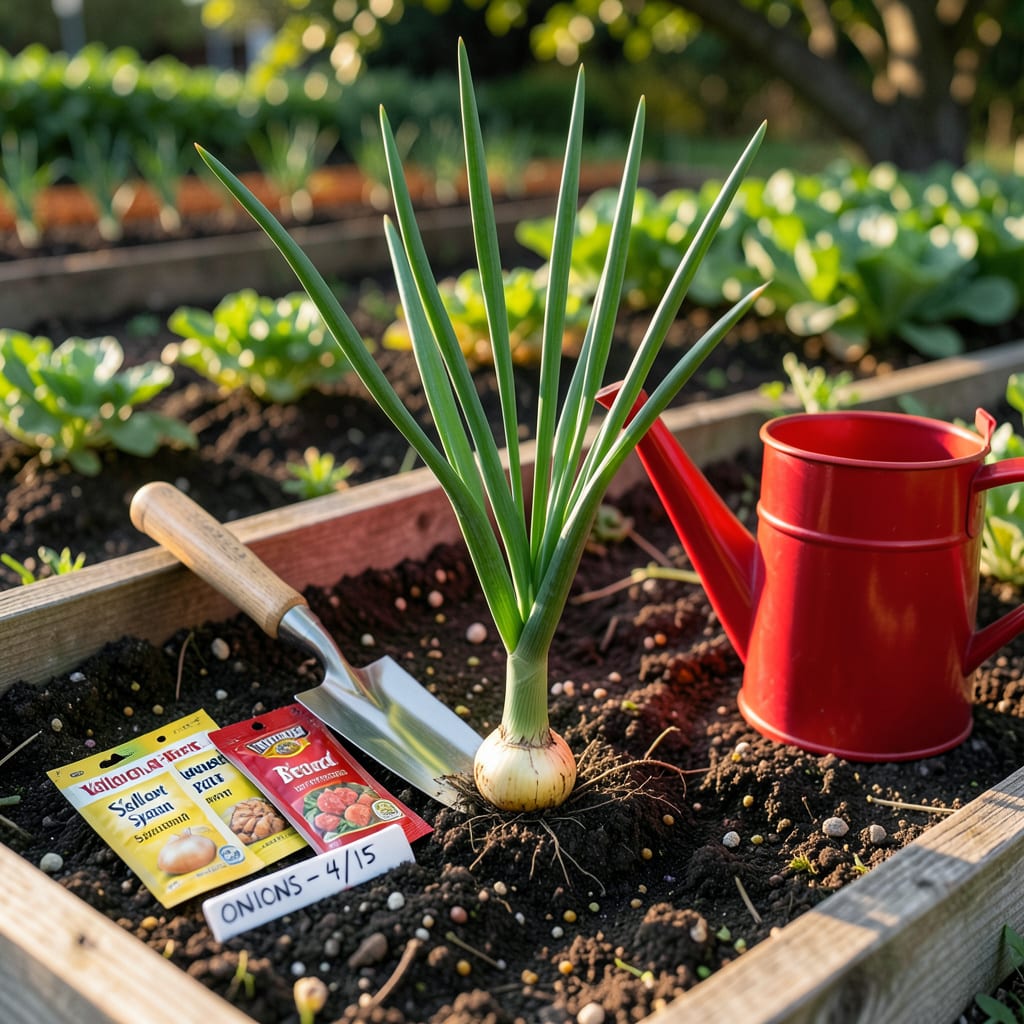
Timing can make or break your onion harvest in Illinois. Plant too soon, and a late frost might wipe out your crop. Wait too long, and those bulbs won’t have time to mature before summer’s heat arrives.
After years of testing different approaches in Zone 5b, I’ve nailed down the perfect windows for both spring and fall planting. Whether you’re working with sets, transplants, or seeds, I’ll show you exactly when to get those 🧅 in the ground for the biggest, most flavorful harvests yet.
Getting your onion timing right in Illinois means working with our three distinct USDA zones—5a, 5b, and 6a. Each zone has slightly different frost dates, which directly impact when you should plant. I’ve found that soil temperature is just as critical as air temperature for onion success.
For spring planting, aim to get sets or transplants in the ground 4-6 weeks before your last frost date. In Northern Illinois (Zone 5a), that’s typically early April, while Southern Illinois (Zone 6a) gardeners can start in late March. Fall planting is trickier—you’ll want to plant 6-8 weeks before your first frost to give roots time to establish.
| Zone | Spring Planting | Fall Planting | Last Frost Date |
|---|---|---|---|
| 5a (Chicago) | March 20 – April 10 | August 15 – Sept 1 | May 1 |
| 5b (Springfield) | March 10 – March 30 | August 20 – Sept 10 | April 15 |
| 6a (Carbondale) | February 25 – March 15 | September 1 – Sept 20 | April 1 |
Note: For seeds, start indoors 8-10 weeks before transplanting. Sets can go directly in the ground.
If you’re planting onion seeds, start them indoors under grow lights about 8-10 weeks before transplanting. I’ve had great success using a heat mat to keep soil temps around 70°F for faster germination. Transplant seedlings when they’re about pencil-thick and soil temps reach 50°F.
For fall-planted onions, timing is everything. You want bulbs to establish roots but not start significant top growth before winter. In Zone 5a, I plant my sets by early September to ensure they’re well-rooted before the ground freezes. These will overwinter and start growing again in early spring.
Soil prep is just as important as timing. Onions thrive in well-draining soil with a pH between 6.0-7.0. I always work in plenty of compost before planting and avoid fresh manure, which can cause forking (split bulbs). A light application of 10-10-10 fertilizer at planting gives them a good start.
Watch your soil temperature—it’s the best indicator of when to plant. Onion sets can go in when soil reaches 40°F, but seeds and transplants need 50°F or warmer. Use a soil thermometer to check at 2-inch depth in the morning for accurate readings.
One trick I’ve learned for Northern Illinois gardeners: use black plastic mulch to warm the soil faster in spring. This can give you a 2-3 week head start on planting. Just be sure to remove it once plants emerge to prevent overheating.
Remember that day length affects bulb formation. Illinois falls in the intermediate-day onion zone, meaning varieties like ‘Candy’ or ‘Stuttgarter’ perform best here. These need 12-14 hours of daylight to form proper bulbs, which our summer days provide perfectly.
Finally, don’t forget about watering consistency. Onions need 1 inch of water per week, including rainfall. I use a soaker hose to keep moisture even and prevent disease. Stop heavy watering as harvest approaches to help bulbs cure properly in the ground.
By following these zone-specific guidelines and watching your soil conditions, you’ll be pulling up plump, sweet onions all season long. Next, let’s look at which varieties perform best in our Illinois climate! 🌱
Even experienced Illinois gardeners can mess up onion planting timing. The most common mistake I see is planting too early in spring when soil is still cold. Onion sets might survive, but they’ll grow slowly and produce smaller bulbs. Wait until soil reaches at least 40°F for sets.
Another big error is ignoring microclimates in your yard. A south-facing slope warms up faster than a low-lying area. I’ve seen gardeners in the same Chicago neighborhood (Zone 5a) have 2-week differences in planting windows based on their yard’s sun exposure and drainage.
Many gardeners also misjudge fall planting windows. If you plant onion sets too late in September, they won’t develop enough roots before winter. I aim for August 15-30 in Zone 5b to give them 6-8 weeks of growth before frost. Use mulch to protect them over winter.
A surprising mistake is planting depth errors. Onion sets should be planted with just the tip showing—about 1 inch deep. Too deep and they’ll rot; too shallow and they’ll dry out. For seeds, plant ¼ inch deep and keep soil moist until germination, which takes 7-14 days at 70°F.
Don’t overlook soil moisture timing either. Onions need consistent watering, but many gardeners either drown them or let soil dry out. I use a soaker hose on a timer for 30 minutes every 3 days, adjusting for rainfall. Stop heavy watering 2 weeks before harvest to help bulbs cure.
Finally, spacing mistakes reduce yields. Crowded onions produce small bulbs. I plant sets 4-6 inches apart in rows 12 inches apart. For seeds, thin to 2 inches apart initially, then to 4 inches when they’re pencil-thick. Proper spacing ensures good airflow, reducing disease risk in our humid Illinois summers. 🌱
Onion sets are small, dormant bulbs that give you a 4-6 week head start compared to seeds. They’re ideal for Illinois’ shorter growing season. Seeds offer more variety options but require starting indoors 8-10 weeks before transplanting. Sets are foolproof for beginners!
Use containers at least 8 inches deep with drainage holes. Each onion needs 3-4 inches of space around it. Container onions dry out faster, so check moisture daily. Place in full sun (6+ hours) and use a lightweight potting mix for best results.
Onions need 6+ hours of direct sun daily. If tops are pale or spindly, they’re not getting enough light. Watch your garden throughout the day – if shadows cover the area before 3 PM, consider relocating or trimming nearby plants. Sunlight directly affects bulb size!
When onions bolt (send up flower stalks), it means they’re stressed—usually from temperature swings. Immediately cut off flower stalks at the base. While the bulbs will still be edible, they’ll stop growing larger. Prevent bolting by planting at the right time and maintaining even soil moisture.
You can, but results are unpredictable. Store-bought onions may be treated to prevent sprouting. If you try, choose organic bulbs with visible growth points. Cut off the bottom third, let dry for a day, then plant. Success rates are lower than using proper sets or seeds.
