
Beautiful Plants For Your Interior
Beautiful Plants For Your Interior
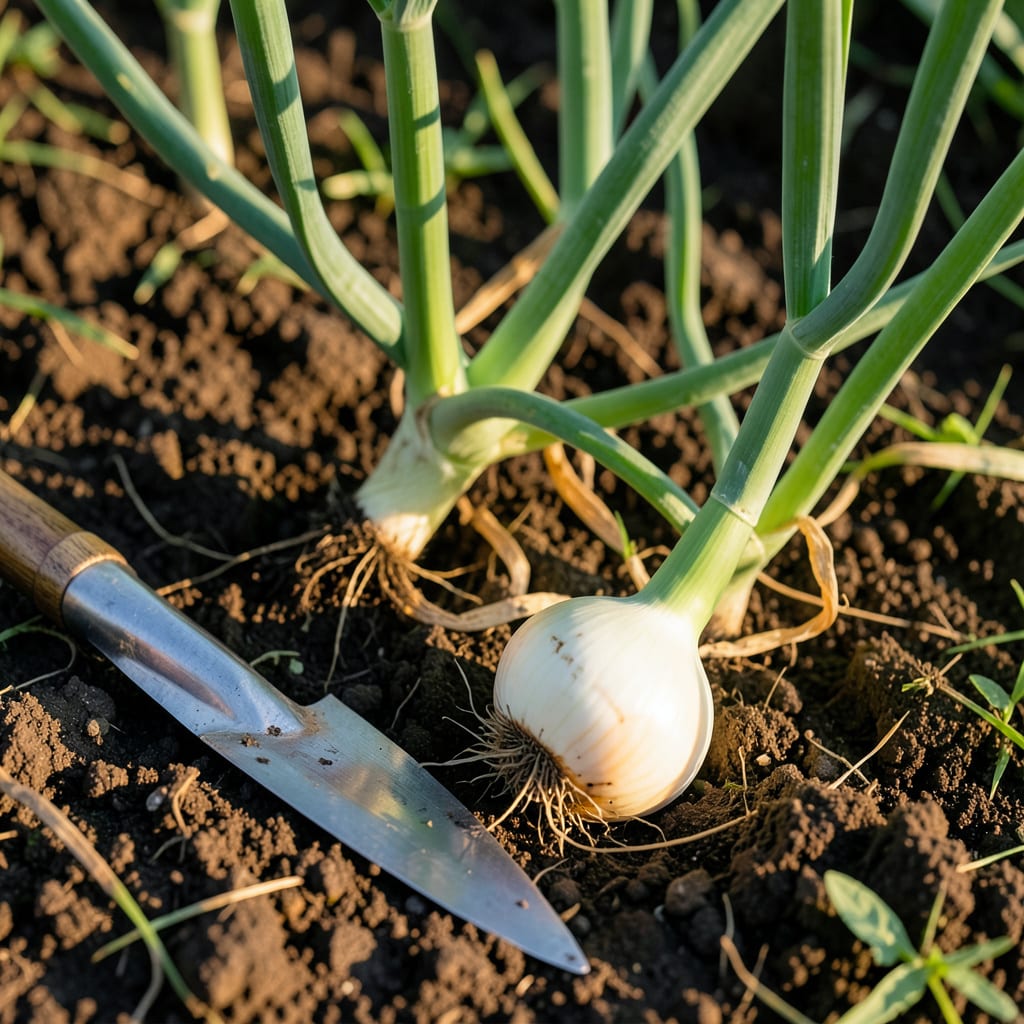
I remember the first time I grew Walla Walla Onion 🧅 – I nearly missed the perfect harvest window. Those subtle changes in the foliage are easy to overlook, but they’re the key to sweet, long-lasting onions.
From July to August in zone 7b, watch for yellowing tops and softening necks. These signs mean your hard work is about to pay off with the best flavor possible.


I’ve learned that Walla Walla onions give clear signals when they’re ready. The most reliable sign is when 80-90% of the foliage turns yellow and begins to die back naturally.
Another key indicator is neck softening. When the stem just above the bulb loses its rigidity, it’s a sure sign the onion has reached maturity and is ready for harvest.
🌱 Harvest Readiness Signs
| Sign | Description |
|---|---|
| Leaf Dieback | 80-90% of tops turn yellow |
| Neck Softening | Stem above bulb becomes pliable |
| Bulb Size | 3-4 inches in diameter |
| Top Falling Over | Tops naturally flop to the ground |
I always check for bulb size too. Mature Walla Walla onions typically measure 3-4 inches in diameter. This size, combined with the other signs, confirms they’re ready.
The timing is usually 90-120 days after planting, depending on your growing conditions. In zone 7b, this often falls between July and August.
If the tops are still green and upright, the onions aren’t ready. Picking too early can result in smaller bulbs with less sweetness and shorter storage life.
On the other hand, waiting too long can lead to splitting or rotting. The tops should be mostly yellow but not completely brown and dried out.
I also pay attention to the weather forecast. If heavy rain is expected, I might harvest a bit earlier to prevent the bulbs from absorbing too much moisture.
Once the signs are there, I use a garden fork to gently loosen the soil around the bulbs. This makes pulling them out easier and reduces the risk of damage.
After harvesting, I let them cure in a dry, well-ventilated area for about 1-2 weeks. This process helps the outer layers dry and tighten, which is crucial for storage. ☀️
I always harvest my Walla Walla onions in the early morning when temperatures are cooler. This helps prevent heat stress to the bulbs and makes the work more comfortable for me.
First, I check the weather forecast to ensure no rain is expected for at least 24-48 hours. Wet conditions can make harvesting messy and increase the risk of rot during curing.
🌱 Harvesting Steps
I use a garden fork to carefully loosen the soil around each bulb. This prevents damage to the onion skins and makes pulling them out much easier.
When pulling the onions, I grasp the foliage near the base and gently lift. If they resist, I use the fork to help ease them out of the ground without breaking the stems.
After harvesting, I never wash the bulbs. Instead, I gently brush off any excess soil with my hands. Washing can introduce moisture that leads to rot during storage.
I then lay the onions in a single layer in a dry, well-ventilated area like my garage or a covered porch. Proper air circulation is essential for curing, which typically takes 1-2 weeks. ✂️
I’ve seen many gardeners make preventable errors when harvesting their Walla Walla onions. The most common is picking too early when tops are still green, which results in smaller, less sweet bulbs.
Another frequent mistake is waiting too long after the tops have completely browned. This can lead to splitting or rotting in the ground, ruining your crop just when it’s ready.
⚠️ Harvesting Pitfalls
Avoid picking during wet weather or without proper curing. These errors reduce storage life and flavor quality significantly.
Improper handling during harvest can also cause problems. Pulling onions too forcefully may damage the skins, making them more susceptible to disease during storage.
I always remind myself that curing is crucial. Skipping this step or doing it in a humid environment leads to soft, moldy onions that won’t keep.
Lastly, ignoring the weather forecast can be costly. Harvesting right before heavy rain means your onions will absorb excess moisture, increasing the risk of rot during storage. 🌱
Look for 80-90% of the foliage to turn yellow and begin drying. If most leaves are yellow with just a few green, they’re ready. This usually happens after 90-120 days of growth.
If the necks remain firm, wait a few more days. The neck should feel pliable when gently squeezed. Harvesting with firm necks means the bulbs aren’t fully mature.
Avoid harvesting during or right after rain. Wet bulbs are prone to rot during curing. Wait for 24-48 hours of dry weather first.
Mature Walla Walla onions typically measure 3-4 inches in diameter. Smaller bulbs may need more time, while oversized ones might split.
