
Beautiful Plants For Your Interior
Beautiful Plants For Your Interior
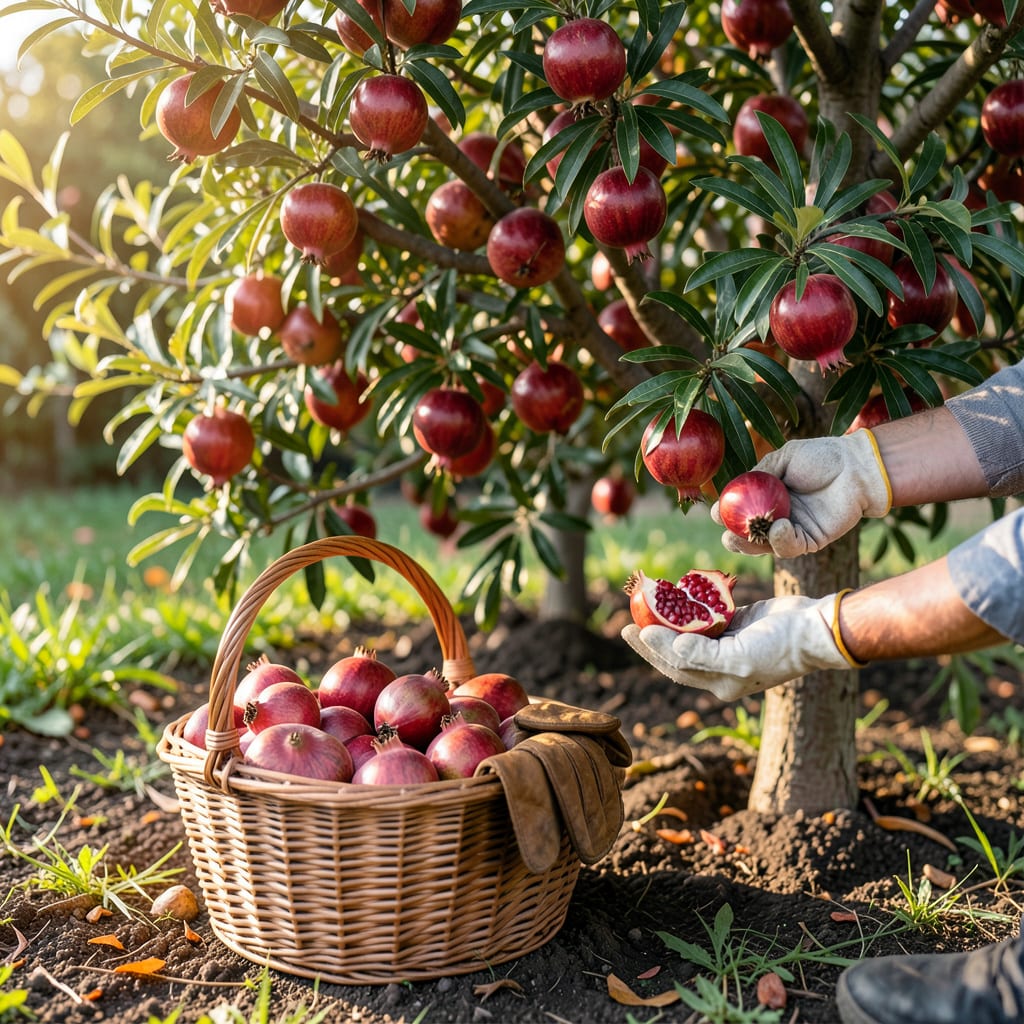
I remember the first time I picked a pomegranate too early—what a disappointment. The 🍇 Pomegranate won’t ripen further once it’s off the tree, so timing is everything.
From August to October, watch for deep color and that telltale metallic sound when tapped. I’ll show you exactly how to spot the perfect moment for the sweetest harvest.


I’ve learned that pomegranates won’t ripen off the tree, so picking at the right moment is crucial. The most reliable sign is a deep red or purple color that covers the entire fruit.
Another telltale indicator is the skin texture. A ripe pomegranate will have a slightly leathery feel rather than smooth and shiny. This change signals the fruit is ready. 🌳
The sound test is my favorite method. Tap the fruit lightly with your knuckle—if it makes a metallic ping, it’s ripe. A dull thud means it’s not ready yet.
Check the crown of the fruit too. A ripe pomegranate often develops a slight split near the stem, which is a natural part of the ripening process.
If you see green or yellow patches, leave the fruit on the tree. These are clear signs the pomegranate isn’t ready for harvest.
A ripe pomegranate should feel heavy for its size and firm to touch. If it gives under gentle pressure, it’s likely overripe or underripe.
I always recommend testing a few fruits first. Pick one that shows all the signs, cut it open, and check the arils inside. They should be plump and juicy.
Remember, early varieties may ripen in August, while late varieties can stay on the tree until October. Watch your tree closely during this window.
Finally, use pruning shears or a sharp knife to harvest. Twisting the fruit off can damage the branch or the pomegranate itself. 🌿
Timing your pomegranate harvest depends on your climate zone and variety. In USDA zones 7-11, the window typically spans from August to October, but local weather plays a big role. 🌳
Early varieties like ‘Wonderful’ often ripen in late August, while ‘Eversweet’ may hold on the tree until October. Cooler regions see later harvests than warm desert climates.
Watch for first frost warnings. Pomegranates can handle light frost, but a hard freeze will damage the fruit. Harvest before temperatures drop below 28°F (-2°C). 🌡️
In humid regions, pomegranates may split if left too long. Check daily once they reach full color to prevent losses from rain or excess moisture.
For container-grown trees, the harvest window may shift slightly. These trees often ripen fruit 1-2 weeks earlier due to controlled conditions and root restriction.
I always mark my calendar when I see the first color change. From that point, it typically takes 30-45 days for the fruit to fully ripen, depending on the weather.
If you’re unsure, pick a test fruit and check the seeds. They should be deep red and surrounded by juicy arils, not pale or translucent. ✂️
Picking pomegranates too early is the most common mistake I see. If the fruit hasn’t developed its full color or makes a dull sound when tapped, it’s not ready.
Another error is waiting too long. Overripe fruits can split on the tree or attract pests. Once they reach peak ripeness, harvest within 1-2 weeks for best quality. 🌳
Warning: Never twist pomegranates off the branch. Use pruning shears to avoid damaging the fruit or tree. Twisting can cause internal bruising and spoilage.
Ignoring variety-specific cues can also lead to mistakes. Some types ripen earlier or later, so know your tree’s needs. Early varieties may be ready in August, while others need until October.
Don’t overlook the stem condition. A slightly cracked crown is normal, but if the stem is green and pliable, the fruit isn’t ripe yet. Wait for it to turn woody and brown.
Finally, avoid harvesting after heavy rain. Excess moisture can cause splitting. Check the forecast and pick during a dry spell for the best results. ✂️
Look for a deep red or purple color all over and tap the fruit. A metallic ping means it’s ready, while a dull thud means it needs more time.
Pomegranates won’t ripen off the tree. Picking too soon results in sour, hard arils. Always wait for full color and the hard rind to ensure sweetness.
Yes, overripe fruits may split on the tree or attract pests. Harvest within 1-2 weeks of reaching peak ripeness for the best flavor and storage.
Early varieties like ‘Wonderful’ ripen in August, while others, such as ‘Eversweet’, may need until October. Know your tree’s type.
