
Beautiful Plants For Your Interior
Beautiful Plants For Your Interior
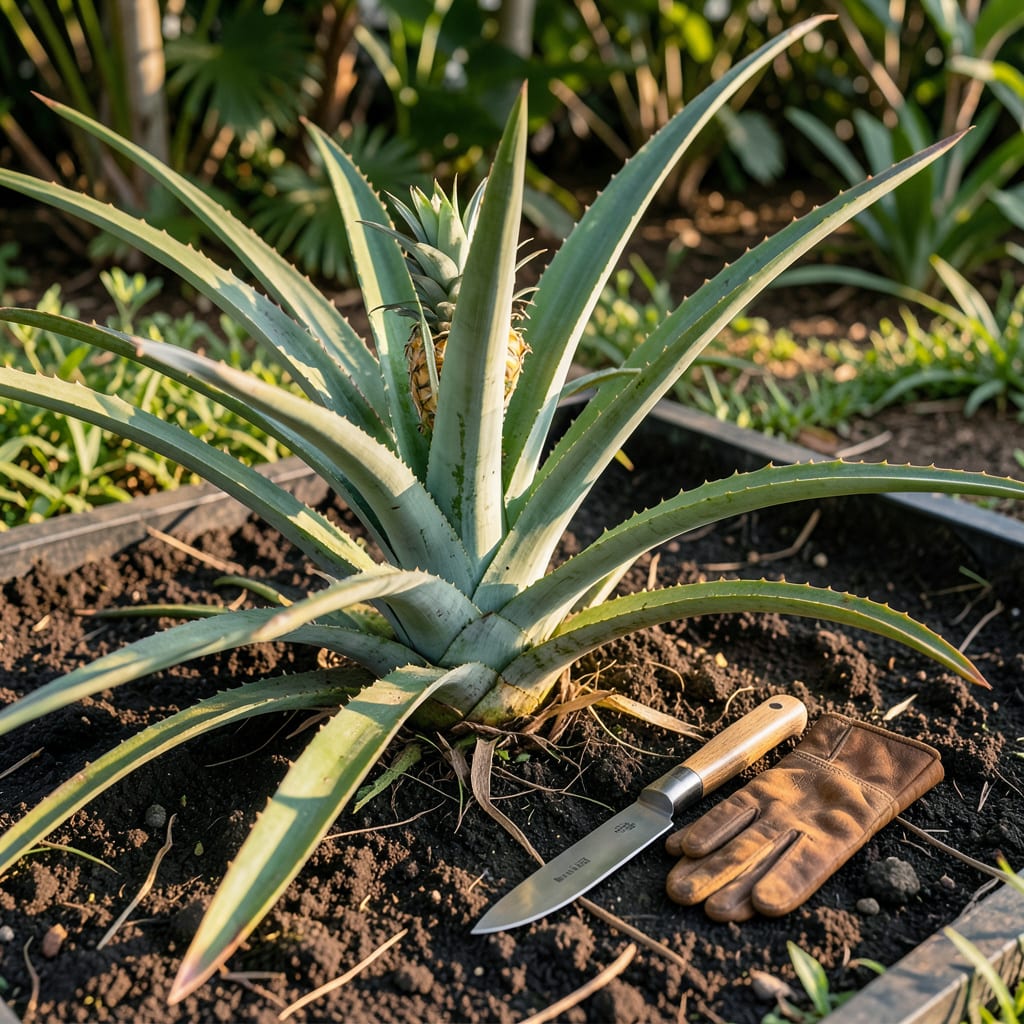
Timing is everything when it comes to harvesting your Pineapple 🍍. Picking too early or too late can ruin all your hard work growing this tropical fruit.
I’ll show you the most reliable signs to look for – from color changes to that telltale sweet aroma – so you can confidently harvest at peak ripeness.


Pineapples don’t ripen further once picked, so timing your harvest is critical. I wait for the color shift from deep green to golden yellow at the base, which signals peak sweetness is near.
The sweet aroma at the fruit’s base is another telltale sign. If I can smell that tropical fragrance without cutting, it’s nearly ready for my garden harvest.
| Sign | What to Look For | Why It Matters |
|---|---|---|
| Color Change | Golden yellow at base | Indicates sugar development |
| Aroma | Sweet smell near stem | Confirms ripeness is complete |
| Texture | Slight softness when pressed | Shows fruit maturity |
| Leaves | Brown lower leaves | Natural senescence sign |
I also check for leaf changes—when the lower leaves start turning brown and dry, it’s a natural part of the ripening process. This often happens as the fruit matures.
A gentle squeeze test helps too. If the pineapple yields slightly to pressure, it’s ready. But I avoid squeezing too hard to prevent bruising the fruit.
The tug test is another method I use. If the pineapple easily detaches from the plant with a gentle twist, it’s a strong indicator of readiness.
I’ve learned that timing varies by climate. In tropical zones, pineapples may ripen year-round, but in cooler areas, the process can take longer.
For me, the combination of signs is key. I look for at least two or three indicators—like color, aroma, and texture—before making the final decision to harvest.
Once I’ve confirmed ripeness, I use clean pruning shears or a sharp knife to cut the fruit from the plant, leaving a short stem attached for easier handling.
Harvesting at the right time ensures the best flavor and texture. A perfectly ripe pineapple from my garden is worth the patience and attention to detail. 🌱
Testing pineapple ripeness before harvesting ensures you get the sweetest fruit. I always start with a visual check for that telltale golden color shift from green.
The aroma test is my next step—lean in and sniff the base of the fruit. A sweet tropical smell means it’s ready, while no scent means it needs more time.
I find the tug test particularly reliable. If the leaf resists, the pineapple isn’t ready. If it slips out smoothly, it’s time to harvest.
For the squeeze test, press the fruit lightly. A ripe pineapple gives just a little, like a firm avocado. If it’s rock hard, wait a few more days.
The color change is the most obvious sign. A fully golden-yellow pineapple is at peak ripeness, but some varieties stay partially green. Trust the aroma and feel over color alone.
Finally, check the leaves at the base. If they’re turning brown or drying, that’s another strong indicator your pineapple is ready to pick. Always combine multiple tests for the best results.
🌿Testing for pineapple ripeness is simpler than you might think. I always start with the tug test—gently pull a leaf from the crown. If it comes out easily, your fruit is likely ready. This method works because ripe pineapples have looser leaves.
Next, I check the aroma at the base. A sweet, tropical smell means it’s time to harvest. If there’s no scent, give it more time. This is one of the most reliable indicators of a perfectly ripe pineapple.
The color inspection is another key step. Your pineapple should transition from green to golden yellow. Don’t wait for full yellow—just a partial shift is enough. This visual cue is hard to miss once you know what to look for.
Finally, I use the gentle squeeze test. A ripe pineapple will give slightly under pressure, like a firm avocado. If it’s rock hard, it’s not ready. This tactile check helps me confirm what the other tests suggest.
Combining these methods ensures I never pick my pineapples too early or too late. With practice, you’ll get a feel for the perfect harvest window every time. ☀️
Pineapples typically take 18-24 months from planting to harvest. The fruit itself matures in about 5-7 months once the flower appears, depending on climate and variety.
Harvesting too soon results in a sour, starchy taste with hard texture. Unlike some fruits, pineapples won’t ripen further after picking. Always wait for the golden color and sweet aroma.
It’s risky. Overripe pineapples may ferment or split on the plant. Once you spot the readiness signs, harvest within 1-2 days for peak quality.
Not always. Size varies by variety, but color and aroma are better indicators. A small pineapple can be perfectly ripe, while a large one might still be green inside.
