
Beautiful Plants For Your Interior
Beautiful Plants For Your Interior
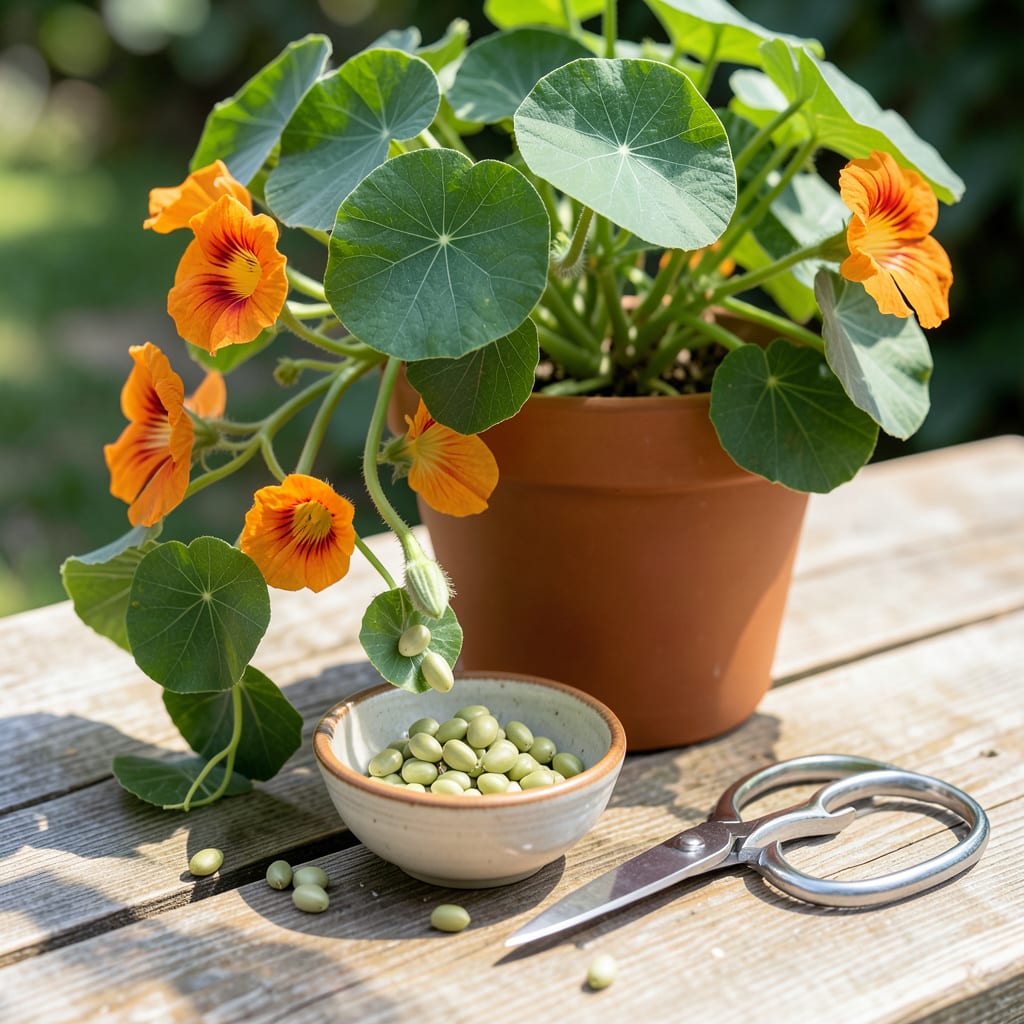
Timing is everything when it comes to collecting seeds from your Nasturtium 🌼. Wait too long and you risk losing them to the wind; pick too soon and they won’t germinate.
I’ll show you the easiest way to spot the perfect moment. From color changes to the telltale rattle, you’ll learn how to harvest seeds that are ready to thrive.


Harvesting nasturtium seeds at the right moment ensures the best germination rates. I wait until the seed pods change from green to beige or light brown. This color shift signals the seeds are maturing inside.
The pollination process must complete before picking. After flowers fade, the seed pods form and gradually dry. I check for a papery texture and listen for seeds rattling inside when shaken.
| Stage | Indicator |
|---|---|
| Color Change | Pods turn beige to brown |
| Texture | Dry and papery to touch |
| Sound Test | Seeds rattle when shaken |
| Stem Signal | Connecting stem turns yellow |
I avoid harvesting during wet conditions as moisture can trap seeds in the pod. A dry, sunny day is ideal for collection. Morning works best when dew has evaporated but before afternoon heat sets in.
The development stages are crucial to observe. First, the flower wilts and the pod emerges. Then it swells as seeds grow inside. Finally, the pod dries and the seeds harden, ready for collection.
If I pick too early, the seeds won’t germinate. Immature seeds are soft and green inside. I always cut open a test pod to verify the seeds are fully formed and hard before harvesting the rest.
I also watch for overripe pods that might split open. Once they shatter, the seeds scatter and are lost. Catching them at the perfect dryness ensures I collect every viable seed.
For best results, I harvest weekly during peak season. Nasturtiums produce continuously, so regular checks prevent missing the window. I use small scissors to snip pods from the plant without damaging the stems.
After collection, I let pods dry for another week in a cool, dark place. This extra drying time guarantees the seeds are completely ready for storage or immediate planting.
Storing seeds in paper envelopes keeps them dry. I label each with the date and variety. Properly dried and stored nasturtium seeds remain viable for up to 4 years, giving me plenty of time to use them. 🌱
Testing for seed maturity is simple once you know what to look for. I rely on the shake test first: gently rattling the pod to hear seeds moving inside. This confirms they’re loose and ready for harvest.
Another method is the paper towel test. I place a seed on a dry paper towel and press lightly. If it leaves no moisture mark, it’s dry enough to collect. Wet seeds need more time on the plant.
For the visual inspection, I open a pod to check the seeds. Ready seeds are dark brown or black and feel hard. If they’re still light-colored or soft, I leave them to mature longer.
I always test multiple pods from different parts of the plant. Nasturtiums don’t all mature at once, so checking various locations ensures I don’t miss any ripe seeds.
Weather plays a role too. After rainy days, I wait an extra 24-48 hours before testing. Wet conditions can give false results, making seeds seem unready when they’re actually fine.
Once seeds pass these tests, I harvest immediately. Delaying risks pods splitting open and losing seeds to the wind or ground. I use a small basket to collect pods, keeping them in a single layer to prevent moisture buildup. 🌱
Picking nasturtium seeds too early is a common mistake I see. Green pods might look ready, but the seeds inside are often soft and immature. This leads to poor germination rates and wasted effort.
Another error is harvesting during wet weather. Moisture can cause seeds to mold or fail to dry properly. I always wait for a dry, sunny day to ensure the best results.
Harvesting too early or in wet conditions can ruin your seed collection. Always check for dry, brown pods that rattle when shaken.
Mishandling seed pods is another issue. Rough handling can cause pods to split open prematurely, scattering seeds. I use sharp scissors to snip pods carefully from the plant.
Ignoring the stem signal is a mistake too. When the stem connecting the pod to the plant turns yellow or brown, it’s a clear sign the seeds are ready. I never harvest if the stem is still green.
Finally, overlooking storage can waste good seeds. I always dry collected pods for 1 week in a cool, dark place before storing them in paper envelopes to maintain viability. 🌱
Check for a color shift from green to beige or brown and a papery texture. Give the pod a gentle shake—you should hear the seeds rattling inside.
Pick on a dry, sunny morning after the dew has evaporated. This prevents moisture from trapping seeds and ensures they’re at peak dryness for collection.
Wait 24-48 hours after rain. Wet pods can give false readings on dryness tests, and moisture may cause mold during storage.
Dry pods for 1 week in a cool, dark place, then store seeds in paper envelopes. Label with the date—they stay viable for up to 4 years.
