
Beautiful Plants For Your Interior
Beautiful Plants For Your Interior
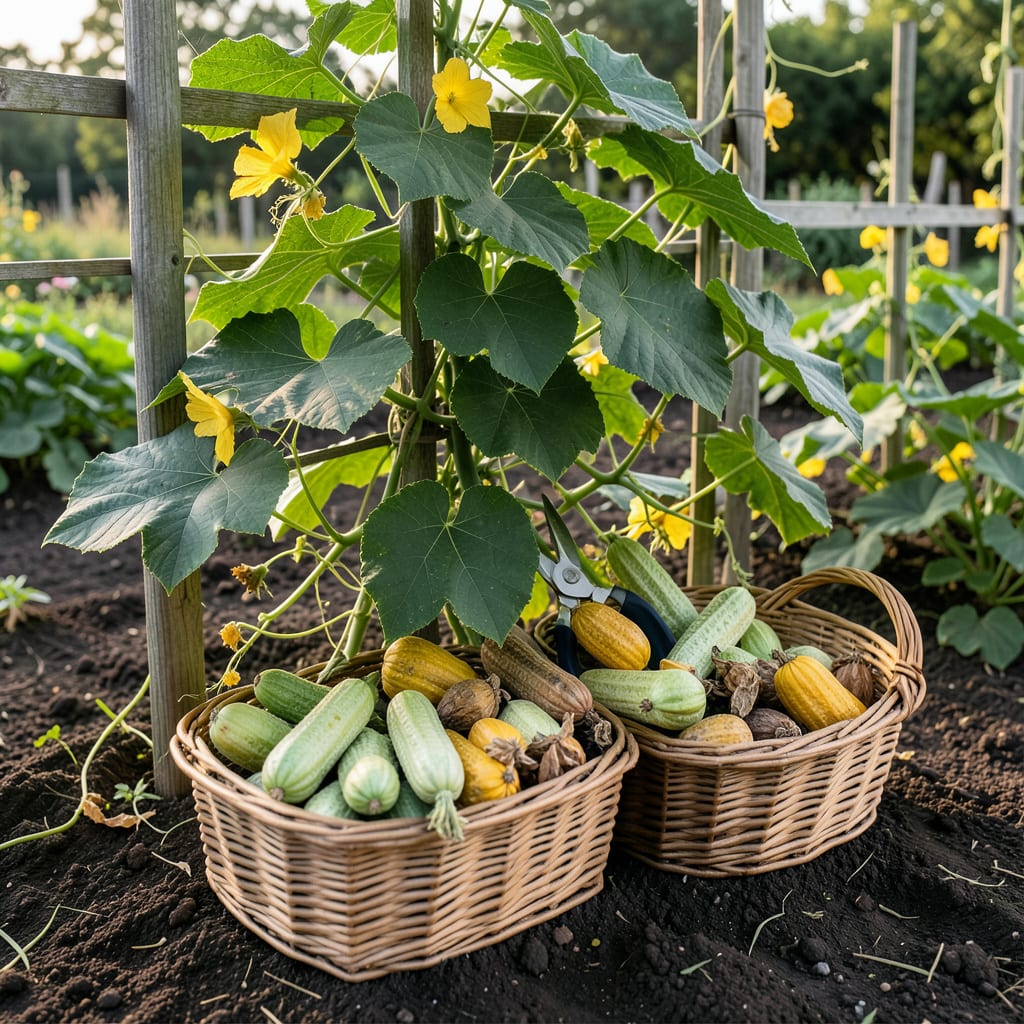
Timing is everything when growing Luffa 🥒. Picking too early or too late can ruin your harvest, but there are clear signs to watch for.
I’ll show you the perfect visual cues—like color changes and lightweight feel—that mean your gourds are ready for sponge-making magic.


When growing Luffa, the most reliable indicator of harvest readiness is the color transformation. As the gourd matures, its skin shifts from a vibrant green to a yellow or brown hue. This change signals the breakdown of chlorophyll.
The weight of the gourd also provides a clear clue. A ready-to-pick luffa will feel surprisingly light for its size, indicating that the moisture content has decreased and the fibrous network inside has developed. This is crucial for sponge production.
| Sign | What to Look For | Why It Matters |
| Color Change | Yellow or brown skin | Indicates maturity |
| Weight | Feels light for size | Fibers have developed |
| Seed Rattle | Seeds loose inside | Confirms dryness |
| Stem Condition | Drying and withering | Final maturity sign |
Another sure sign is the “shake test”. When you gently shake a mature luffa, you should hear the seeds rattling inside. This sound confirms that the interior has dried sufficiently for the fibers to be processed into a sponge.
The stem also tells a story. As the gourd nears harvest time, the stem connecting it to the vine will begin to dry out and wither. This is nature’s way of signaling that the luffa is no longer drawing nutrients from the plant.
If you’re growing luffa for culinary use, you’ll want to pick them when they’re still young and green. At this stage, they’re tender and can be cooked like zucchini. But for sponge production, patience is key—wait for the full maturity signs.
I always recommend checking your luffa gourds daily as they approach maturity. The transition from not-ready to perfect can happen quickly, especially in hot weather. Missing the window by just a few days can result in an overripe gourd that’s past its prime.
The texture of the skin changes too. A mature luffa will have a slightly rough or papery feel compared to the smooth skin of younger gourds. This texture change is another confirmation that the fibers inside are ready.
Remember that variety matters. Smooth luffas (Luffa aegyptiaca) and ridged luffas (Luffa acutangula) may have slightly different timelines, but these visual cues apply to both. The key is consistency in your observations.
Finally, trust your instincts. If most of these signs are present, your luffa is likely ready. The combination of color, weight, sound, and stem condition gives you a complete picture of harvest readiness 🌿
Not all luffa varieties mature at the same rate. The smooth luffa (Luffa aegyptiaca) typically reaches harvest readiness in 150-180 days, while the ridged luffa (Luffa acutangula) may be ready slightly sooner.
For sponge production, smooth luffas often need the full 180 days to develop their dense fiber network. Ridged varieties, with their angular shape, tend to mature a bit faster but still require patience to reach peak fiber quality.
| Variety | Days to Maturity | Best Use |
|---|---|---|
| Smooth Luffa | 150-180 days | Sponge |
| Ridged Luffa | 120-150 days | Culinary or Sponge |
If you’re growing luffa for culinary purposes, both varieties can be harvested young and green at about 6-12 inches long. At this stage, they’re tender and perfect for cooking, much like zucchini.
For sponge production, I recommend waiting until the gourds show all the maturity signs we discussed earlier. The smooth variety often produces a softer sponge, while ridged luffas create sponges with more texture.
Remember that climate conditions can affect these timelines. In warmer zones, your luffas may mature faster, while cooler areas might extend the growing season. Always prioritize the visual cues over the calendar.
I’ve found that ridged luffas often start showing maturity signs about 2-3 weeks before smooth ones in my garden. This makes them a good choice if you’re eager to try your first luffa sponge project sooner rather than later.
Regardless of variety, the shake test and color change remain your most reliable indicators. When in doubt, let the plant tell you it’s ready 🌿
One of the biggest mistakes I see with luffa harvesting is picking too early. If the skin is still green and the gourd feels heavy, the fibers inside haven’t fully developed yet. This results in a poor-quality sponge.
Another common error is waiting too long. An overripe luffa may split open or develop mold inside, ruining both the fibers and the seeds. The window for perfect harvest is surprisingly narrow.
⚠️ Warning: Never harvest luffa when the skin is still solid green or if it feels heavy and waterlogged. This means the fibers haven’t formed properly for sponge use.
I always use the nail test to confirm readiness. Gently press your fingernail into the skin—if it leaves a dent but doesn’t puncture, it’s ready. If it punctures easily, it’s overripe.
Improper storage after harvest is another pitfall. Luffas need dry, well-ventilated conditions to prevent mold. I hang mine in a shady, airy spot for 2-3 weeks to fully dry.
Finally, don’t forget to check your plants daily as they near maturity. The difference between perfect and overripe can be just 2-3 days in hot weather. Trust the visual cues over the calendar every time 🌿
Look for a yellow or brown skin color and a lightweight feel. The seeds should rattle inside when shaken, and the stem will start drying out.
Picking too soon means the fibers haven’t fully developed. The gourd will feel heavy, and you won’t get a good sponge from it. Wait for the visual signs.
No, once it turns yellow or brown, it’s too tough for eating. For culinary use, harvest when it’s still young and green, about 6-12 inches long.
Smooth luffa takes 150-180 days, while ridged types may be ready in 120-150 days. Always check the maturity signs before harvesting.
