
Beautiful Plants For Your Interior
Beautiful Plants For Your Interior
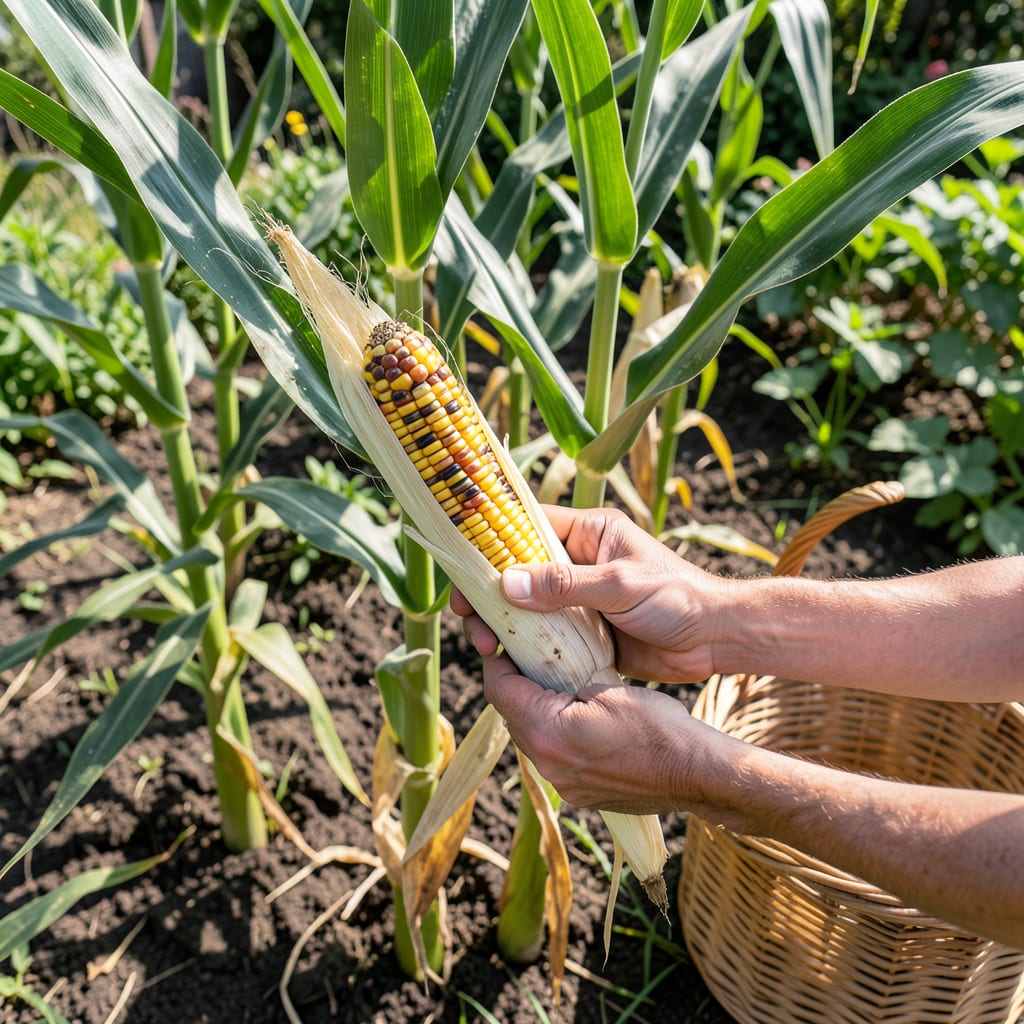
Timing your harvest can make or break your Indian Corn crop. I’ve seen too many gardeners miss the perfect window, only to end up with underripe or over-dry ears.
With 🌽 Indian Corn, the signs are clear if you know what to look for. Let me show you how to spot the exact moment for a bountiful, flavorful harvest.


Harvesting Indian Corn at the right time ensures the best flavor and seed viability. I always watch for visual cues that signal maturity, like husk dryness and kernel hardness. These signs are your best guide in the garden.
Timing varies slightly by variety and climate, but most Indian Corn reaches maturity in 80-120 days. Look for consistent changes in the ears and silks as harvest time approaches.
| Sign | Description |
|---|---|
| Husk Color | Turns brown and dry |
| Kernel Hardness | Hard and glossy when pressed |
| Ear Firmness | Feels full and solid |
| Silk Dryness | Completely dry and brown |
The husk is your first clue. When it turns brown and feels papery, the corn is nearing readiness. I check the kernels next—they should be hard enough to resist a fingernail.
A firm ear is another key indicator. Gently squeeze the ear through the husk—if it feels plump and heavy, it’s likely ready. The silks should also be dry and brittle to the touch.
For ornamental varieties, color changes in the kernels can signal maturity. I’ve noticed some develop deep reds, blues, or whites when fully ripe. These colors often intensify as the corn dries.
If you’re growing for flour or seed, wait until the kernels are rock-hard. This stage ensures the starches have fully converted, which is critical for storage and grinding. ☀️
In drier climates, Indian Corn may mature faster. I recommend checking the ears weekly once the silks start to brown. In humid regions, the husks might take longer to dry.
Don’t rush the process. Picking too early results in soft kernels that lack flavor. On the other hand, leaving it too long can expose the corn to pests or mold, especially in wet weather. 🌾
I’ve found that morning harvests work best. The corn is firmest after the cool night air, and the husks are easier to handle. Use a sharp knife or pruners to cut the ears cleanly from the stalk.
Testing your Indian Corn for ripeness is simple with a few proven methods. I rely on the thumbnail test and milk stage check to confirm maturity before harvesting. These techniques help avoid guesswork.
Start by peeling back a small portion of the husk to expose the kernels. Press your thumbnail into a kernel—if it resists and feels hard, the corn is ready. If it dents easily, it needs more time. 🌽
For the milk stage check, pierce a kernel with your fingernail. If the liquid inside is thick and milky, the corn is in the late milk stage and nearly ready. If it’s clear, it’s not ripe yet.
Always refer to your seed packet for the maturity timeline. Most Indian Corn varieties take 80-120 days from planting. I mark my calendar to start checking around day 80 for early signs.
Another trick is the ear shake test. Hold the ear and give it a gentle shake. If the kernels feel solid and don’t rattle, it’s likely ready. This works best when combined with the other tests for accuracy. ☀️
Finally, trust your senses. Ripe Indian Corn will have a dry husk, firm ear, and hard kernels. If all signs align, it’s time to harvest and enjoy the fruits of your labor. 🌾
Harvesting Indian Corn at the wrong time can ruin your crop. I’ve seen gardeners lose flavor and seed viability by picking too soon or waiting too long. Timing is critical for quality and storage.
Picking too early results in soft kernels that lack sweetness and texture. The starches haven’t fully developed, making the corn starchy and bland. This is especially true for flour corn varieties.
⚠️ Avoid These Harvesting Mistakes
Picking too early: Soft kernels and poor flavor. Waiting too long: Pest damage and mold risk in wet conditions.
Leaving Indian Corn on the stalk too long can expose it to pests and diseases. In humid climates, excess moisture can cause mold or rot. I always check the weather forecast before delaying harvest.
Another common mistake is ignoring variety-specific timelines. Some Indian Corn matures in 80 days, while others need 120 days. Always refer to your seed packet for guidance.
Finally, don’t harvest in wet conditions. Moisture can trap bacteria and lead to ear rot. I wait for a dry morning to ensure the husks and kernels stay intact. ✂️
Press a kernel with your thumbnail. If it resists and feels firm, it’s ready. Soft kernels mean it needs more time.
Early picking results in soft kernels with poor flavor and texture. The starches won’t have fully developed, making it bland.
Avoid harvesting in rain or damp conditions. Moisture can cause mold or rot. Wait for a dry morning instead.
Yes, the husk turns brown and dry as it matures. If it’s still green, the corn isn’t ready yet.
