
Beautiful Plants For Your Interior
Beautiful Plants For Your Interior
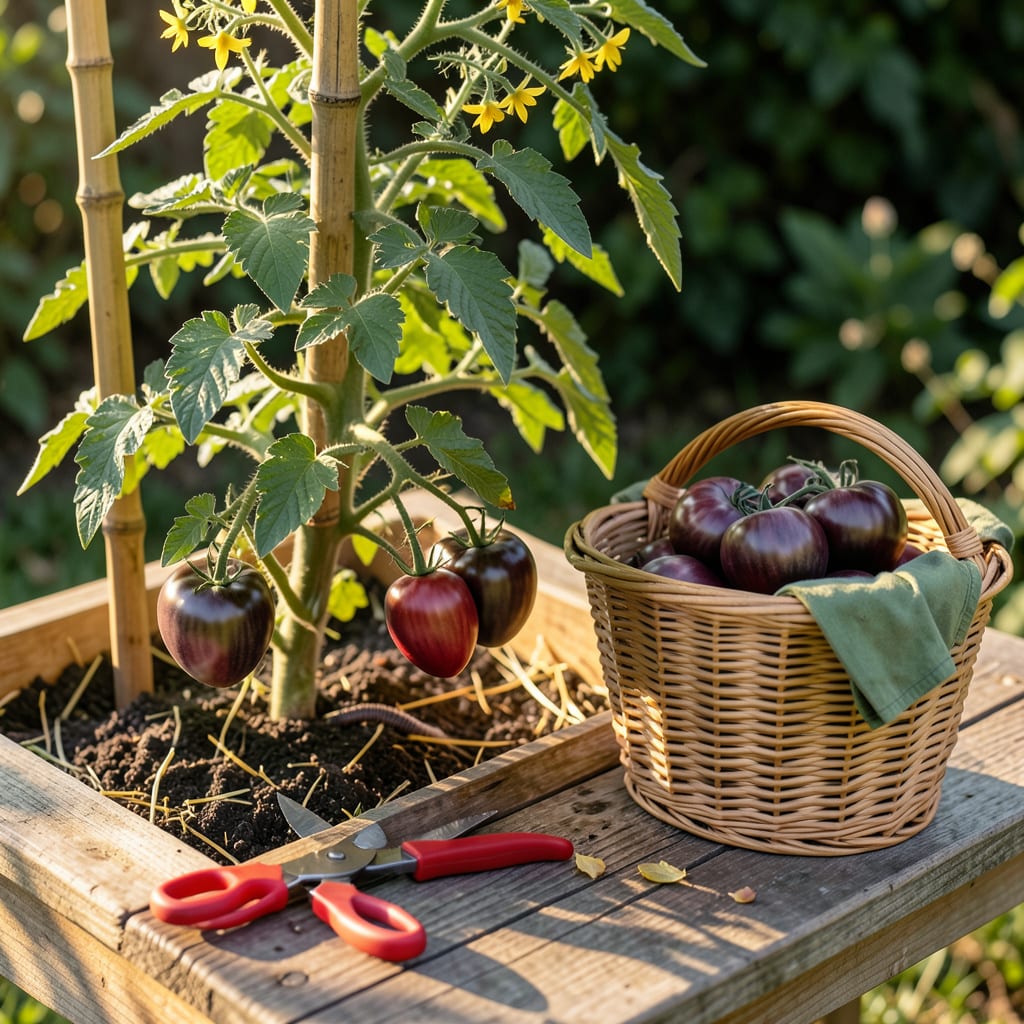
That moment when your Cherokee Purple 🍅 tomatoes finally ripen is pure magic—but their dark, mysterious hue makes timing tricky. Unlike bright red varieties, these heirlooms whisper “I’m ready” through subtle clues most gardeners miss.
I’ve wasted too many seasons picking them too early (bland!) or too late (mushy!). After mastering the perfect 3-step test for color, texture, and stem separation, I now harvest them at peak smoky-sweet flavor every time. Here’s exactly what to look for—no guesswork needed.


Cherokee Purple tomatoes don’t shout “I’m ready!” like red varieties—they whisper. Their deep purple-black shoulders with red-green undertones develop gradually, often fooling gardeners into waiting too long. I learned the hard way that color alone isn’t enough; texture and stem clues are just as critical.
These heirlooms typically reach maturity in 75–90 days, but your climate plays a huge role. Cooler zones may extend that window by a week or two, while hotter areas could speed it up. The real secret? A combination of visual, tactile, and olfactory cues that I’ll break down next.
The biggest mistake I see gardeners make is waiting for Cherokee Purples to turn fully black. By then, they’re often overripe and mushy inside. Instead, focus on that dull, matte finish—it’s your cue that sugars have fully developed.
Sunlight exposure dramatically affects color. Tomatoes on the outer edges of the plant may develop deeper purples, while shaded fruit might stay greener. I always check the underside of the tomato, where color develops last, to confirm even ripening.
Pro tip: If you’re growing Cherokee Purples alongside other heirlooms like Black Krim or Brandywine, note that Black Krim ripens slightly earlier (70–80 days) and has a darker, almost sooty appearance. I’ll cover those differences in detail later.
Still unsure? Perform the “countertop test”: Place a questionable tomato on your kitchen counter for 24 hours. If it softens slightly and develops a stronger aroma, it was ready. If not, it needed more vine time. This trick has saved me countless underripe tomatoes!
Remember, Cherokee Purples continue ripening off the vine—but only if they’ve started the color-change process. Green fruit won’t ripen properly indoors, so resist the urge to pick early unless frost threatens. When in doubt, err on the side of leaving them longer.
Once you’ve mastered these signs, you’ll be rewarded with that legendary smoky-sweet flavor this heirloom is famous for. The difference between a perfectly ripe Cherokee Purple and one picked a day too early is like comparing a gourmet meal to fast food—worth the patience! 🪴
If you’re growing multiple heirloom varieties, you’ve probably noticed that Cherokee Purple tomatoes don’t follow the same ripening rules as their red cousins. Their unique color progression and texture changes can be confusing—especially when compared to similar dark varieties like Black Krim or classic reds like Brandywine.
I’ve found that Cherokee Purples typically take 75–90 days to mature, while Black Krim might be ready in 70–80 days. The key difference? Cherokee Purples develop that signature smoky-sweet flavor when their shoulders turn deep purple with reddish-green undertones, not when they’re fully black. Let’s break down the comparisons.
| Variety | Days to Maturity | Ripeness Color | Texture at Peak | Stem Separation | Flavor Profile |
|---|---|---|---|---|---|
| Cherokee Purple | 75–90 days | Deep purple-black shoulders with reddish-green undertones | Slight give, like a ripe avocado | Detaches with gentle twist | Smoky, sweet, complex |
| Black Krim | 70–80 days | Darker, almost sooty black with green shoulders | Firmer than Cherokee Purple | Requires slightly more force | Salty, umami-rich |
| Brandywine | 80–100 days | Pink-red, no purple hues | Very soft when ripe | Easiest to detach | Sweet, low-acid |
| Cherokee Chocolate | 80–90 days | Brownish-purple with green shoulders | Firm but yields slightly | Moderate resistance | Balanced sweet-tart |
The color progression is where most gardeners get tripped up. Cherokee Purples develop their signature dull, matte finish when ripe, while Black Krims maintain a slightly glossier appearance even at peak. I always check the shoulder area—that’s where the true color develops last.
Texture is another giveaway. A ripe Cherokee Purple should yield to gentle thumb pressure, but it won’t be as soft as a Brandywine. If it feels like you’re pressing a tennis ball, it needs more time. The “gentle twist test” works best for these—if the stem resists, walk away for another day.
Here’s a trick I use when growing multiple varieties: tag your plants with colored ribbons matching their ripe color. Purple for Cherokee Purple, black for Black Krim, red for Brandywine. It’s a simple visual reminder that prevents me from harvesting a Black Krim thinking it’s a Cherokee Purple (yes, I’ve done that!).
Remember that climate affects ripening times. In cooler zones (like my Zone 6 garden), Cherokee Purples might take the full 90 days, while in hotter climates, they could be ready at 75 days. I keep a harvest journal to track these variations year to year—it’s the best way to predict timing in your specific microclimate.
If you’re ever unsure, perform the “24-hour counter test” I mentioned earlier. Place the tomato indoors at room temperature. If it develops a stronger aroma and softens slightly overnight, it was ready. If not, it needed more vine time. This works for all heirlooms but is especially helpful with the darker varieties.
The reward for perfect timing? That unmistakable smoky-sweet flavor that makes Cherokee Purples a garden favorite. Once you’ve nailed the ripeness cues for these, you’ll find judging other heirlooms becomes much easier. Happy harvesting! 🌱
Timing is everything with Cherokee Purple tomatoes. Pick them too early, and you’ll get a hard, mealy texture with none of that signature smoky-sweet flavor. Wait too long, and you risk split skins or a mushy interior that attracts pests. I’ve learned the hard way that these heirlooms have a goldilocks zone—just a few days where they’re absolutely perfect.
An underripe Cherokee Purple will feel rock-hard when squeezed, with a glossy skin that lacks the characteristic matte finish. The flavor is disappointingly bland, almost like a grocery store tomato. I once picked a batch too early for a garden party, and the difference was shocking—guests couldn’t believe they were the same variety as my perfectly ripe ones from earlier in the season.
If you’ve accidentally picked Cherokee Purples too early, don’t despair. Place them in a paper bag with a ripe banana at room temperature. The ethylene gas will help them ripen, though they’ll never reach the same flavor complexity as vine-ripened fruit. I’ve salvaged many early picks this way—they’re great for cooking but not ideal for fresh eating.
Overripe tomatoes present different challenges. Their skins become thin and prone to splitting, which invites fruit flies and other pests. If you notice fermented smells or soft spots, harvest immediately—even if the color isn’t perfect. These can still be used for sauces or salsas, where texture is less critical. I keep a “rescue bowl” in my kitchen for these less-than-perfect specimens.
The 24-hour rule works wonders for questionable tomatoes. Place them on your counter (not in the fridge!) and check after a day. If they’ve developed a stronger aroma and softened slightly, they were close enough to ripe. If there’s no change, they needed more vine time. This simple test has saved me from many disappointing harvests.
Remember that Cherokee Purples continue ripening after picking, but only if they’ve started the color-change process. Completely green tomatoes won’t ripen properly indoors. When frost threatens, I harvest all tomatoes showing any color and let them finish ripening inside. The flavor won’t be quite as good as vine-ripened, but it’s far better than losing them to frost damage. 🌱
Look for deep purple-black shoulders with reddish-green undertones. The skin should appear dull, not glossy, and the fruit should yield slightly to gentle thumb pressure. A ripe one will also detach easily with a gentle twist.
Harvest any tomatoes showing color and bring them indoors. Place them in a paper bag with a ripe banana at room temperature to speed up ripening. They won’t be as flavorful as vine-ripened but will still develop better taste than green ones.
Sunlight exposure makes a big difference! Tomatoes on the outer edges get more sun and ripen faster, while shaded ones may stay greener longer. Always check the underside of each tomato, as that’s the last area to develop full color.
Yes! Reduce watering slightly as they near maturity—this stresses the plant just enough to concentrate sugars. You can also remove some leaves to increase sunlight exposure. For already-picked tomatoes, store them with an apple or banana in a closed container.
Harvest split tomatoes immediately to prevent pest damage. They’re still usable—just cut away the damaged parts. Split tomatoes are perfect for sauces or cooking where appearance doesn’t matter. Use them within 24 hours for best quality.
