
Beautiful Plants For Your Interior
Beautiful Plants For Your Interior
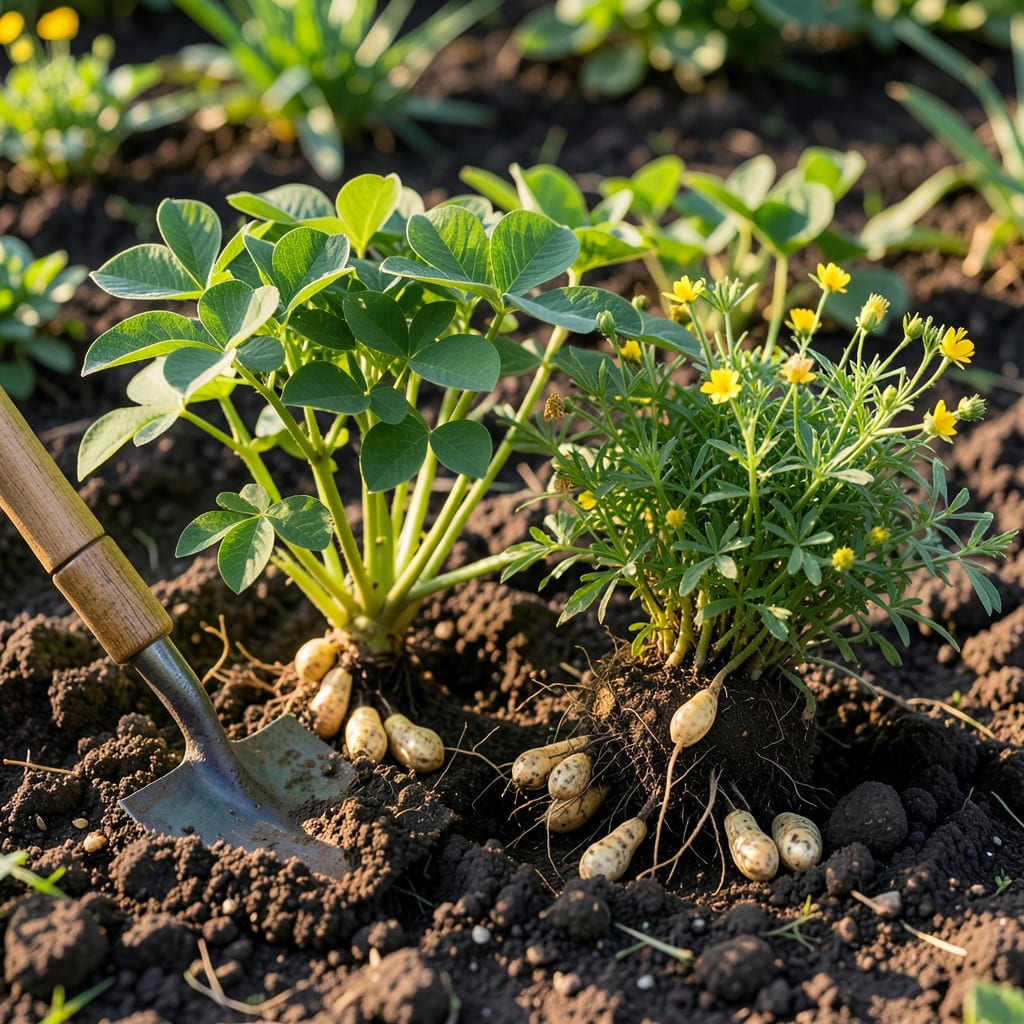
Timing your peanut harvest can make or break your crop. With the 🥜 Peanut ready in September – October, knowing the exact moment to pull them ensures the best flavor and storage.
I’ve learned the hard way that waiting for those yellowing leaves and fully formed pods is the key to perfect results. Let me share what to watch for so you don’t miss your window.


I always watch for yellowing leaves as the first sign my peanuts are nearing harvest. This color change indicates the plant is shifting energy to the developing pods below ground.
The 120-day mark is typically when I start checking for maturity. By this time, the pegs (stems connecting to soil) should be well-established, and pods visibly forming.
| Sign | Description |
|---|---|
| Yellowing leaves | Lower leaves turn bright yellow |
| Pod development | Visible through thin soil |
| Shell color | Turns from white to tan |
| Internal nuts | Filling out completely |
Another clear indicator is when the pods feel plump through the soil. I gently brush away dirt to check for fully formed shells with visible veining.
The scratch test works wonders: if I can easily scratch through a pod’s surface with my fingernail, it’s ready. This means the shell has hardened enough for harvest.
I also look for wilting plants as a late-stage sign. When the entire plant starts to die back, the peanuts inside are typically at peak maturity.
Remember that early varieties may mature in as few as 90 days, while others need up to 150 days. I always track my planting date to estimate the window.
In my experience, dry conditions before harvest improve flavor. I reduce watering about 1-2 weeks before pulling plants to concentrate sugars in the nuts.
Finally, I check a few plants first. If most show these signs, I know it’s time to harvest the entire crop. This systematic approach prevents premature picking of unripe peanuts.
Trust your eyes and hands – the plant will tell you when it’s ready 🌱
Testing peanut maturity is simpler than you think. I start with the scratch test—gently scrape a pod’s surface with your fingernail. If it leaves a mark, the shell is hardening nicely.
Next, I dig up a few plants to inspect the pods directly. Look for tan or brown shells with visible veining, which signals the nuts inside are plump and ready.
I also examine the inside of the pods. Mature peanuts will have a beige or tan inner skin, while immature ones remain white or translucent.
For larger fields, I test plants from different areas to ensure even maturity. If most pass these checks, I know the entire crop is ready for full harvest.
Avoid harvesting during wet conditions, as damp soil makes digging harder and can damage pods. I always wait for dry weather to begin.
Finally, I confirm with the leaf test—if most leaves are yellow and wilting, it’s a surefire sign the peanuts are at peak maturity and ready to be pulled from the earth 🌱
I’ve seen many gardeners rush their peanut harvest, only to end up with underdeveloped nuts and poor flavor. Patience is key—waiting for those yellowing leaves pays off.
Another common error is harvesting during wet soil conditions. Digging in damp earth can damage pods and lead to mold growth during drying.
⚠️ Harvesting Too Early or Too Late
Picking green peanuts results in poor texture. Waiting too long risks splits and sprouting.
I also caution against improper drying. Peanuts need warm, dry air for 1-2 weeks after harvest to cure properly. Skipping this step can cause storage issues.
Handling pods roughly can crack shells and expose nuts to pests. I always use gentle digging tools and handle plants with care during the process.
Finally, don’t overlook soil temperature. Harvesting when soil is below 50°F can shock plants. I aim for dry, sunny days with warm soil for best results.
Learn from my mistakes—your peanuts will thank you 🌱
Look for yellowing leaves and wilting plants. The pods should feel plump when gently pressed through the soil.
Picking them before maturity results in underdeveloped nuts with poor texture and flavor. The shells will be difficult to open, and the peanuts inside may not fill out properly.
Avoid digging in damp soil, as it can damage pods and lead to mold during drying. Always wait for dry weather and warm soil conditions.
Most varieties need 90-150 days after planting. Early types may be ready in 90 days, while others can take up to 150 days for full development.
