
Beautiful Plants For Your Interior
Beautiful Plants For Your Interior
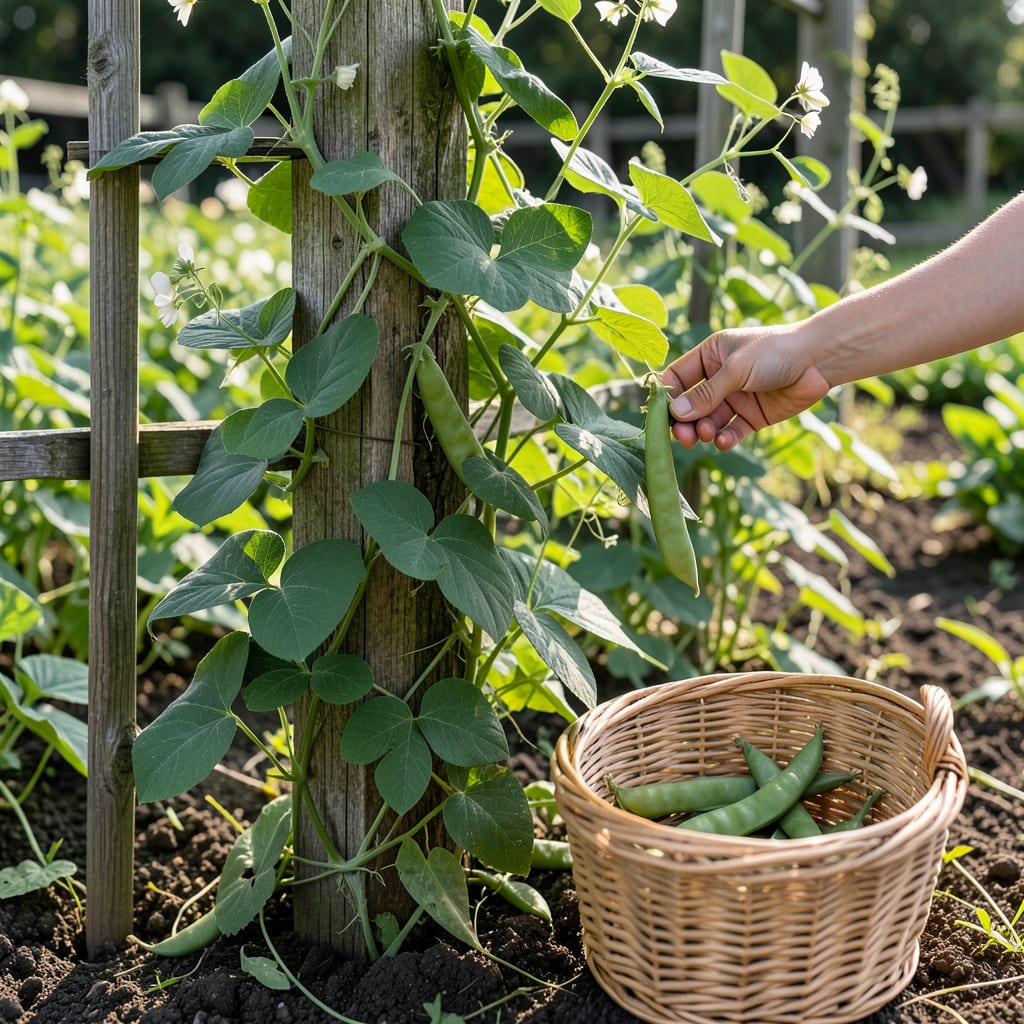
I remember the first time I picked Pea 🌱 pods too late – what a disappointment. Those tough, overgrown peas taught me that timing is everything when it comes to harvesting.
With these fast-growing legumes, the difference between sweet and starchy can be just a few days. Let me show you the visual cues that guarantee perfect flavor every time.


I always check for bright green pods first when scouting my pea plants. This vibrant color signals the peas inside are developing well and the pod is approaching maturity.
Next, I look for plump pods that feel firm when gently squeezed. The peas inside should be visible as small bumps through the pod skin, indicating they’re forming properly.
| Pea Type | Ready Sign | Size |
|---|---|---|
| Snap Peas | Pods snap easily | 2-3 inches |
| Shelling Peas | Peas fully formed | 3-4 inches |
| Snow Peas | Peas barely visible | 2 inches flat |
The texture test is crucial – a ready pod should feel smooth and firm, not soft or mushy. I also check that the pod snaps cleanly when bent.
For snow peas, the peas inside should be just visible as tiny bumps. These are harvested when the pods are still flat and the peas are underdeveloped.
Shelling peas need more time. I wait until the peas inside are round and plump, but the pod is still bright green and hasn’t started to yellow.
I’ve learned that size matters too. Most varieties are ready when pods reach 2-3 inches long, though this varies by type. Always check your seed packet for specifics.
The color change is another telltale sign. As pods mature, they’ll go from a dull green to that perfect bright green we’re looking for. Any yellowing means they’re past their prime.
I make it a habit to check plants daily once pods start forming. Peas can go from perfect to overripe in just 2-3 days during warm weather.
Remember, the earlier in the day you harvest, the sweeter your peas will be. I aim to pick in the cool morning hours for the best flavor.
With these visual cues, I’ve never had another batch of tough, starchy peas. The key is regular observation and acting at the first sign of readiness. 🌱
I’ve found that timing your harvest based on growth stages makes all the difference. For baby peas, I pick when pods are tiny and flat, usually just 1-2 inches long.
These young pods are perfect for quick cooking or fresh eating. The peas inside are barely formed, but the pods are tender and sweet. I check daily once flowers appear to catch them at this stage.
For snap peas, I wait until the pods are plump and crisp. At 2-3 inches, they’re ideal for eating whole. The peas inside should be small but visible as bumps.
Shelling peas need the most patience. I harvest these when the pods are 3-4 inches long and the peas inside are round and firm. The pods will start to lose their bright sheen.
If I miss the window, I let some pods mature fully for drying. These will turn yellow or brown and the peas inside become hard. Perfect for saving seeds or winter soups.
I always use two hands when picking to avoid damaging the vines. Hold the stem with one hand and gently pull the pod with the other. This keeps the plant productive for weeks. 🌱
I’ve made my share of pea harvesting mistakes over the years, and the biggest was waiting too long. Those overripe pods turn tough and starchy fast, especially in warm weather. The window for perfect peas is surprisingly small.
Another common error is pulling pods without supporting the vine. I learned to always use two hands – one to hold the stem and one to gently twist the pod free. This prevents damage to the plant.
⚠️ Warning: Harvesting too late results in tough, starchy peas. Check plants daily once pods appear. Over-handling can damage vines and reduce future yields.
I see many gardeners harvest in the heat of the day, but this can make peas lose their sweetness faster. I always aim for early morning picking when the pods are still cool and crisp.
Don’t make the mistake of ignoring the lower pods. They often mature first but can be easy to miss. I do a thorough check of the entire plant, especially near the base.
Finally, remember that regular harvesting encourages more production. The more you pick, the more pods your plants will produce. I make it a habit to check my pea plants every other day during peak season. 🌱
Check daily once pods start forming. They can go from perfect to overripe in 2-3 days during warm weather. Morning checks are best for peak sweetness.
Overripe pods become tough and starchy. The peas inside grow large and mealy, losing their sweet, tender quality. Harvest at first sign of readiness.
Pick in the cool morning hours for the sweetest flavor. Heat causes peas to lose sugar content quickly after picking.
Yes! Snow peas are ready when pods are flat and peas are barely visible. Shelling peas need more time until peas are round and firm.
