
Beautiful Plants For Your Interior
Beautiful Plants For Your Interior
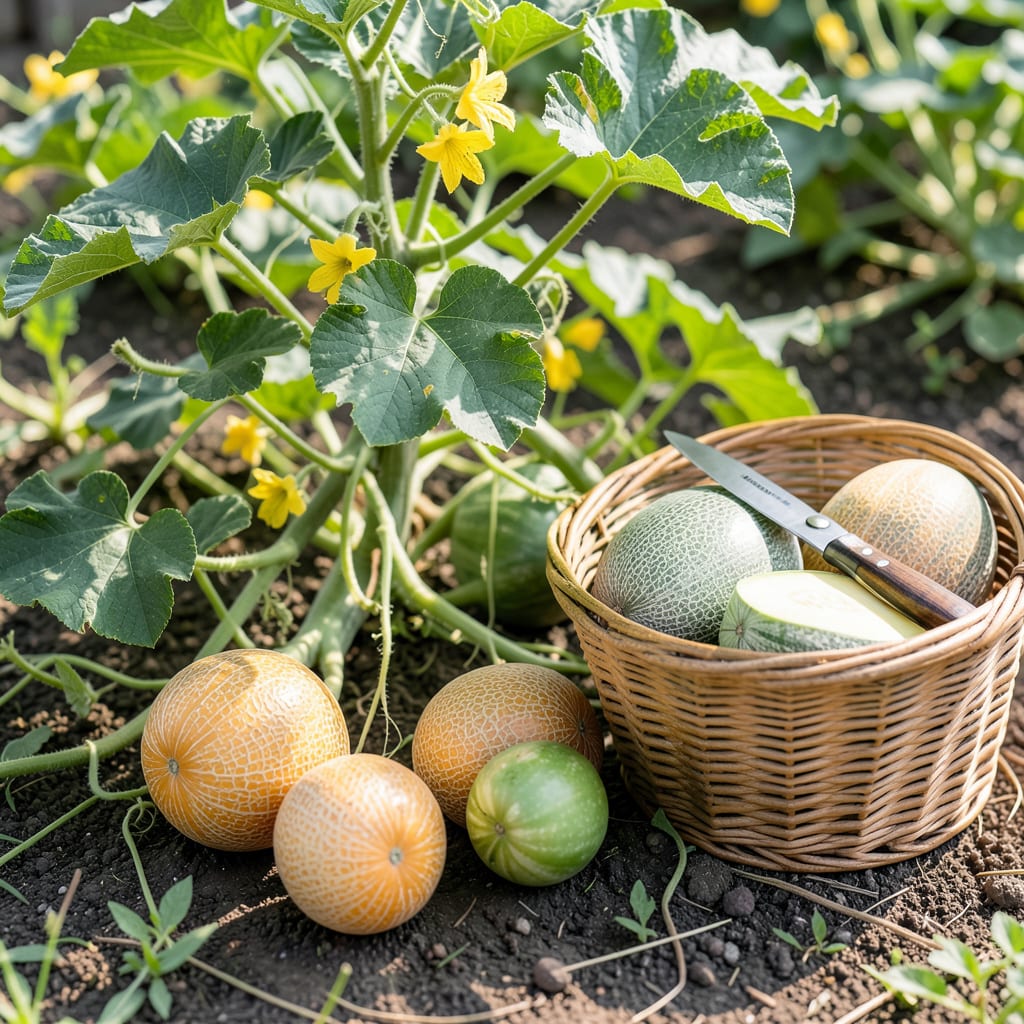
Nothing beats the disappointment of cutting into a Muskmelon 🍈 that’s not quite ready. The difference between perfect sweetness and bland flavor often comes down to timing.
I’ll show you the easiest ways to tell when your melons are at their peak. From the stem slip method to scent clues, you’ll learn how to pick them at just the right moment.


The stem slip method is the gold standard for harvesting muskmelons at peak ripeness. This simple test checks if the melon is ready to detach from the vine with minimal pressure.
When the stem separates cleanly from the fruit with just a gentle tug, it signals the full slip stage, meaning your melon is perfectly ripe.
I always recommend testing the stem slip in the early morning. Cooler temperatures make it easier to handle the fruit without damaging the vine.
If the stem doesn’t detach, leave the melon for another day or two. Forcing it off too early can result in underripe, flavorless fruit.
The full slip stage typically occurs 70-90 days after planting, depending on the variety. Check your seed packet for specific maturity times.
Another tip: test a few melons on the same vine. Sometimes they ripen at slightly different rates, even on the same plant.
Remember, the stem slip method works best for muskmelons and cantaloupes, but not all melon varieties use this cue.
If you’re growing heirloom muskmelons, they may require a slightly longer growing period. Patience is key for the best flavor.
Once harvested, store your melons at room temperature for a day to enhance sweetness before refrigerating.
While the stem slip method is reliable, I always check for scent clues too. A ripe muskmelon emits a strong sweet aroma at the blossom end when ready.
This fragrance is most noticeable in the early morning when temperatures are cooler. If you don’t smell anything, the melon likely needs more time on the vine.
| Ripeness Sign | What to Look For |
|---|---|
| Scent | Sweet musky smell at blossom end |
| Color | Netting turns coarse, background yellows |
| Texture | Slight softness at stem end |
| Stem | Detaches cleanly with gentle pressure |
The rind color also changes as the melon ripens. Look for a cream or yellow hue beneath the netting, replacing the green of an unripe fruit.
The netting pattern becomes more pronounced and coarse when ready. This visual cue is especially helpful for varieties with heavy netting.
I find the blossom end (opposite the stem) often softens slightly when ripe. Press gently with your thumb—it should give just a little.
Combine these visual and scent clues with the stem slip test for the most accurate harvest timing. Trust your senses for the best results. ☀️
Even experienced gardeners make mistakes when harvesting muskmelons. One common error is checking for ripeness too early in the day. The stem slip method works best in cooler morning temperatures.
Another pitfall is ignoring the weather impact. After a heavy rain, melons may absorb excess water, temporarily affecting their ripeness indicators. Wait a day or two after rain to test.
⚠️ Warning: Never harvest based on size alone. Muskmelons can reach full size while still unripe. Always combine size with other ripeness tests.
Some gardeners also make the mistake of twisting or pulling the stem. This can damage the vine and the fruit. Always use gentle pressure when testing for stem slip.
Harvesting too late is another issue. Overripe muskmelons become mushy and lose their sweetness. Once the stem slips easily, pick the fruit within 24 hours for best quality.
Finally, don’t forget to check multiple melons on the same vine. They may ripen at slightly different rates, even if they’re the same variety and planted at the same time. 🌱
It should detach cleanly with gentle pressure at the full slip stage. If it resists, the melon needs more time. Never twist or pull forcefully.
Yes! A ripe melon has a strong sweet aroma at the blossom end. If there’s no scent, wait another day or two. Check in the morning for the clearest fragrance.
Most varieties reach maturity in 70-90 days. Heirlooms may take slightly longer. Always combine time estimates with physical ripeness tests.
Underripe melons lack sweetness and flavor. They won’t ripen properly off the vine. Always use the stem slip or scent test to confirm readiness.
