
Beautiful Plants For Your Interior
Beautiful Plants For Your Interior
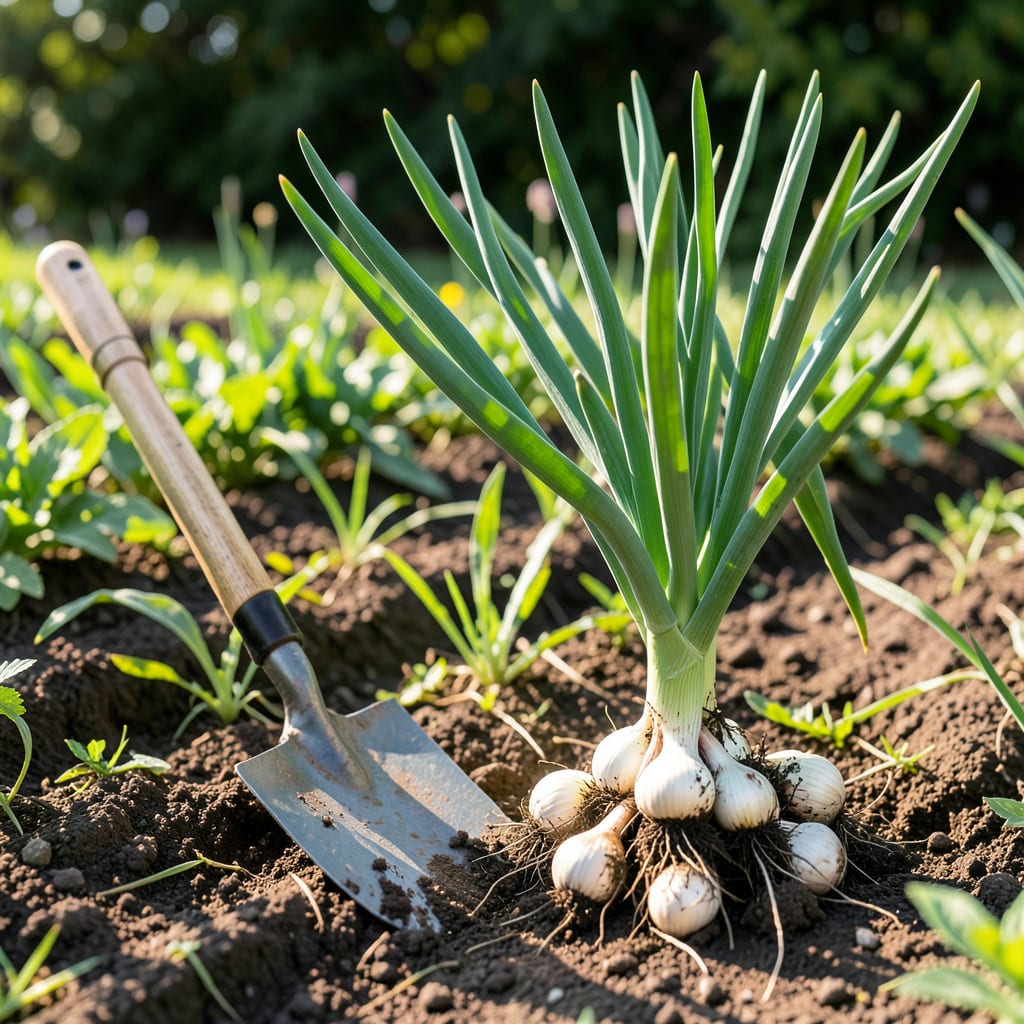
Timing is everything when growing flavorful crops in Michigan’s unpredictable climate. For garlic, missing the harvest window by even a week can ruin your entire yield.
I’ll show you the key signs to watch for and exactly when to pull those bulbs from the ground. Let’s make sure your hard work pays off with a bountiful harvest.


Michigan’s cool climate and short growing season make timing critical for garlic. Watch for the first sign: lower leaves turning yellow or brown while upper leaves stay green.
This color change signals the plant is redirecting energy to bulb development. Another key indicator is when 5-6 lower leaves have dried out completely, which typically happens in late June to mid-July.
| Description | What It Means | |
|---|---|---|
| Lower leaves yellow | Bottom 5-6 leaves turn brown | Plant maturing bulbs |
| Stems dry out | Necks become thin and papery | Harvest imminent |
| Bulb formation | Well-defined cloves visible | Peak size achieved |
| Upper leaves green | Top 4-5 leaves still vibrant | Perfect timing window |
I always check the bulb size by gently brushing away soil from the top. A mature garlic bulb will have well-formed cloves that are clearly visible through the skin.
Be careful not to wait until all leaves turn brown. This often means the bulb has split or started to rot in the ground, especially in Michigan’s humid summers.
Another trick I use is watching for stem curling. Hardneck varieties often develop curly scapes that straighten out as harvest time approaches. This is a great visual cue.
Softneck garlic, which is more common in southern Michigan, typically doesn’t produce scapes. For these, I rely more on the leaf color change and bulb size.
Remember that weather conditions can affect timing. A cool, wet spring might delay maturity by a week or two, while hot, dry weather can speed it up.
I’ve found that morning harvesting works best. The soil is cooler and moister, making it easier to dig without damaging the bulbs. Use a garden fork to gently lift them out.
After harvesting, avoid washing the bulbs. Instead, brush off excess soil and let them cure in a dry, well-ventilated area for about 2-3 weeks. This process is crucial for long-term storage.
☀️In Michigan’s growing zones (5b-6a), harvest timing varies by garlic type. Hardneck varieties typically mature earlier than softnecks, often ready by late June to early July.
Softneck garlic, more common in southern Michigan, usually needs an extra 1-2 weeks. This difference comes from their genetic growth habits and cold tolerance.
| Variety | Harvest Window | Key Traits |
|---|---|---|
| Hardneck | Late June – Early July | Curly scapes, fewer cloves |
| Softneck | Early – Mid July | No scapes, more cloves |
| Elephant | Mid – Late July | Largest bulbs, mild flavor |
I recommend marking your planting date on a calendar. Hardnecks planted in October often reach maturity around 240 days, while softnecks may take up to 270 days.
Northern Michigan gardeners should watch for earlier maturity due to cooler temperatures. The shorter growing season means every day counts in these areas.
For Elephant garlic, which isn’t true garlic but a leek relative, expect larger bulbs but a longer growing period. These often need the full Michigan summer to reach peak size.
Remember that spring weather affects all types. A late frost might delay growth, while early warmth can accelerate it. Always combine calendar dates with visual cues for best results.
☀️Even experienced gardeners can ruin a garlic crop with simple mistakes. In Michigan’s climate, timing errors are particularly costly due to our short growing season and variable weather.
One of the most common errors is waiting too long to harvest. When all leaves turn brown, the bulb wrapper often splits, exposing cloves to disease and pests. This typically happens about 2 weeks after the optimal harvest window.
⚠️ Warning: Harvesting too early results in small, underdeveloped bulbs that won’t store well. Always check for 5-6 brown lower leaves before pulling.
Another mistake is harvesting in wet soil. Michigan’s summer rains can make digging difficult and increase the risk of rot during curing. I always wait for a dry spell of at least 2-3 days before harvesting.
Improper curing is equally damaging. Many gardeners make the error of washing bulbs immediately after harvest. This removes the protective outer layers and invites mold growth. Instead, I brush off excess soil and cure in a shady, airy location.
Finally, don’t overlook variety differences. Hardneck garlic matures faster than softneck, and Elephant garlic needs the longest time. Each type has its own harvest window in Michigan’s climate. I always label my plants to track these differences.
☀️Harvesting too soon results in small, underdeveloped bulbs that won’t store well. Always check for 5-6 brown lower leaves before pulling to ensure proper maturity.
It’s best to avoid harvesting in wet soil as it increases rot risk. Wait for a dry spell of at least 2-3 days to make digging easier and safer for curing.
Hardneck varieties are typically ready by late June to early July, while softnecks often need an extra 1-2 weeks. This difference comes from their genetic growth habits.
Washing removes the protective outer layers and can lead to mold growth. Instead, brush off excess soil and cure in a shady, airy location for 2-3 weeks.
