
Beautiful Plants For Your Interior
Beautiful Plants For Your Interior
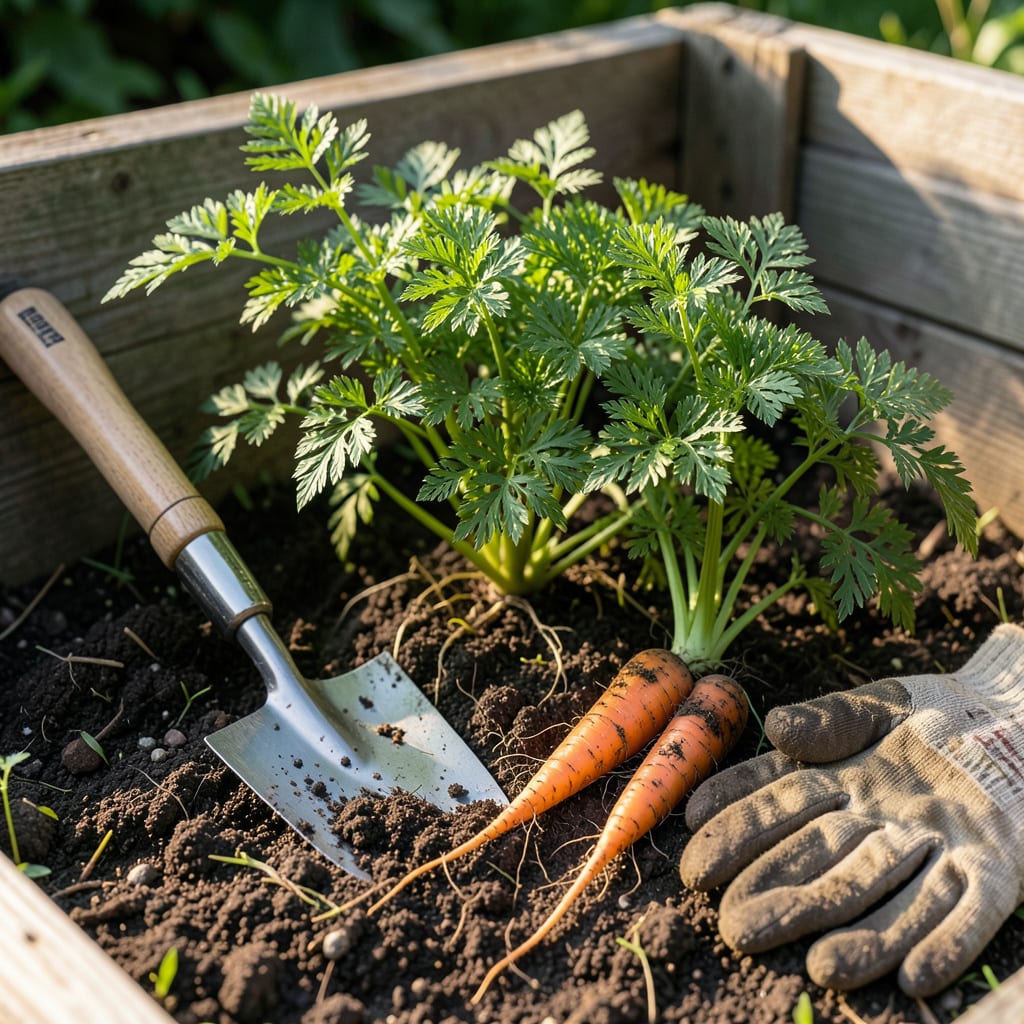
I remember the first time I pulled a Carrot 🥕 from my spring garden and thought, “Is this actually ready?” Timing the harvest perfectly makes all the difference between tough, bitter roots and sweet, crisp perfection.
Your plants will show clear signs when they’re at peak flavor. Discover the visual cues I rely on to know exactly when to pull my spring-planted carrots for the best taste and texture.


I always check for the shoulder diameter first when my spring carrots are nearing maturity. A 3/4 to 1 inch width at the top of the root means they’ve likely reached their sweet spot for harvest in most varieties.
Another clear signal is the foliage height. When the green tops reach about 6-8 inches tall, it’s usually time to start checking the roots below. This works for most spring-sown types I grow.
| Sign | Description |
|---|---|
| Shoulder diameter | 3/4 to 1 inch wide |
| Foliage height | 6-8 inches tall |
| Color change | Bright, consistent hue |
| Root crown | Visible above soil |
The color change is another reliable indicator. Spring carrots develop a rich, deep orange (or their variety’s characteristic color) when ready. Pale roots usually need more time in the soil.
I also look for the root crown peeking above the soil line. When the very top of the carrot becomes visible, it’s often ready to harvest. This is especially true for Nantes or Danvers varieties.
For early varieties, you might see these signs as soon as 60 days after planting. Most spring-planted carrots reach maturity between 70-80 days after sowing in my experience.
I’ve found that gently brushing away the soil from the top of a few carrots gives the clearest picture. This lets me check both the diameter and color without disturbing the whole row.
Remember that over-mature carrots can become woody and lose their sweetness. Once you see these visual cues, it’s better to harvest promptly rather than waiting for them to grow larger.
The leaf health matters too. Lush, green foliage indicates a healthy root system. If the leaves start to yellow or look sparse, it might be a sign to harvest soon or check for pests.
I always harvest my spring carrots in the cool morning hours for the best flavor and to reduce stress on the plants. This timing helps preserve their crisp texture and sweet taste.
I’ve learned that carrot variety plays a huge role in harvest timing. Early types like Paris Market may be ready in 60 days, while late varieties such as Chantenay can take up to 85 days in spring conditions.
Spring weather can speed up or delay maturity. Cool temperatures slow growth, while warm spells accelerate it. I always adjust my harvest window based on the season’s pattern.
In my Zone 6 garden, I’ve noticed that consistent moisture helps carrots mature evenly. Dry spells can stunt growth, so I monitor soil moisture closely during spring.
Regional climates also matter. Gardeners in cooler areas may need to wait longer, while those in warmer zones can harvest earlier. I always check local frost dates as a guide.
For best results, I plant early varieties first, followed by mid-season types 2 weeks later. This staggers my harvest and extends the fresh carrot season.
I’ve found that successive planting every 2-3 weeks ensures a continuous supply. This way, I’m never left without fresh carrots, regardless of spring’s unpredictable weather. ☀️
I’ve seen many gardeners harvest too early when their carrots are still pencil-thin. These small roots lack the sweetness and texture that comes with full maturity. Patience is key for the best flavor.
On the other hand, leaving carrots too long in the ground can lead to woody, bitter roots. Once they pass their prime, the texture and taste decline rapidly, especially in warm spring weather.
⚠️ Warning: Pulling by the greens can break the foliage, leaving the root in the soil. Always loosen the soil first with a fork.
Another common mistake is using improper pulling techniques. I always gently loosen the soil around the carrot with a fork before pulling. This prevents breakage and ensures you get the full root.
Ignoring soil conditions can make harvesting difficult. If the soil is too dry, carrots can snap. I water the bed the day before harvest to soften the soil for easier removal.
I’ve learned to check a test carrot first rather than harvesting the whole row at once. This lets me verify the size and color before committing to the full harvest.
Finally, avoid harvesting during the hottest part of the day. I always pick in the cool morning to preserve the carrots’ crispness and sweetness. ✂️
Gently brush away soil from the top to check diameter. Ready carrots show a 3/4 to 1 inch width at the shoulder with rich color.
No, over-mature spring carrots become woody and bitter. Harvest promptly once they show visual readiness cues to preserve sweetness.
Pick in the cool morning hours for optimal flavor and texture. This minimizes stress on the plants and keeps them crisp.
Varieties and weather affect growth rates. Early types mature in 60 days while late ones take up to 85 days. Warm spells speed this up.
