
Beautiful Plants For Your Interior
Beautiful Plants For Your Interior
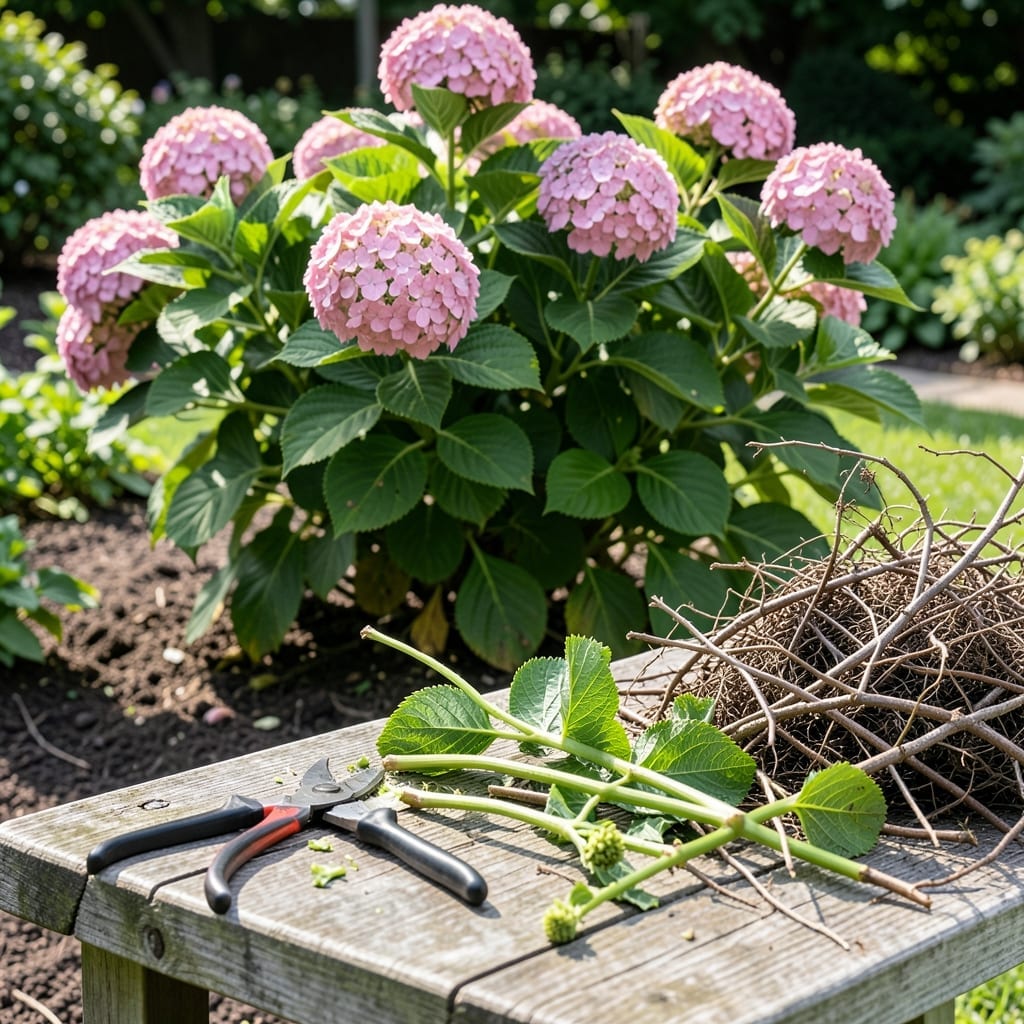
Timing your hydrangea pruning wrong can mean a season without blooms. With the 🌸 Hydrangea, getting the timing right is the key to vibrant, abundant flowers year after year.
Whether you’re growing bigleaf, panicle, or oakleaf varieties, each has its own ideal pruning window. I’ll help you understand these differences so you can make the right cuts at the right time.
Discover how to keep your Hydrangea thriving with simple, seasonal guidance that ensures bigger, better blooms every time.
I know how frustrating it can be to prune your hydrangeas only to see fewer blooms the next season. The secret lies in understanding that each variety has its own ideal pruning window based on its bloom cycle.
Bigleaf hydrangeas bloom on old wood, meaning they set their flower buds in the fall for the following year. Pruning these too late can remove the very buds that would have become your summer blooms.
| Variety | Bloom Wood | Best Pruning Time | Key Notes |
|---|---|---|---|
| Bigleaf (H. macrophylla) | Old wood | Right after blooming | Avoid late summer/fall pruning |
| Panicle (H. paniculata) | New wood | Late winter/early spring | Can handle heavier pruning |
| Oakleaf (H. quercifolia) | Old wood | After flowering | Prune before August |
| Smooth (H. arborescens) | New wood | Late winter | Cut back to 12-18 inches |
For new wood bloomers like panicle and smooth hydrangeas, I recommend pruning in late winter or early spring. These varieties produce flowers on the current season’s growth, so you can cut them back more aggressively.
Oakleaf hydrangeas, while blooming on old wood like bigleaf, have a slightly more flexible window. I’ve found pruning immediately after their summer blooms gives the best results for next year’s flowers.
The key difference is that old wood bloomers need time to develop their flower buds after pruning. If you cut them back in spring, you’re likely removing all those carefully formed buds from the previous year.
I always mark my calendar after my hydrangeas finish blooming. This reminder helps me prune at the optimal time, especially for those old wood varieties that need such precise timing.
For panicle hydrangeas, I take advantage of their new wood nature to do more dramatic shaping. This variety can handle being cut back to just a few feet from the ground each year.
Remember that local climate plays a role too. In colder zones, I finish all pruning before the first frost to give plants time to recover before winter dormancy.
If you’re unsure about your hydrangea type, observe when it blooms. Early summer bloomers are likely old wood, while late summer bloomers are typically new wood varieties.
This simple observation can guide your entire pruning schedule and ensure you never accidentally remove next year’s blooms again.
I always start my hydrangea pruning with the right tools to ensure clean cuts and healthy regrowth. A pair of sharp bypass pruners is my go-to choice for most cuts.
For thicker stems, I keep lopping shears handy.
I begin by removing any dead or diseased wood at the base. This improves airflow and directs energy to healthy growth. Next, I identify and remove the oldest stems.
For new wood bloomers, I’m more aggressive, cutting back to 12-18 inches from the ground. This encourages vigorous new growth with larger blooms.
With old wood varieties, I’m more cautious, only removing about 1/3 of the oldest stems each year. This gradual renewal maintains flower production.
I always make my cuts just above a leaf node or bud at a 45-degree angle. This helps water run off and prevents disease from settling in the fresh cut.
After pruning, I clean up all debris around the base. This removes potential hiding spots for pests and diseases while giving my hydrangeas a tidy appearance. ✂️