
Beautiful Plants For Your Interior
Beautiful Plants For Your Interior
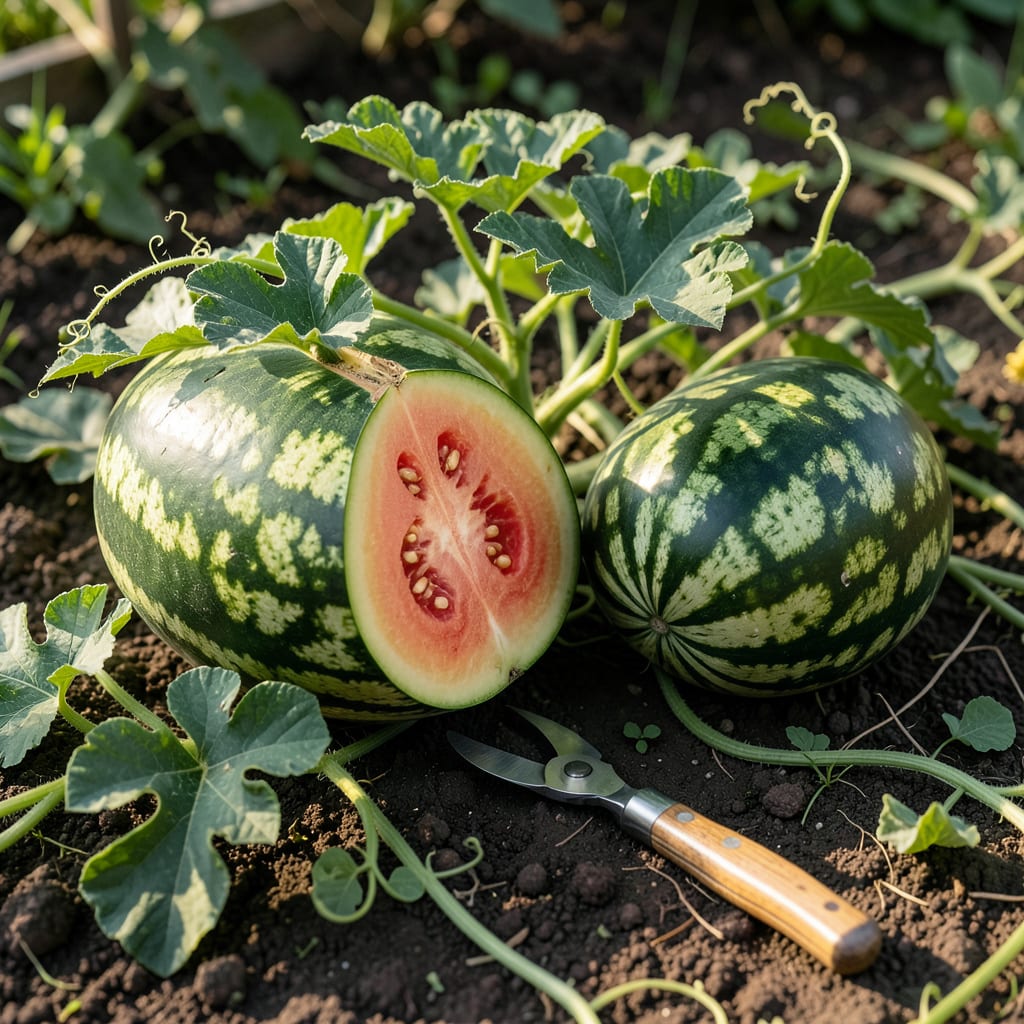
Picking a 🍉 watermelon too early means bland fruit, but waiting too long leads to a mushy mess. Timing is everything for that perfect sweetness we all crave.
I’ll show you the field-tested signals to know exactly when your Watermelon is ready. These simple checks take the guesswork out of harvest time.


Timing your watermelon harvest perfectly is an art. I’ve learned that visual cues and simple tests take all the guesswork out of the process. The key is knowing what to look for.
From the tendril color to the sound when tapped, each signal tells you something important. Here are the most reliable indicators I use in my garden.
Curly Tendril Dries Out
The tendril nearest the stem turns brown and brittle when ripe.
Ground Spot Turns Cream
The underside changes from white to yellow or cream.
Rind Becomes Dull
A matte finish replaces the shiny surface of unripe fruit.
Hollow Sound When Tapped
A deep, hollow thud means it’s ready to pick.
Resists Thumbnail Pressure
The rind hardens and won’t puncture easily.
The tendril test is my go-to first check. When the curly tendril closest to the stem turns brown and dries up, it’s a strong sign your watermelon is nearing ripeness.
Next, I always flip the watermelon over to inspect the ground spot. This is the area where the fruit touches the soil. An unripe watermelon has a white or pale spot, while a ripe one turns cream or yellow.
The rind’s appearance changes dramatically as it matures. Early on, it’s shiny and smooth. When ready, it becomes dull and rough to the touch. This is nature’s way of signaling the sugars have developed.
I love the tapping test because it’s so satisfying. Use your knuckles to tap the watermelon and listen closely. A deep, hollow sound means it’s ripe, while a high-pitched or metallic sound means it needs more time.
Finally, the thumbnail test is a great confirmatory check. Press your thumbnail into the rind. If it resists penetration, your watermelon is likely ready. If it punctures easily, give it a few more days.
Remember, these signals work best together. I never rely on just one—combining 2-3 tests gives me confidence I’m picking at the perfect moment for peak sweetness. 🌱
Not all watermelons mature on the same schedule. I’ve found that seedless varieties often take a bit longer than their seeded cousins. This difference is crucial for timing your harvest.
Understanding the days to maturity for your specific type helps you anticipate when to start checking for ripeness signals. Here’s how the timelines typically break down.
| Variety | Days to Maturity | Key Ripeness Signal |
|---|---|---|
| Seeded Watermelon | 70-85 days | Tendril dries first |
| Seedless Watermelon | 80-90 days | Ground spot turns yellow |
| Mini Watermelon | 65-75 days | Rind dulls early |
For seeded watermelons, I start checking for ripeness around 70 days after planting. The curly tendril near the stem is often the first to show it’s ready.
Seedless varieties typically need an extra 10 days. I pay close attention to the ground spot color, as it’s a more reliable indicator for these types.
Mini watermelons are the quickest to mature. Their smaller size means they reach peak sweetness faster, often in just 65-75 days. The rind dulling is usually my first clue.
Remember, these are general guidelines. Weather, soil conditions, and your specific growing practices can all affect the timeline. Always combine these timelines with the ripeness tests we discussed earlier. 🌱
Even experienced gardeners can misjudge watermelon ripeness. I’ve seen many well-meaning folks make simple errors that cost them that perfect sweet flavor. Avoiding these pitfalls is just as important as knowing the right signs.
One of the most common mistakes is relying solely on size. A big watermelon doesn’t always mean a ripe one. Some varieties naturally grow larger, while others stay small but pack incredible flavor.
⚠️ Harvest Timing Mistakes to Avoid
Ignoring weather impact can ruin your harvest. Heavy rain before picking dilutes sugars, leading to bland flavor.
Another frequent error is harvesting too soon after rain. Watermelons absorb water quickly, which can dilute their sugar content. I always wait at least 2-3 days after significant rainfall before checking for ripeness.
Many gardeners also overlook the stem condition. If the stem is still green and flexible, the watermelon isn’t ready, no matter what other signs you see. The stem should be drying and browning at the point of attachment.
Lastly, don’t assume all watermelons on the same vine ripen simultaneously. I check each fruit individually, as they can mature at different rates even on the same plant. Patience and attention to detail pay off with the sweetest results. 🌱
Most varieties need 70-100 days from planting to harvest. Seedless types often take 80-90 days, while mini watermelons may ripen in as little as 65 days.
A deep, hollow sound indicates ripeness. This happens because the fruit’s internal structure changes as sugars develop. A high-pitched sound means it needs more time.
Wait at least 2-3 days after rain. Watermelons absorb water quickly, which can dilute their sugar content and affect flavor.
Underripe watermelons will be bland and lack sweetness. The flesh may also be harder and less juicy than fully mature fruit.
