
Beautiful Plants For Your Interior
Beautiful Plants For Your Interior
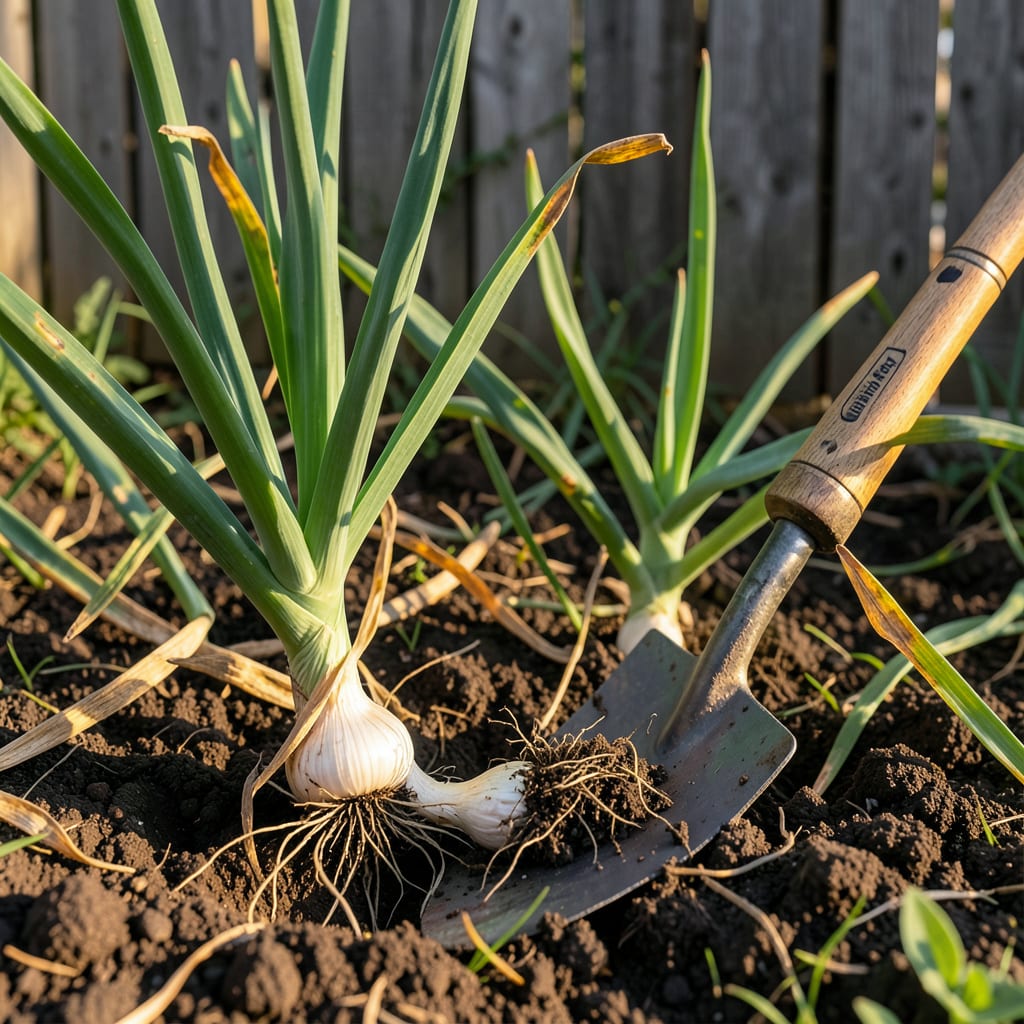
Timing your garlic harvest perfectly can transform your crop from disappointing to spectacular. The 🧄 plant sends clear signals when it’s ready, and missing them means missing out on full-flavored bulbs.
I’ve learned the hard way that watching for those first yellowing lower leaves is your best clue. Let me show you exactly what to look for and when to act for the best results.


I always watch for those first yellowing lower leaves as my primary signal. When about 5-6 lower leaves turn brown while the upper ones stay green, your garlic is telling you it’s nearly time. This change happens as the plant redirects energy to bulb development.
The second clue is bulb formation beneath the soil. Gently brush away dirt to check size and wrapper tightness. Plump bulbs with dry, papery skins are ready, while soft, green-skinned bulbs need more time.
I check my garlic every few days as harvest time approaches. The transition from green to brown happens quickly, especially in hot weather. Missing this window by even a week can mean split bulbs or poor storage quality.
Another trick I use is the “leaf count method”. Each green leaf represents a layer of bulb wrapper. When 5-6 leaves remain green, that means your bulbs have enough protective layers for storage.
For hardneck varieties, watch for the curly scape to appear and then straighten. This typically happens about 2-3 weeks before harvest time. Softneck garlic doesn’t produce scapes, so focus on leaf color.
The soil moisture at harvest matters too. I stop watering about 1 week before I plan to harvest to let the soil dry slightly. This makes digging easier and helps prevent bulb rot during curing.
I’ve found that morning harvesting works best. The bulbs are firmer, and the cooler temperatures help with the curing process. Use a garden fork to gently lift the bulbs, being careful not to pierce them.
After digging, I let my garlic cure in a dry, shaded spot for about 2 weeks. This drying period is crucial for long-term storage. The papery wrappers will tighten and the flavors will intensify during this time.
Remember that weather conditions can affect timing. In cooler climates, garlic may take 240 days to mature, while warmer areas might see ready bulbs at 210 days. Always prioritize the visual signs over the calendar.
I’ve noticed that hardneck garlic often matures 2-3 weeks earlier than softneck. The telltale sign for hardnecks is when the curly scape straightens out, which usually happens in early summer. This is your cue to start checking for harvest readiness.
Softneck varieties don’t produce scapes, so I rely on the leaf yellowing method. When about 5-6 lower leaves turn brown while the upper ones stay green, it’s time to harvest. Softnecks typically need the full 240-day growing period.
In my cooler climate (Zone 6), hardnecks are usually ready by late June, while softnecks might not be ready until mid-July. The exact timing depends on your planting date and spring weather conditions.
For both types, I check the bulb size when about half the leaves have browned. Gently dig around one plant to inspect. If the bulb wrapper is tight and papery, it’s ready. If it’s still green and soft, wait another week.
Regional differences matter too. In warmer climates, garlic may mature 3-4 weeks earlier than in cooler areas. I’ve found that consistent moisture throughout the growing season leads to more uniform maturity.
Remember that early varieties like ‘Music’ or ‘German White’ often mature faster than late varieties. Always prioritize the visual signs over calendar dates for the best harvest timing. 🌱
I’ve made the mistake of harvesting garlic too early and ended up with small, underdeveloped cloves. These tiny bulbs lack the full flavor and won’t store well. The plant needs that full growing period to develop its signature taste and size.
On the other hand, leaving garlic in the ground too long causes problems too. Over-mature bulbs often split open or develop secondary growth, which ruins their storage potential and can lead to disease issues.
If you’ve harvested early, don’t despair. You can still use these small bulbs immediately in cooking or as seed garlic for next year. Just don’t expect them to store well. For over-mature garlic, use the split bulbs first as they won’t keep long.
The ideal harvest window is when about half the leaves have browned but 5-6 green leaves remain. This balance ensures maximum bulb size and proper wrapper development for storage.
I always mark my calendar for 240 days after planting as a reminder to start checking. But I never rely on dates alone – the plant’s visual cues are the most reliable indicators of readiness. 🌱
Aim for 5-6 green leaves at the top when the lower ones have browned. Each green leaf represents a protective wrapper layer for your bulb during storage.
Yes, hardnecks typically mature 2-3 weeks earlier. Watch for their scapes to straighten as a sign. Softnecks rely solely on leaf yellowing as their indicator.
Over-mature bulbs may split open or begin secondary growth. This reduces storage life and can lead to disease. Always check when half the leaves have browned.
Yes, reduce watering about 1 week before your planned harvest. This helps the soil dry slightly, making digging easier and preventing bulb rot during curing.
