
Beautiful Plants For Your Interior
Beautiful Plants For Your Interior
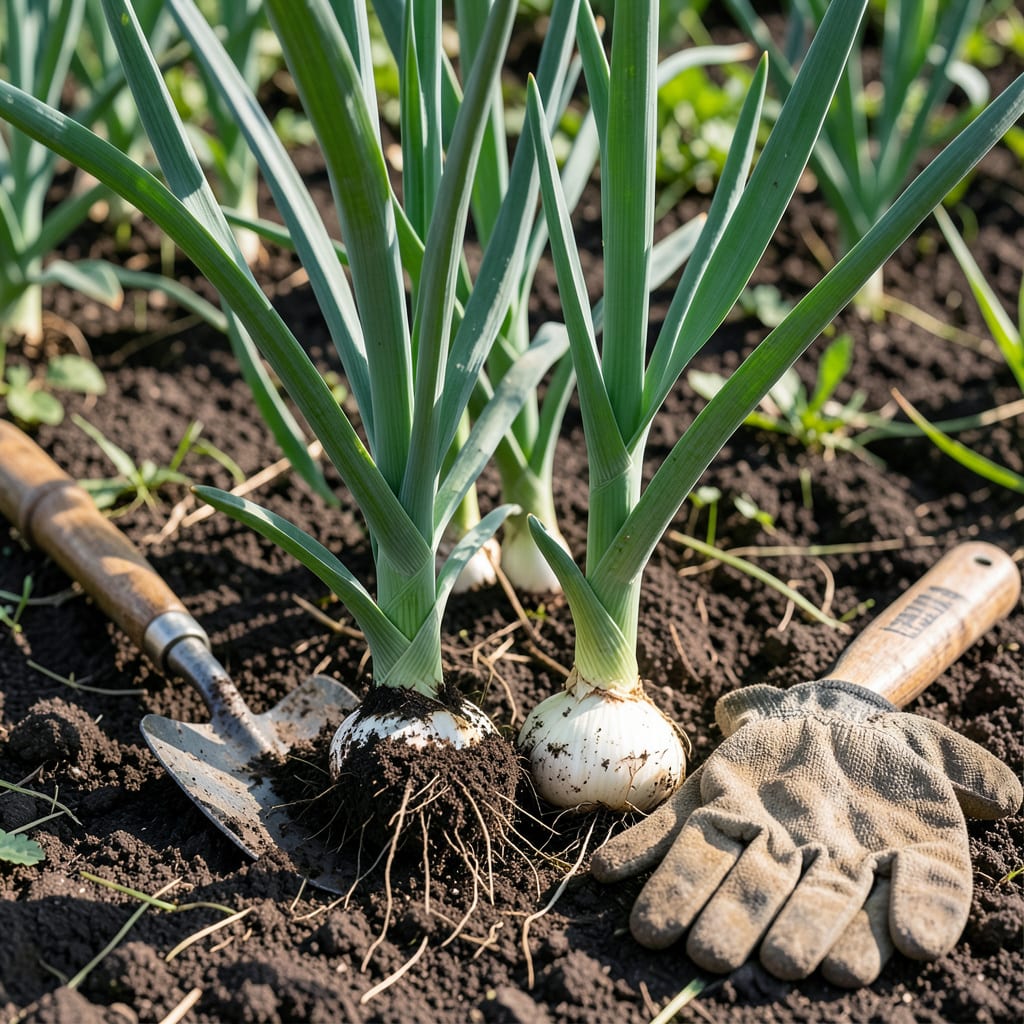
I remember my first attempt at growing 🧄 Elephant Garlic – I pulled it too soon and ended up with disappointingly small bulbs. Timing is everything with this giant allium.
With the right knowledge, you’ll know exactly when to harvest for those massive, flavor-packed heads. Let me show you the key signs to watch for in your garden.


I’ve learned that elephant garlic gives clear signals when it’s harvest time. The most reliable sign is lower leaf yellowing—when 50% or more of the lower leaves turn brown.
Unlike regular garlic, this giant allium also shows bulb formation visibly above soil. You’ll notice the stems softening and beginning to flop over as the plant matures.
| Sign | Description |
|---|---|
| Lower Leaf Yellowing | 50%+ brown lower leaves |
| Bulb Formation | Visible bulb swelling above soil |
| Stem Softening | Stems bend and flop |
| Foliage Dieback | Upper leaves still green |
Another key indicator is the bulb wrapper becoming papery. When you gently brush away soil, you should see plump cloves forming inside a dry, papery skin.
The upper leaves should still be green when you harvest. This tells you the plant is still actively growing but the bulbs are mature enough to pull.
I check my plants weekly in late spring (May-June) for these signs. Elephant garlic typically takes 240 days from planting to harvest in zones 4-9.
If you wait until all leaves turn brown, you’ve waited too long. The bulbs may split open in the ground, reducing storage life.
On the other hand, harvesting too early means small bulbs that haven’t reached their full potential. The ideal window is when 3-4 lower leaves are brown but 5-6 upper leaves remain green.
Weather matters too. I aim to harvest during a dry spell so the bulbs can cure properly. Wet conditions can lead to rot during curing, so timing is crucial.
Remember, these visual cues are more reliable than calendar dates. Your local climate and planting time affect maturity, so watch the plant, not the calendar 🌱
I’ve made my share of mistakes with elephant garlic harvest timing. The biggest error is pulling it too early when bulbs are still small and underdeveloped.
Another common misstep is waiting too long until all foliage dies back completely, which can cause bulb splitting and poor storage quality.
Warning: Harvesting during wet weather can lead to rot during curing. Always aim for a dry spell when pulling your bulbs.
Improper digging techniques can damage bulbs. I always use a garden fork to gently lift the plants, not a shovel that might slice through them.
Don’t harvest based on calendar dates alone. Your local climate and planting time affect maturity more than fixed dates on a schedule.
I’ve found that morning harvesting works best. The soil is firmer, making it easier to extract bulbs intact without breaking stems or roots.
Remember that elephant garlic needs 2-3 weeks of curing in a well-ventilated, dry area after harvest to develop its full flavor and storage potential 🌱
I always start the post-harvest process immediately after pulling my elephant garlic. The first step is gently brushing off excess soil, but not washing the bulbs.
Then comes the crucial curing phase, which takes 2-3 weeks in a well-ventilated, shady spot. This helps the bulbs develop their full flavor and storage potential.
After curing, I trim the roots and cut the stems about 1-2 inches above the bulb. This prevents them from drawing moisture from the bulb during storage.
For storage, I use mesh bags or hang in bundles in a cool, dry place. Properly cured elephant garlic can store for 6-8 months under ideal conditions.
Avoid storing in plastic bags or airtight containers, as this can trap moisture and cause rot. The air circulation is key to maintaining quality.
I check my stored bulbs monthly and remove any that show signs of softening or sprouting to prevent spoilage from spreading to the rest 🌱
Check for 3-4 brown lower leaves with 5-6 green upper leaves still intact. The stems should soften and begin to flop over naturally.
You’ll get underdeveloped bulbs with smaller cloves. These won’t store well and lack the full, mild flavor elephant garlic is known for.
Avoid this whenever possible. Wet conditions increase rot risk during curing. Wait for a dry spell to pull your bulbs instead.
Plan for 2-3 weeks in a well-ventilated, shady spot. Proper curing develops flavor and extends storage life to 6-8 months.
