
Beautiful Plants For Your Interior
Beautiful Plants For Your Interior
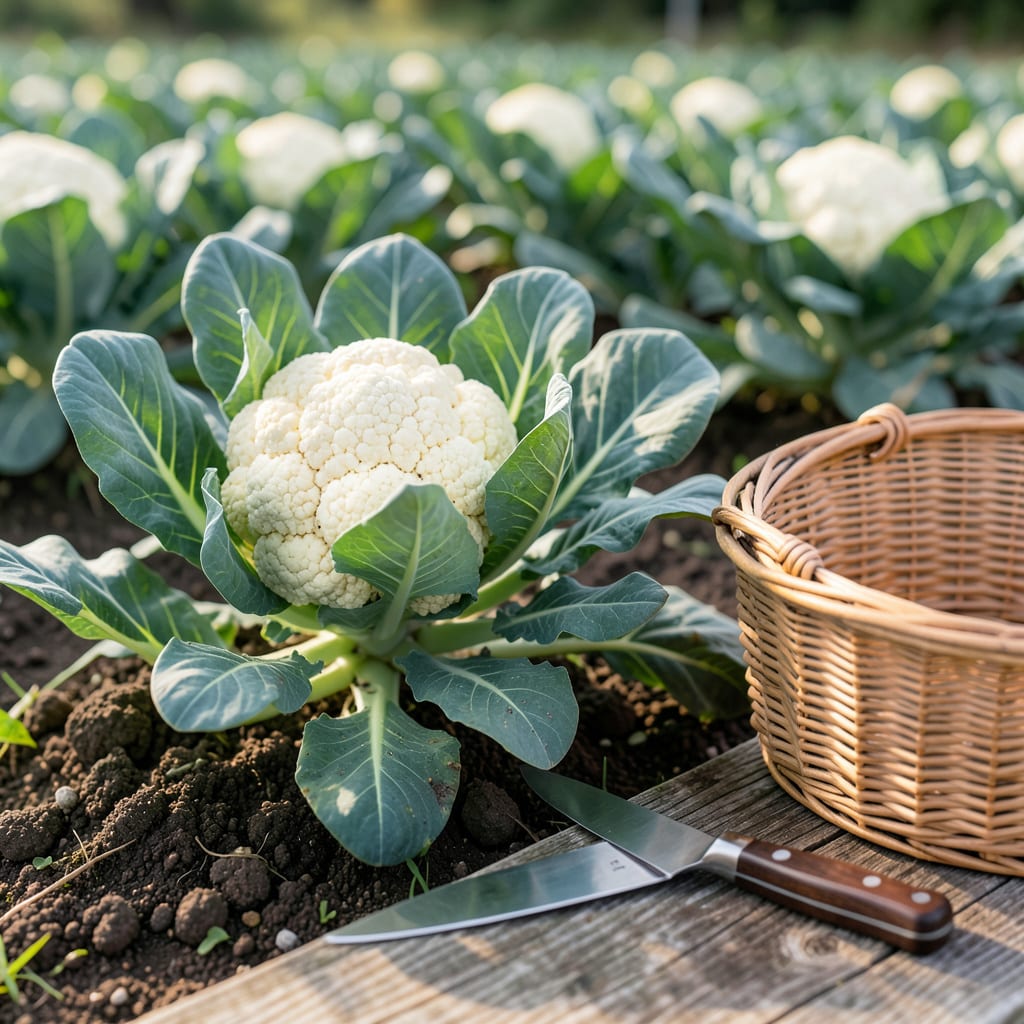
Timing your cauliflower harvest perfectly can be tricky. Wait too long, and you’ll end up with a ricey, separated head that’s past its prime.
I’ll show you the key visual cues to watch for with your 🥦 crop, so you can pick it at the peak of flavor and texture.


I always watch for the first sign of a ready cauliflower: a firm head about 6-8 inches across. This size is ideal for most varieties, though some may grow slightly larger.
The curds should be tightly packed with no visible gaps between them. If you see spaces forming, it’s time to act fast before quality declines.
A uniform color across the head signals maturity. For white cauliflower, look for a clean cream color. Colored varieties will show their characteristic hue deeply and evenly.
The leaves often give clues too. When they begin to curl away from the head, it’s nature’s way of saying your cauliflower is nearing its peak.
I check the underside of the head as well. If it feels solid and dense when pressed, it’s ready. A soft or spongy feel means it needs more time.
Different cauliflower varieties have slightly different signs. Romanesco types develop their distinctive spiral patterns when mature, while purple varieties deepen in color.
Remember that early varieties may be ready in as little as 50 days, while others might take up to 100 days. Always check your seed packet for specific timelines.
Weather affects maturity too. In cooler temperatures, cauliflower may take longer to mature. Hot weather can speed up growth but may cause heads to open prematurely.
I’ve found that morning harvesting works best. The heads are firmer after a cool night, and you’ll avoid the wilting that can occur in afternoon heat.
Use a sharp knife to cut the head with a few inches of stem attached. This helps preserve freshness and makes handling easier during storage or transport.
Harvesting your cauliflower at the wrong time can lead to disappointing results. Picking too early means you’ll get a small, underdeveloped head that lacks the proper texture and flavor.
If you wait too long, the curds separate and develop a ricey texture, which is a clear sign of overmaturity. The flavor also turns bitter and strong.
Harvesting Too Early
Harvesting Too Late
An early harvest often results in a head that’s too small to use effectively. The curds won’t be tightly packed, and the overall yield will be much lower than expected.
With overmature cauliflower, you might notice the head turning yellow or brown. The leaves may wilt or drop, which are clear visual cues that it’s past its prime.
I’ve learned that timing is everything with cauliflower. A perfect harvest gives you a firm, compact head with a sweet, nutty flavor that’s ideal for fresh eating or storage.
If you see the first signs of separation in the curds, harvest immediately—even if the head is slightly smaller than expected. It’s better to pick early than to risk losing the entire crop to overmaturity. ☀️
I use blanching to protect my cauliflower heads from sun damage. Simply tie the outer leaves together over the head to shield it from direct sunlight.
This keeps the curds white and prevents that bitter flavor that sun exposure can cause. It also helps maintain the tight head formation we all want in a perfect harvest.
Blanch outer leaves
Tie leaves over head to shield from sun
Plant in succession
Sow new seeds every 2 weeks
Monitor daily
Check heads as they near maturity
Succession planting is another trick I swear by. By planting new cauliflower seeds every 2-3 weeks, I ensure a continuous harvest throughout the growing season.
This approach works especially well with early and mid-season varieties. It spreads out your harvest so you’re not overwhelmed with too many heads at once.
I also recommend morning checks as your plants approach maturity. Cauliflower can go from perfect to overmature surprisingly quickly, sometimes in just a few days of hot weather. ✂️
Most varieties are ready at 6-8 inches in diameter. Check for a firm, compact head with tightly packed curds. Size can vary slightly by type, but this range works for most home gardeners.
Overmature heads develop a ricey texture as curds separate. The flavor turns bitter, and the color may yellow or brown. Harvest at first signs of separation to avoid this.
Morning harvesting is ideal. Heads are firmer after cool nights, and you avoid afternoon wilting. Use a sharp knife to cut with a few inches of stem attached.
A head that feels soft or spongy needs more time. Look for gaps between curds or a loose formation. Underripe cauliflower lacks the sweet, nutty flavor of mature heads.
