
Beautiful Plants For Your Interior
Beautiful Plants For Your Interior
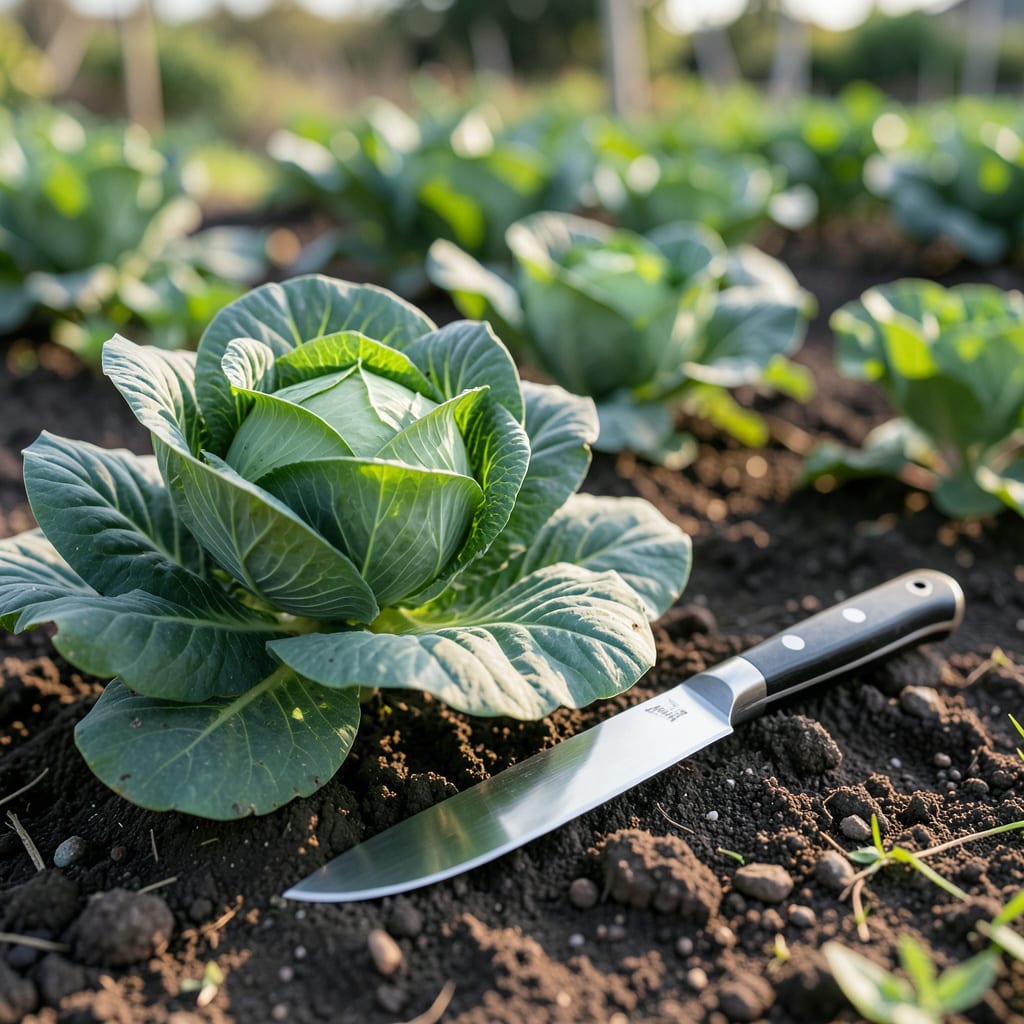
Nothing beats the satisfaction of growing your own 🥬 Cabbage, but knowing the perfect moment to harvest can be tricky. Picking too early or too late can ruin all your hard work.
Discover the telltale signs of readiness—from firm heads to leaf tightness—that ensure your crop is at its peak. Let me guide you through the key indicators for a bountiful harvest.


I always check my cabbage heads for firmness first. A mature head should feel solid and dense when gently squeezed, not soft or spongy. This is the most reliable sign that your cabbage is ready for harvest.
Next, I look for tight leaf formation. The leaves should be closely wrapped around the head with minimal gaps. If the outer leaves are starting to separate slightly, it’s often a good indicator of peak maturity. 🌱
| Sign | Description |
|---|---|
| Firm Head | Feels solid when squeezed |
| Size | 4-6 inches diameter for most varieties |
| Leaf Tightness | Leaves tightly wrapped around head |
| Color | Rich, even color for variety |
The size of your cabbage matters too. Most varieties reach 4-6 inches in diameter at maturity, though storage types may grow larger. Check your seed packet for the expected mature size for your specific variety.
I pay close attention to the outer leaves. While they should be vibrant, a slight yellowing of the lowest leaves can signal that the head is nearing its peak. However, avoid waiting until there’s significant yellowing or splitting.
A compact appearance is another clue. The head should look uniformly round or slightly oblong, depending on the variety, without any loose or floppy sections. This visual cue often confirms what you feel when testing firmness.
For early varieties like Golden Acre, I start checking at about 60 days after transplanting. Mid-season types typically need 75-80 days, while storage varieties may require 100 days or more to reach full maturity.
I always harvest in the cool morning hours when possible. This helps preserve the cabbage’s crispness and flavor. If you notice the head is starting to split, it’s past its prime and should be harvested immediately, even if it’s not quite at full size.
Remember that consistent watering affects maturity. Uneven watering can lead to cracked heads or stunted growth. I maintain even moisture throughout the growing season for the best results.
Finally, trust your instincts. If the head looks and feels right based on these indicators, it’s probably ready. With experience, you’ll develop an eye for the perfect harvest window. ✂️
I’ve found that cabbage maturity times vary widely by type. Early varieties like Golden Acre are ready in about 60 days, while others need more time to reach their peak.
For mid-season cabbages, such as Red Express, I start checking around 75 days after transplanting. These types balance quick growth with good storage potential.
| Variety Type | Days to Maturity | Best For |
|---|---|---|
| Early | 60-65 days | Fresh eating |
| Mid-Season | 75-80 days | Storage & fresh use |
| Storage | 100+ days | Long-term storage |
Storage varieties like Danish Ballhead can take 100 days or more. I plant these when I want cabbage to last through winter in my root cellar.
Climate affects timing too. In cooler regions, cabbage may mature slower, while warmer areas can speed up growth. I adjust my expectations based on my local conditions.
I always mark my planting dates on a calendar. This helps me track when to start checking for readiness. It’s a simple but effective way to stay on top of harvest times.
For the best flavor, I harvest early varieties promptly at maturity. Leaving them too long can lead to bitter taste or splitting heads. 🌿
I’ve seen many gardeners rush their cabbage harvest and end up with undersized heads. Picking too early results in loose, immature cabbage that lacks flavor and crunch. Patience is key for this crop.
On the other hand, waiting too long can be just as problematic. Overmature cabbage often develops a bitter taste or splits open, which attracts pests and reduces storage life. I always check daily once heads near maturity.
Harvesting too early: Leads to small, loose heads that lack flavor.
Waiting too long: Causes splitting and bitter taste development.
Using dull tools: Can damage the plant and make clean cuts difficult.
Harvesting in heat: Morning picks retain crispness better than afternoon harvests.
Improper cutting techniques are another common mistake. I always use a sharp knife to cut the head cleanly at the base, leaving the outer leaves intact. This prevents damage to the plant and allows for potential secondary growth.
Ignoring weather conditions can also affect your harvest. I avoid picking cabbage when it’s wet, as this can promote rot during storage. The best time is on a dry morning after the dew has evaporated.
Finally, don’t overlook the lower leaves. While they may look ready, the head itself might still need more time. I always check the head’s firmness and size before making the final decision to harvest. ✂️
Gently squeeze the head—it should feel solid and dense, not soft or spongy. A mature cabbage won’t give under light pressure and maintains its shape when handled.
Overmature cabbage can split open or develop a bitter flavor. Splitting also attracts pests and shortens storage life, so check daily once heads near maturity.
Always pick in the cool morning hours for the best crispness and flavor. Heat can make the leaves wilt, reducing quality and shelf life.
For a continuous harvest, you can remove outer leaves as needed, but the head will keep growing. For full heads, cut cleanly at the base with a sharp knife.
