
Beautiful Plants For Your Interior
Beautiful Plants For Your Interior
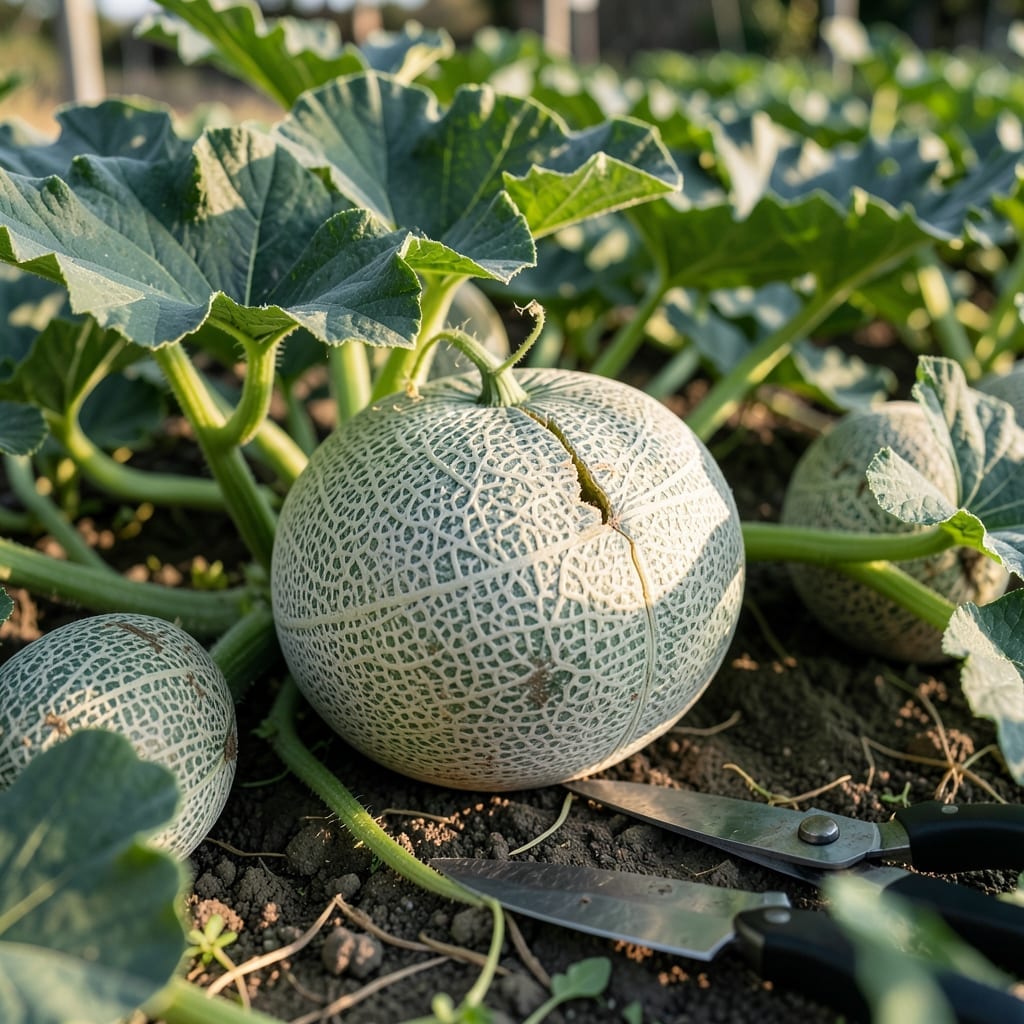
Nothing beats the sweet, juicy flavor of a perfectly ripe 🍈 cantaloupe—but picking one too early or too late can leave you with a bland or mushy mess.
I remember the frustration of cutting into a hard, tasteless cantaloupe after what I thought was a smart selection. There’s an art to spotting the perfect moment to harvest.
Discover the foolproof visual cues that guarantee you’ll select a cantaloupe at its peak ripeness every time. Your taste buds will thank you.


I’ve learned that picking cantaloupes at the right moment is crucial for maximum sweetness. The first sign I always check is the rind color under the netting.
When the beige or tan color appears beneath the webbing, it’s a clear indicator that the sugar content is developing. This change happens as the fruit matures on the vine.
| Sign | What to Look For | Why It Matters |
|---|---|---|
| Rind Color | Beige or tan under netting | Indicates sugar development |
| Stem End | Sweet musky aroma | Peak ripeness signal |
| Blossom End | Slightly soft to pressure | Fruit is ready to harvest |
| Stem Slip | Detaches easily from vine | Natural separation at maturity |
The stem end should have a strong sweet aroma. If you don’t smell anything, the cantaloupe isn’t ready yet. This scent develops as the fruit ripens on the vine.
Another key sign is the blossom end (opposite the stem). When it yields slightly to gentle pressure, it’s a good indicator of ripeness. Be careful not to press too hard to avoid bruising.
I always check for the stem slip. A ripe cantaloupe will detach easily from the vine with just a little pressure. If it’s still firmly attached, it needs more time.
The webbing on the rind should be pronounced and corky. This netting becomes more defined as the fruit matures. A smooth rind often means it’s not ready yet.
Remember that size isn’t everything. A smaller cantaloupe can be perfectly ripe, while a large one might still be immature. Focus on these visual and tactile cues instead.
For the best flavor, I harvest in the early morning when the fruit is cool. This helps preserve its freshness and sweetness during storage.
If you’re growing cantaloupes, keep an eye on the days to maturity. Most varieties take 75 to 100 days from planting to harvest, depending on the conditions.
By combining these visual signs with a gentle touch and sniff test, you’ll never be disappointed by an unripe cantaloupe again 🌿
I’ve seen many gardeners make the same ripeness mistakes with cantaloupes. The most common error is relying solely on uniform color as a sign of readiness. A fully green or yellow cantaloupe isn’t necessarily ripe.
Another frequent misstep is judging by overall firmness. A rock-hard cantaloupe might still be unripe, while one that gives slightly may be perfect. Don’t squeeze too hard though—this can cause bruising.
⚠️ Avoid These Ripeness Traps
Don’t rely on thumping alone—a hollow sound isn’t a guarantee of ripeness. Also, ignore size or weight as these don’t indicate maturity. The stem end and blossom end are far more reliable indicators.
Many people think a strong smell from the entire melon means it’s ripe, but the true aroma should be concentrated at the stem end. A faint or absent smell there means it’s not ready.
I’ve also noticed gardeners get fooled by smooth rinds. While some varieties naturally have less netting, a completely smooth cantaloupe is usually underripe. Look for that corky webbing we discussed earlier.
Another mistake is harvesting based on days since planting alone. While most cantaloupes take 75-100 days, weather and growing conditions can speed up or slow down maturity. Always combine the visual cues with the timeline.
Lastly, don’t harvest after heavy rain or when the plant is wet. This can lead to premature spoilage. Wait for a dry morning to check for ripeness and pick your cantaloupes.
By avoiding these common pitfalls, you’ll consistently pick cantaloupes at their peak flavor and sweetness 🌱