
Beautiful Plants For Your Interior
Beautiful Plants For Your Interior
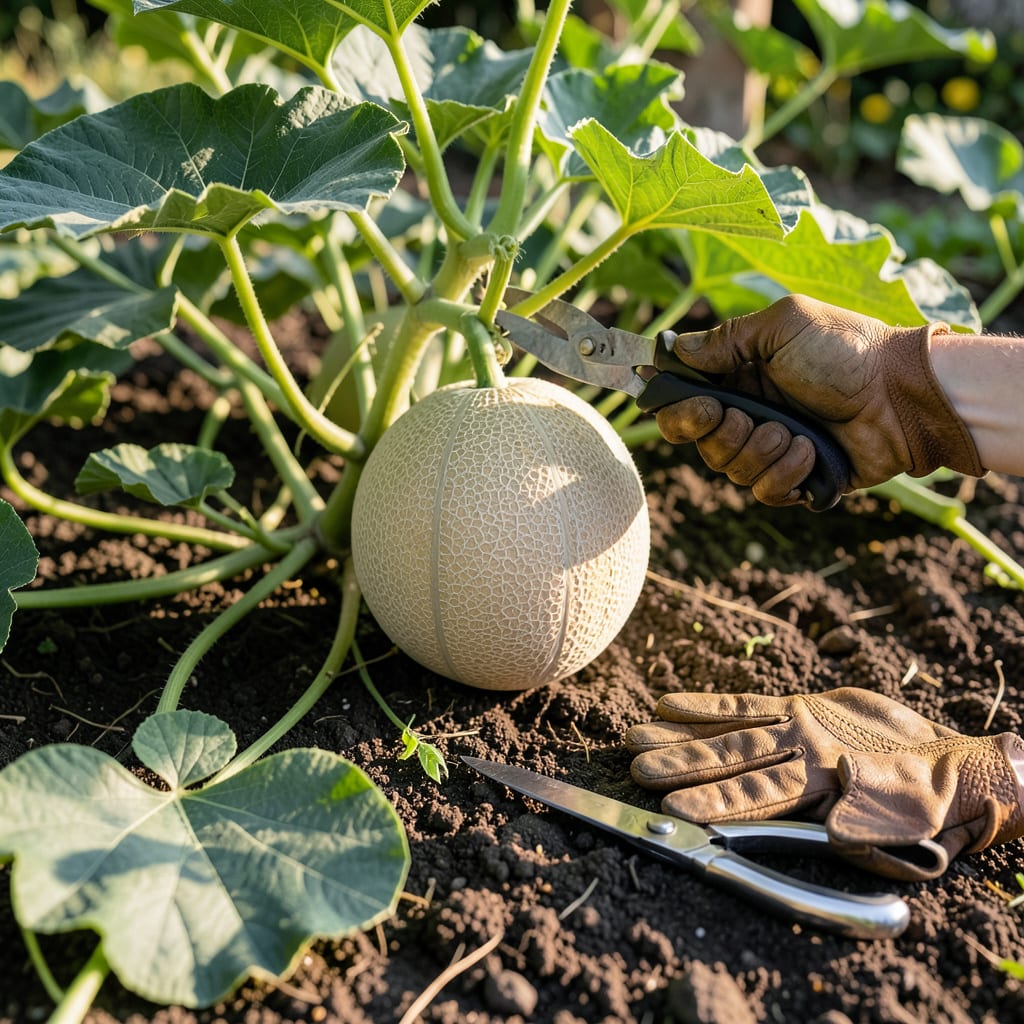
Nothing beats the taste of a homegrown 🍈 Cantaloupe at its peak of ripeness. But how do you know when it’s ready to come off the vine?
I’ve learned the subtle signs that make all the difference between a mediocre melon and one that’s bursting with sweetness. Let me show you exactly what to look for.


The moment your cantaloupe reaches perfect ripeness is magic. I watch for that color transformation under the netting first—it shifts from green to beige as the fruit matures and sugars develop.
Another key indicator is the stem slip test. When the melon is ready, the stem will detach with just gentle pressure, leaving a clean break at the vine.
| Sign | Description |
| Netting Color | Turns beige/tan under netting |
| Stem Slip | Detaches with light pressure |
| Rind Color | Changes from green to tan |
| Veins | Turn brown opposite stem |
The netting pattern on the rind becomes more pronounced as the cantaloupe ripens. This webbing should look raised and corky, not flat or smooth, when it’s ready to harvest.
I also check the blossom end of the melon—the side opposite the stem. When ripe, this area often has a slightly softer feel compared to the rest of the fruit.
The color change is perhaps the most reliable sign. A ripe cantaloupe will show a golden or tan hue beneath its netting, replacing the green color of immaturity.
Don’t overlook the veins on the stem side. When they turn from green to brown, it’s a clear signal that the melon has reached its sugar peak and is ready for harvest.
I’ve found that checking these visual cues in the early morning yields the most accurate results. The cooler temperatures make the colors and textures more distinguishable.
Remember that size isn’t everything. While most cantaloupes reach 3-4 inches in diameter when ripe, the visual signs are far more important than measurements.
By combining these visual indicators with the stem slip test, I can confidently determine when my cantaloupes are at their peak of perfection and ready to be enjoyed.☀️
Consistent monitoring of these signs ensures I never miss the optimal harvest window, giving me the sweetest, most flavorful cantaloupes every time.🌱
Once you’ve spotted the visual ripeness signs, it’s time to confirm with these non-invasive tests. I always start with the thump test—a ripe cantaloupe produces a hollow sound when tapped.
A gentle press at the blossom end should yield slight give, but the fruit shouldn’t feel soft. This indicates the perfect balance of firmness and ripeness inside.
The smell test is often overlooked but incredibly reliable. A ripe cantaloupe emits a distinct sweet fragrance at the stem end that you can’t miss.
I avoid the common mistake of pressing too hard, which can bruise the fruit. The ideal pressure is just enough to feel the slight give without leaving an indentation.
For best results, I perform these tests in the early morning when temperatures are cooler. The melon’s natural aroma and texture are most pronounced at this time.
Remember that sound varies with melon size—larger fruits produce deeper tones. With practice, you’ll learn to recognize the perfect pitch for your cantaloupes.🌿
Combining these sensory tests with visual cues gives me complete confidence in my harvest timing every season.🌱
Timing your cantaloupe harvest perfectly makes all the difference. I’ve learned that picking too early results in bland, hard fruit that lacks the sugar development needed for that sweet flavor.
On the other hand, waiting too long leads to overripe melons that turn mushy and fermented, losing their firm texture and fresh taste.
⚠️ Warning: Harvest Timing Matters!
Underripe: Lacks sweetness and texture
Overripe: Becomes mushy and fermented
Solution: Check visual cues and stem slip daily
The optimal harvest window is often just 2-3 days long. I monitor my cantaloupes closely during this period to catch them at their peak.
I’ve found that morning harvests work best. The cooler temperatures help preserve the fruit’s firmness and flavor after picking.
By combining visual signs with the stem slip test, I ensure my cantaloupes are always harvested at the perfect moment for maximum sweetness and quality.🌱
Look for a raised, corky texture in the webbing pattern. Flat or smooth netting means it needs more time on the vine.
Yes, but it should only give slightly—not feel mushy. Over-softness indicates it’s past peak ripeness.
Avoid picking when wet to prevent mold. Wait until morning dew evaporates or the vine dries completely.
They’ll become overripe quickly, turning mushy and fermented within 2-3 days. Check daily once signs appear.
