
Beautiful Plants For Your Interior
Beautiful Plants For Your Interior
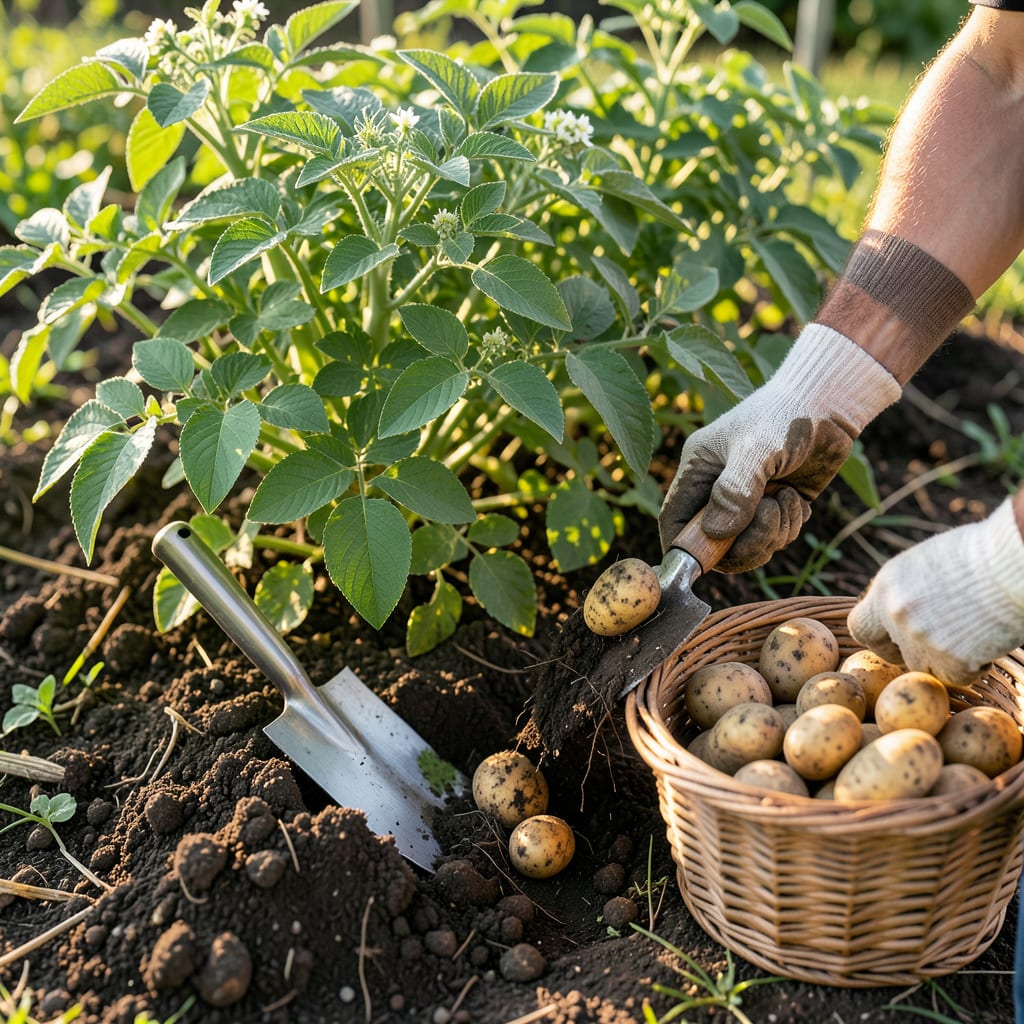
Ever dug up a potato 3 months too soon and been disappointed by its size? Timing is everything when it comes to harvesting your 🥔 crop.
I’ll show you how to read the signs from your plants and soil to know exactly when they’re ready. Discover the simple cues that guarantee a perfect harvest every time.


I always watch for the first sign: yellowing foliage. When the plant tops start to die back, it’s nature’s way of saying your potatoes are maturing below the soil. This typically happens 90-120 days after planting for most varieties.
Another clear indicator is the appearance of flowers. For new potatoes, you can start harvesting when you see these blooms. But for mature potatoes, I wait until the flowers have faded and the tops have completely died back.
| Harvest Sign | What to Look For |
|---|---|
| Foliage | Yellow, wilted, or dead tops |
| Flowers | Blooms appear (new potatoes) or fade (mature) |
| Skin Set | Firm skin that doesn’t rub off |
| Size | Golf ball to fist-sized tubers |
The skin test is crucial. Gently rub a dug potato with your thumb. If the skin stays intact, it’s ready. If it rubs off easily, I leave them in the ground for another week or two.
For early varieties, I start checking at 60 days. These are perfect for immediate eating. Mid-season potatoes usually need 70-90 days, while late varieties can take up to 120 days to mature fully.
I always consider the weather forecast. If a hard frost is coming, I’ll harvest early to prevent damage. Potatoes can’t handle freezing temperatures, and even a light frost can damage the tops and affect the tubers below.
The soil temperature matters too. I use a soil thermometer to check. When temps drop below 50°F consistently, it’s time to dig. This often coincides with the tops dying back in cooler climates.
For new potatoes, I carefully feel around the base of the plant. When I can feel marble-sized tubers, I know it’s safe to harvest a few while leaving the rest to grow larger.
Remember, the size of your potatoes depends on variety and growing conditions. I’ve found that Yukon Golds are ready when they reach about 2-3 inches in diameter, while Russets can grow much larger.
I always harvest on a dry day when the soil isn’t waterlogged. This makes digging easier and helps prevent rot during curing. After digging, I let them dry in a cool, dark place for a few hours before storing.☀️
I always plan my potato harvest around the variety I’m growing. Early potatoes like Red Norland are ready in 60-70 days, perfect for a quick summer crop. These are ideal when you want that fresh-dug flavor early in the season.
Mid-season varieties such as Yukon Gold take 70-90 days. I find these strike the perfect balance between yield and flavor, making them a garden staple. They’re versatile for both immediate use and storage.
| Variety Type | Days to Maturity | Best For |
|---|---|---|
| Early | 60-70 days | New potatoes, quick harvest |
| Mid-Season | 70-90 days | Balanced yield & storage |
| Late | 90-120 days | Long-term storage |
Late varieties like Russet or Katahdin need the full 90-120 days. I grow these for winter storage. They develop thicker skins that protect them during long-term storage in cool, dark conditions.
I stagger my planting dates to enjoy continuous harvests. Starting new plants every 2-3 weeks gives me fresh potatoes all season long. This works especially well with early varieties that mature quickly.
Climate plays a big role in my harvest timing. In cooler regions, I add 10-14 days to the maturity time. In warmer areas, potatoes may mature a bit faster, but I watch for the foliage die-back as my primary indicator.
I always check the soil temperature before harvesting late varieties. When it consistently drops below 50°F, it’s time to dig. This usually happens in early fall for me, just before the first frost threatens.
For the best storage results, I harvest late varieties after a few light frosts but before a hard freeze. This helps toughen the skins for better keeping quality.🌱
I’ve learned the hard way that harvesting too early is a common mistake. When I pull potatoes before the skin sets, they often bruise easily and don’t store well. The skin should be firm enough to resist gentle rubbing.
Another error I see is waiting too long. If you leave potatoes in the ground past maturity, they can rot or become susceptible to pests. I always mark my planting dates and start checking for readiness as the expected maturity date approaches.🌱
Don’t dig when soil is wet – this causes clumping and rot risk. Always wait for dry conditions.
Improper digging techniques can damage your crop. I never use a shovel directly next to the plant. Instead, I use a garden fork and work carefully around the plant to avoid piercing the tubers.
I’ve also found that harvesting in wet conditions leads to problems. Wet soil makes digging difficult and can cause the potatoes to rot during curing. I always check the weather forecast and choose a dry day for harvest.
Many gardeners forget about post-harvest handling. After digging, I let my potatoes dry in a cool, dark place for a few hours. This helps the skin toughen up for storage. Never wash them before storing – just brush off excess soil.
Finally, I avoid exposing potatoes to light after harvest. This can cause them to turn green and develop a bitter taste. I store mine in burlap sacks or cardboard boxes in a dark, cool location.☀️
New potatoes are ready when you see flowers on the plants. You can gently feel around the base for marble-sized tubers and harvest a few while leaving the rest to grow larger.
Harvesting before the skin sets results in tubers that bruise easily and don’t store well. The skin should resist gentle rubbing. Wait until the tops start dying back for best results.
Yes, leaving them past maturity can cause rot or pest damage. Mark your planting dates and check for readiness as the expected maturity date approaches, typically 90-120 days after planting.
Avoid shovels near the plant. Use a garden fork and work carefully around the plant to prevent piercing the tubers. Always dig on a dry day to avoid clumping.
