
Beautiful Plants For Your Interior
Beautiful Plants For Your Interior
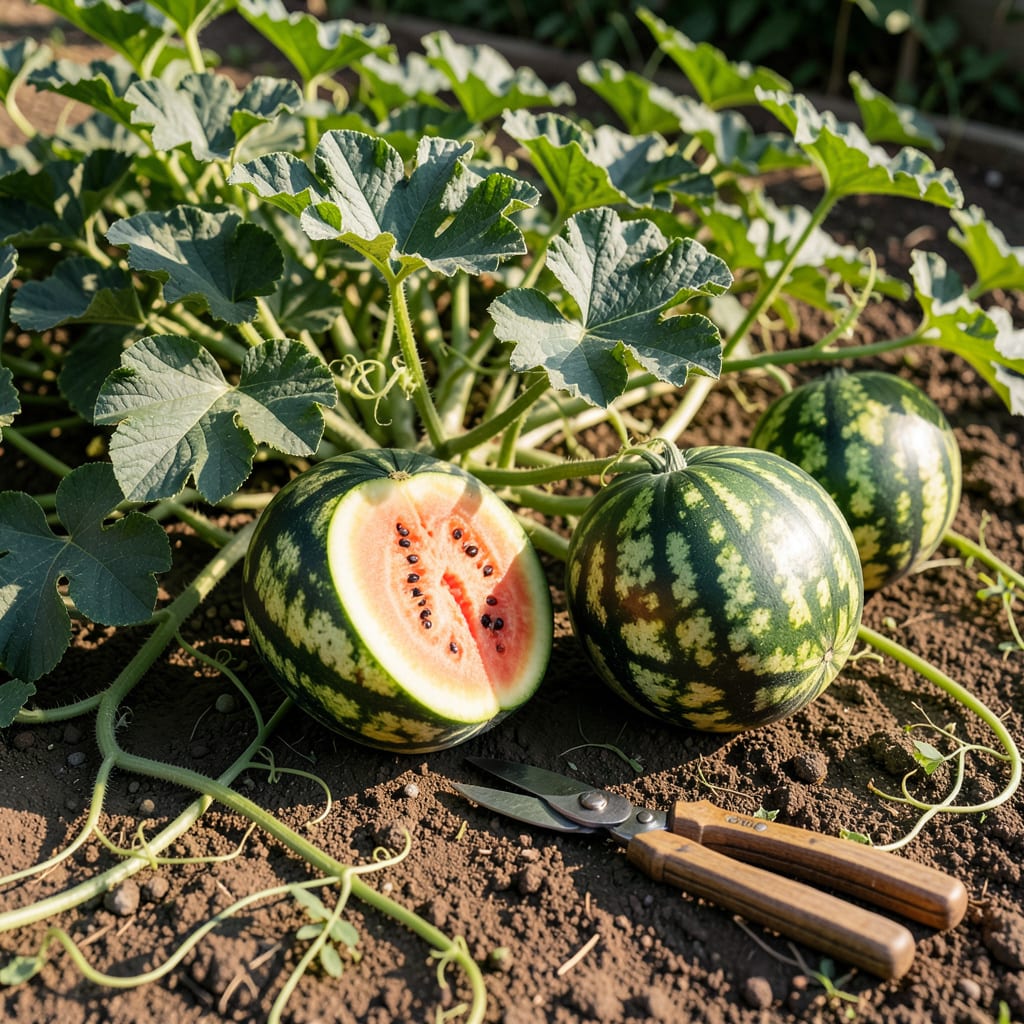
Nothing beats the taste of a perfectly ripe 🍉 Watermelon fresh from your garden. But how do you know when it’s ready to pick without cutting it open?
I’ve learned the most reliable signs to look for, from tendril drying to that telltale hollow sound. Let me show you how to get it right every time.


The tendril method is my go-to for checking watermelon ripeness. Look at the curly tendril closest to the stem—it’s the plant’s way of signaling maturity. When this tendril turns brown and dries up, your melon is likely ready.
This works because the tendril’s life cycle is tied to the fruit’s development. As the watermelon matures, the vine redirects energy, causing the tendril to withdraw moisture and shrivel. It’s nature’s perfect timing mechanism.
| Sign | What to Look For |
|---|---|
| Tendril Color | Turns from green to brown |
| Tendril Texture | Becomes dry and brittle |
| Location | Check tendril opposite the stem |
I always recommend checking multiple tendrils on the same vine. Sometimes one might dry out due to environmental stress, not ripeness. Consistency across several tendrils gives me confidence the fruit is truly ready.
For the most accurate results, examine tendrils in the morning sunlight. The contrast between green and brown is more visible then. Avoid checking after rain, as moisture can temporarily revive a drying tendril.
Remember that size isn’t everything. Even small watermelons can be ripe if the tendril is brown. I’ve harvested perfectly sweet mini-melons this way, proving that the tendril method works regardless of fruit size.
The tendril test works best for seedless varieties too. While some gardeners think these need special treatment, I’ve found they follow the same ripening cues. The vine still produces tendrils that dry as the fruit matures.
One pro tip: if you’re growing multiple watermelon plants, compare tendrils across vines. This helps you spot the subtle differences between nearly-ripe and fully-ripe melons. I do this every season to fine-tune my harvest timing.
Don’t rush the process. A tendril that’s just starting to brown might mean the melon needs a few more days. Patience here often means the difference between good and exceptionally sweet fruit.
This method has never failed me in my 10+ years of gardening. Combined with other signs we’ll discuss, it’s the most reliable way to know your watermelons are ready for harvest. ✂️
Beyond the tendril method, the tap test is my favorite way to confirm ripeness. Gently tap the watermelon with your knuckles and listen for a deep, hollow sound. A dull thud means it’s not ready, while a metallic ring suggests overripeness.
This works because the flesh density changes as the fruit matures. The hollow sound indicates the perfect balance of juiciness and firmness. I’ve found this method especially useful for larger varieties.
The ground spot is particularly telling. This is the area where the melon rests on the soil. When it turns creamy yellow, it’s a clear sign of ripeness. I check this first before doing the tap test for confirmation.
For the rind texture, run your fingernail across the surface. If it resists penetration and feels rough, the melon is likely ready. Shiny rinds usually indicate immaturity, while dull ones suggest peak ripeness.
Don’t forget to consider the stem condition. While not as reliable as other signs, a stem that’s starting to dry and shrink often accompanies a ripe watermelon. However, I never rely on this alone.
Combining these methods gives me the most accurate results. I’ll often use 3-4 signs together to be absolutely sure. This approach has helped me harvest perfectly ripe watermelons season after season. ☀️
Even experienced gardeners can misjudge watermelon ripeness. The most common mistake I see is relying on just one sign. A brown tendril alone doesn’t guarantee perfection—always cross-check with other indicators.
Another pitfall is picking too early. Many assume large size means readiness, but premature harvesting results in bland, watery fruit. I’ve learned patience pays off when waiting for that creamy yellow ground spot to appear.
⚠️ Warning: Environmental factors like drought stress or excessive rain can affect traditional ripeness signs. Always consider recent weather when assessing your crop.
Don’t overlook the tap test results. A metallic ring often means the melon is overripe, while a dull thud indicates it needs more time. I’ve found the hollow sound is the sweet spot for perfect ripeness.
Many gardeners forget to check the stem condition. While not foolproof, a stem that’s beginning to dry and shrink often accompanies a ripe watermelon. However, I never use this as my sole indicator.
Timing matters too—harvest in the morning when temperatures are cooler. This helps preserve the fruit’s sugar content and freshness. I’ve noticed melons picked in the heat of the day often taste less sweet.
By avoiding these common errors and using multiple verification methods, you’ll consistently harvest watermelons at their peak of flavor and juiciness. ✂️
Gently tap the watermelon with your knuckles and listen for a deep, hollow sound. A dull thud means it needs more time, while a metallic ring suggests it’s overripe. Practice on a few melons to train your ear.
The ground spot is where the melon touches the soil. When it turns from white to creamy yellow, it signals ripeness. This is one of the most reliable visual cues for harvest timing.
Picking in the cooler morning hours helps preserve the fruit’s sugar content and freshness. Watermelons harvested in the heat of the day often taste less sweet and may spoil faster.
While the tendril drying is a great indicator, it’s best to cross-check with other signs like the tap test or ground spot color. Using multiple methods ensures you don’t pick too early or too late.
