
Beautiful Plants For Your Interior
Beautiful Plants For Your Interior
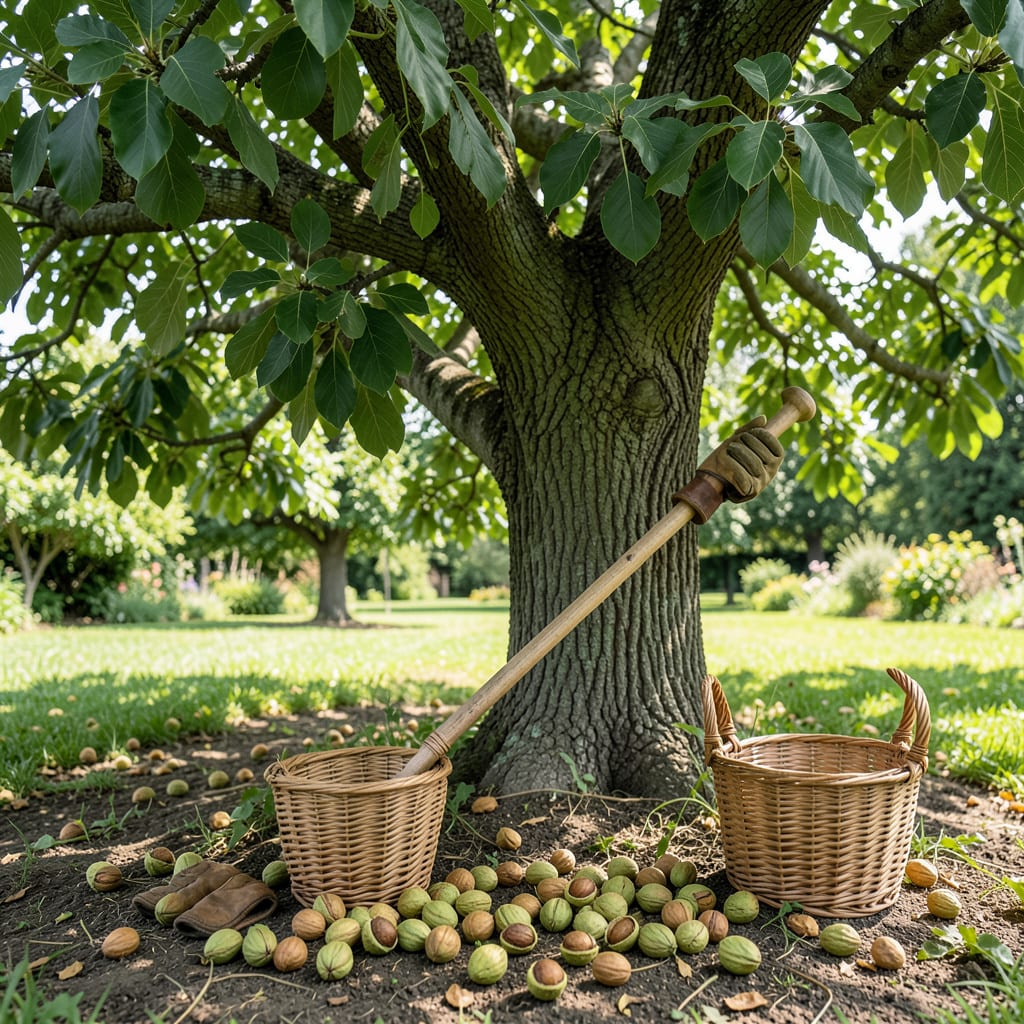
Timing your walnut harvest perfectly makes all the difference between disappointing and delicious. The 🌰 Walnut tree gives clear signals when its treasure is ready.
From hull splitting to kernel firmness, I’ll show you the exact signs to watch for between September-October. Let’s make this your most successful harvest yet.


I’ve learned that walnut harvest timing is all about watching for hull changes. The first clue is when the green outer hull starts to crack open, revealing the hard shell inside. This typically happens in late September or early October. 🌰
Don’t rush it—premature picking leads to soft kernels that won’t store well. For English walnuts, the hull turns yellowish-brown and splits wider as it ripens. Black walnuts often drop to the ground when ready, so check the orchard floor daily.
| Sign | English Walnut | Black Walnut |
|---|---|---|
| Hull Color | Yellowish-brown | Dark green to black |
| Split Appearance | Wide open | Partial or full |
| Kernel Texture | Firm and plump | Hard and dry |
| Natural Drop | Rare | Common |
The moisture content of the kernel is another critical factor. A ripe walnut will have a kernel moisture of about 8-10%. If it’s higher, the nut isn’t ready. I use a moisture meter for precision, but a simple squeeze test works too. 🌿
Climate plays a role too. In warmer regions, walnuts may ripen 2-3 weeks earlier than in cooler areas. Watch for first frost warnings—harvest before frost hits to avoid kernel damage. A light frost can actually help the hulls split, but a hard freeze ruins the crop.
For English walnuts, the hull split is the most reliable sign. The outer husk will loosen and peel away easily. With black walnuts, the hull turns black and softens, often staining your hands when handled. Both varieties should be harvested promptly once these signs appear.
I always check the tree canopy for falling nuts. If you see 10-15% of the crop on the ground, it’s time to start hand-picking the rest. Use gloves—walnut hulls release a staining compound that’s tough to wash off. ✂️
Another trick is the shake test. Gently shake a branch—if the nuts fall easily, they’re likely ready. If they cling tightly, give them another week. Overripe walnuts can sprout prematurely or attract pests like squirrels.
For commercial growers, mechanical harvesters are used once 75% of the hulls have split. But for home gardeners, daily inspection is key. I make it a habit to walk my walnut trees every morning during harvest season.
Finally, remember that variety matters. Chandler walnuts split earlier than Hartley or Franquette. Check with your local extension office for variety-specific advice. The right timing ensures maximum flavor and storage life. 🌳
Testing walnut ripeness is simpler than you might think. I always start with the hull squeeze test. If the outer hull gives slightly under pressure, the nut is likely ready. For English walnuts, a firm kernel means it’s harvest time. 🌰
Next, try the shake test. Gently shake a branch—if the nuts drop easily, they’re probably ripe. If they cling tightly, they need more time. This works especially well for black walnuts, which often fall when ready.
The kernel inspection is the most reliable method. Cut open a few nuts and check the kernel texture. A ripe walnut will have a hard, dry kernel that doesn’t dent when pressed. If it’s soft or rubbery, wait another week. 🌿
For black walnuts, look for a dark, stained hull. The stain comes from the juglone compound, which also signals ripeness. I always wear gloves to avoid staining my hands during this test.
Another sign is the hull split percentage. If 70-80% of the hulls on your tree have split, it’s time to harvest. This is especially useful for commercial growers but works for home gardeners too.
Finally, consider the weather forecast. If a hard frost is coming, harvest immediately—even if the nuts aren’t fully ripe. A light frost can help the hulls split, but a freeze will damage the kernels. ✂️
I’ve seen many gardeners lose their walnut crop by making simple mistakes. The most common is waiting too long to harvest. Overripe walnuts can sprout prematurely or attract squirrels and birds. 🌰
Another mistake is picking too early. If the kernel is soft, the nut won’t store well and may develop off flavors. Always check for firm kernels and split hulls before harvesting.
Waiting too long: Risk mold, animal theft, or sprouting.
Picking too early: Kernels stay soft and won’t store well.
Ignoring weather: A hard frost can ruin the entire crop.
Timing is everything with walnuts. If you see 70-80% hull split, start harvesting immediately. In warmer climates, this may happen in late August, while cooler areas see it in October. 🌿
Don’t forget to wear gloves when handling walnuts. The hulls release a staining compound called juglone that can discolor your hands for days. Use thick gloves and long sleeves for protection.
Finally, avoid harvesting in wet conditions. Wet walnuts can develop mold during storage. Always pick on dry days and let the nuts cure in a well-ventilated area before storing. ✂️
Picking too soon results in soft kernels that won’t store well. They may develop off flavors and spoil faster. Always check for firm kernels and split hulls first.
Overripe walnuts may sprout prematurely or fall to the ground in large numbers. The hulls often turn completely brown or black. Harvest when 70-80% of hulls have split.
Yes! A light frost can help hulls split, but a hard freeze damages kernels. In warmer areas, harvest may start in late August, while cooler climates see it in October.
Walnuts release a staining compound called juglone. It can discolor your hands for days. Always use thick gloves and long sleeves for protection.
